
A Sweet Legacy From Bucuria
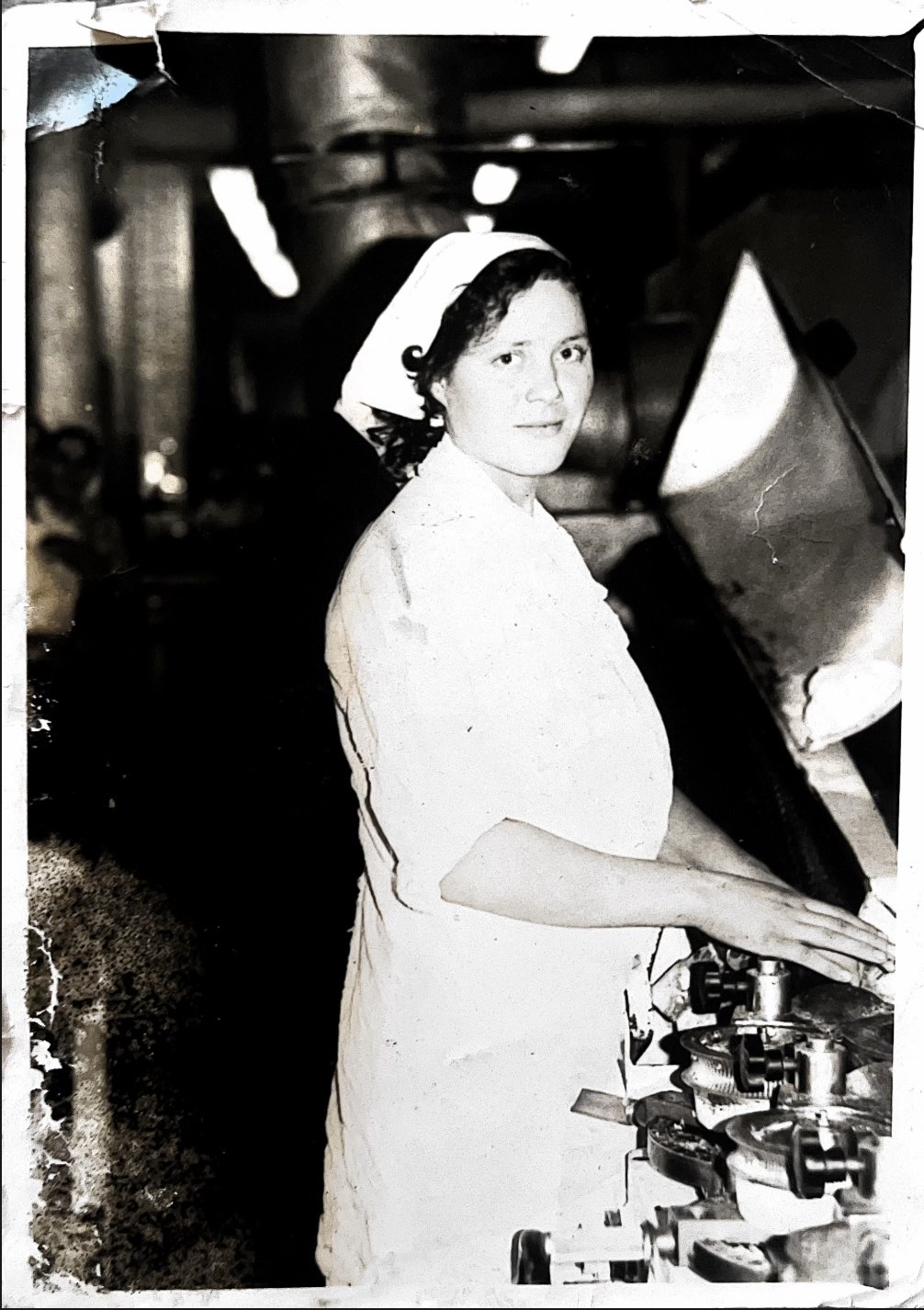
This old keepsake holds a faded photo and a note written on the back. Behind the image, flowing script reveals words slightly blurred by time. A young woman stands in a bustling workshop, with noise echoing just beyond the frame. Maria, my grandmother, wears a clean apron, its fabric stiff from daily use. Her head is covered by a folded cloth, simple but firmly tied. Machines stretch into the background, designed for shaping dough into treats that were later sold in tins throughout towns. One device directly in front of her
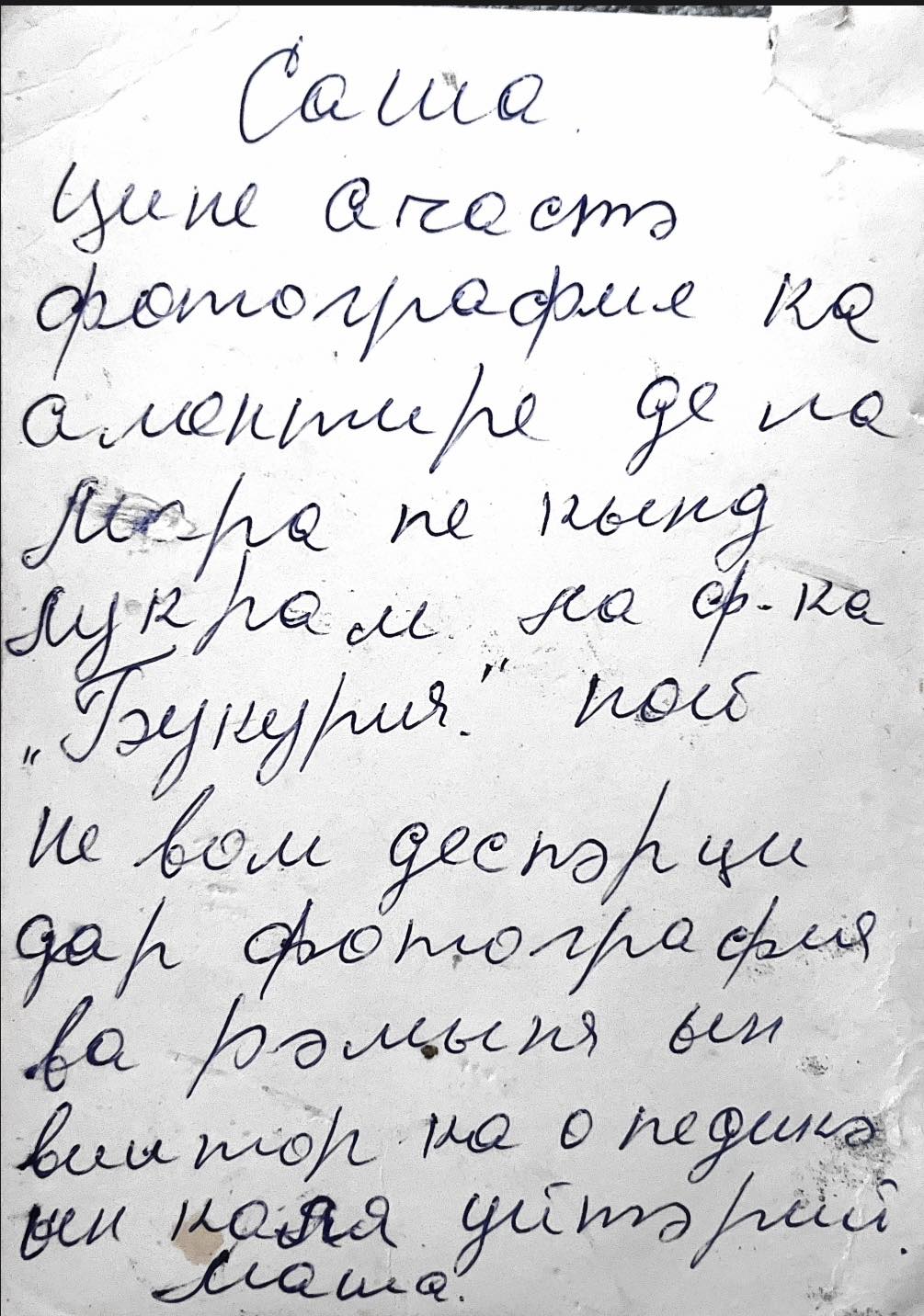
twists sugar strands into precise spirals. The place was called Bucuria, known throughout Chișinău for its delicious baked goods. Workers moved quickly with a steady rhythm, putting in long hours. That factory helped sustain traditions passed down through generations. Behind it lies something quieter and deeper— the note scrawled on the back. The ink, shaped by letters long since faded, holds its ground against years of change. It carries a personal word meant for one person only: Sasha, a companion in work and spirit. Each move we made never left these behind, kept within a worn book, carried like silent cargo. They are not just fragments of old material, but threads pulled from her past into ours. They speak of steel mills, laughter shared between shifts, and bonds formed before cameras ever rolled. Her world lives here, not in speeches or records, but in this fragile piece of paper touched by her hand.
Hidden within this story lies the heart of Moldova’s factories, politics, and changing words through the 1900s. Not far stands the Bucuria, established in 1946 and quickly rising after the war ended in Europe. This place became one of many symbols rebuilding what conflict had torn down. My grandmother shaped her days within those walls, part of a wave where large government workshops powered entire neighborhoods. From this effort grew Chișinău as it now thrives. That handwritten note holds more than just words. Back then, in the Moldavian part of the Soviet Union, people had to write what was called "Moldovan"—really just Romanian—using letters from the old Slavic set instead of the familiar Western ones. The way those shapes appear on paper indicates exactly where and when it came from: the middle decades of the 1900s, a moment tightly controlled over speech and learning. If you look closely at the strokes, you can see the natural flow of Romance sounds bent to fit the angular symbols imposed by imperial rule. This bending continued for years, fading near the end of the eighties. What we have here is proof of daily life under heavy policy shifts—a quiet survivor showing how one household lived through broad changes that few could escape.
The handwriting brings quiet emotion to a room filled with machines. Translated, the words say: "Sasha, hold on to this picture—remember us working together at 'Bucuria.' Paths split later, but this snapshot remains, something small to resist fading memories. — Maria." For us, it's not proof of jobs held or some official pass; instead, it captures the breath between friends, echoing how quickly young days fade. She understood that change came often—people move, time passes, everything shifts. One girl named Maria recognized that early. Beyond the sticky air and the clatter of gears turning day into night, she sensed it would not last. Lives change when love finds you or choices pull you elsewhere. A picture, however, might hold what memory allows to slip: laughter during breaks, hands stained with syrup, faces tired but bright. Not proof exactly, just something real to remember. That soft curve of her lips in the picture carries more than just joy—it holds quiet strength. Her foresight ensured that what she built with Sasha remained real long after. In our home, this keepsake means something deeper: presence, memory, and care shaped by effort and touched by beauty. Even where machines ruled, it was feeling—the human part—that refused to fade.
The story around this object connects to Soviet Moldova’s so-called boom years—those mid-20th century times when factories seemed to glow. Bucuria wasn’t just another factory; consider it a point of pride, known well beyond local borders for sweets made with care. Young people like Maria often left family farms
behind, trading village paths for city streets and assembly lines. This shift meant stepping into a faster, louder life with a different rhythm. Movement mattered, not just for money but for understanding one’s place in the world. Inside those factory walls, life flourished beyond shifts and schedules. People celebrated feast days together, formed work teams like families, and found belonging in shared routines. Writing in a Romance language using Cyrillic letters came straight out of old Soviet language rules, which were later dropped when times changed in 1989. This photograph now rests in our hands, carrying traces of past maps, outdated decrees, and an alphabet no longer used. Still, what Maria wrote shows how small wishes— for respect, connection, and passing down memories—can last much longer than empires ever do.