


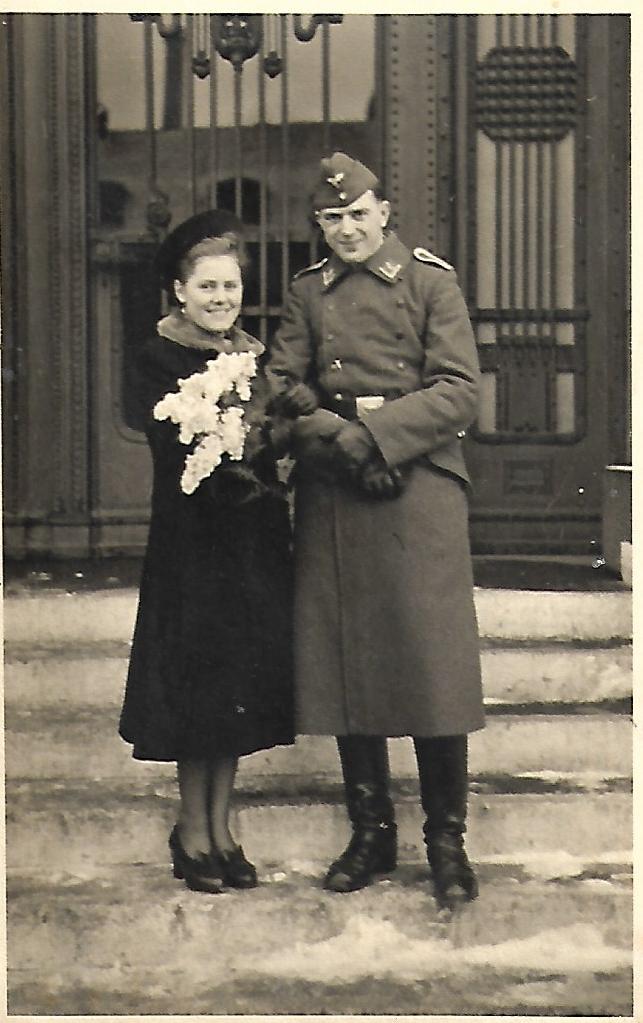
Heinrich and Charlotte Karkowski
About the Creator
My name is Patryk Drażba. I'm 14 years old. I'm an 8th-grade student at a primary school in Olsztyn, Poland. I'm interested in history and politics.
To the casual observer, it's just Art Deco jewellery. For my family, it's an object with a soul. By describing the fate of Heinrich and Charlotte, I want to pay tribute to them, young people who met and fell in love during the war, and today, their only memento is a group photo and a gold bracelet.
The story begins in Małga. It's a village in southern Masuria, which you won't find on maps today. Heinrich Karkowski was born on August 16, 1916, during the First World War. Fate was harsh on him from the start. When he was two years old, he lost his mother. The burden of raising four siblings fell on eighteen-year-old Maria, the eldest. When Heinrich was eight, another tragedy struck: his father died. As a young man, at eighteen, he volunteered for the Arbeitsdienst (Arbeitsdienst) and, a year later, for the army. Little did he know that another great war would soon break out, one that would change everything. During the war, Heinrich was stationed in Kaliningrad, where he met Charlotte Bohme. In 1942, they married, and shortly after, their son was born. But before the war separated them forever, Heinrich bought Charlotte a gift. In Masuria, the land of his birth, he found a bracelet. It was modern, geometric, typical of the 1930s. Crafted with the precision typical of German jewelers, in a shade of warm yellow gold. At the very center of the bracelet rested a stone—a light blue spinel surrounded by openwork scrolls. Heinrich gave the bracelet to Charlotte with the hope that the war would soon end and they would be together forever.
1945 was the year Germany capitulated, the end of the long war, a time when it seemed that everything would return to normal. But not for the Karkowski family. The siege of the city began in Kaliningrad. Heinrich helped Charlotte and their young son board a ship that was supposed to evacuate the inhabitants to Germany. Sam remained in the city, where he fought in anti-aircraft defense. Meanwhile, Charlotte reached Germany and settled in Berlin. Unfortunately, their infant son soon fell ill and died of typhus. Heinrich was lost at the front. Charlotte was plunged into grief, which she had no one to share with.
At the same time, hell broke loose near Małga itself. January 1945 was marked in the village's history with bloodshed. A group of Soviet troops broke into the homes of the Mazurians. Residents who had already survived the First World War had not expected such brutality from the military. Maria, Henrich's sister, and her family fled and hid in the forest. Meanwhile, in Małga, the soldiers spared no one – men were murdered, women raped. Those who survived did not emerge from hiding until the spring of 1945. They were met with a horrific sight. Half of the houses had been burned down, and the bodies of their dead lay in the streets. After the war, Charlotte never stopped searching for Heinrich. She wrote letters and sent inquiries to the Red Cross. A reply never came. She answered each call with a pounding heart. One silent call she received one day ignited a spark of hope within her. Unfortunately, life went on, and Heinrich never returned. Charlotte remained in contact with her husband's family, who remained in Masuria.
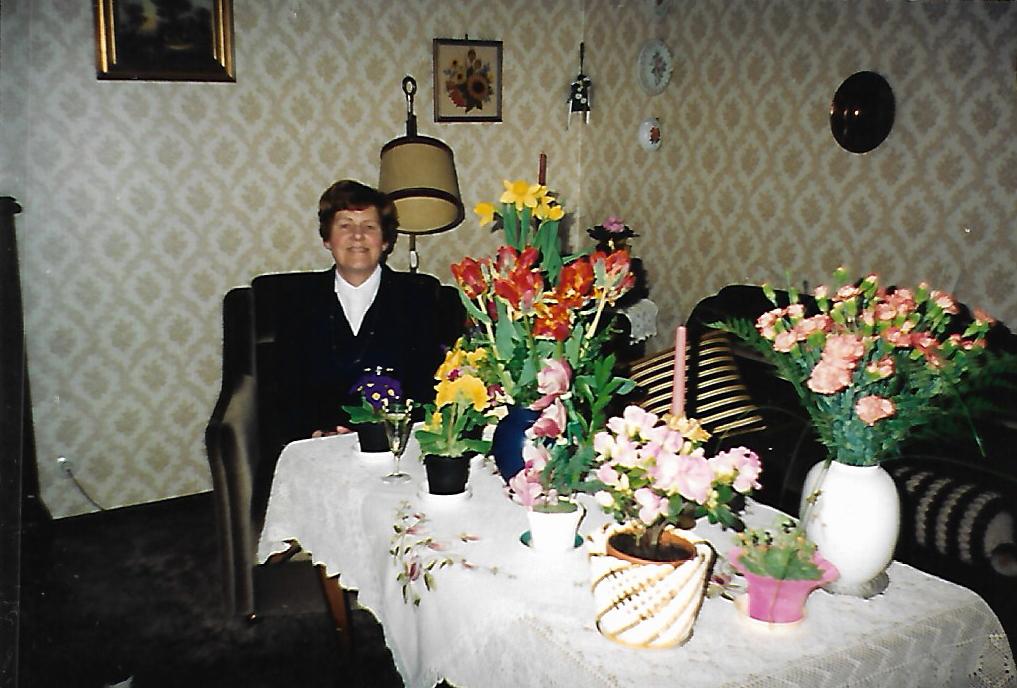
In the 1990s, a remarkable reunion took place: Heinrich's sister's daughter, Marta, came from Masuria to Germany and visited Charlotte. The meeting took place in Berlin – the two elderly women, connected by blood and family tragedy, embraced. Charlotte, still haunted by the memory of her beloved husband, told Marta that she wished the bracelet her beloved had given her would return to Masuria. To her family, where Heinrich was born and where it had been purchased.
Charlotte died on May 3, 2011. Shortly afterward, a parcel from Denmark arrived in Great-Grandma Marta's hands, sent by the deceased's sister. Inside, wrapped in paper, was a bracelet. The keepsake returned to Masuria many years later. Great- Grandma Marta gave it to her son Henryk's granddaughter – my mother. Henryk, who loved the history of his ancestors the most, knew it was more than just jewelry.
Great-Grandma Marta passed away in 2016. The bracelet rests in a safe place today – in my home, protected like the greatest treasure. From the very beginning, it was more than just jewelry. It survived World War II, the typhus epidemic, the rebuilding of bombed Berlin, and the search for Heinrich. It is proof that love and memory are stronger than war, separation, and death.
My mother promised my great-grandmother that she would keep it safe and pass it on to her children, along with this story.