
Life on Yellowed Pages…
About the Creator
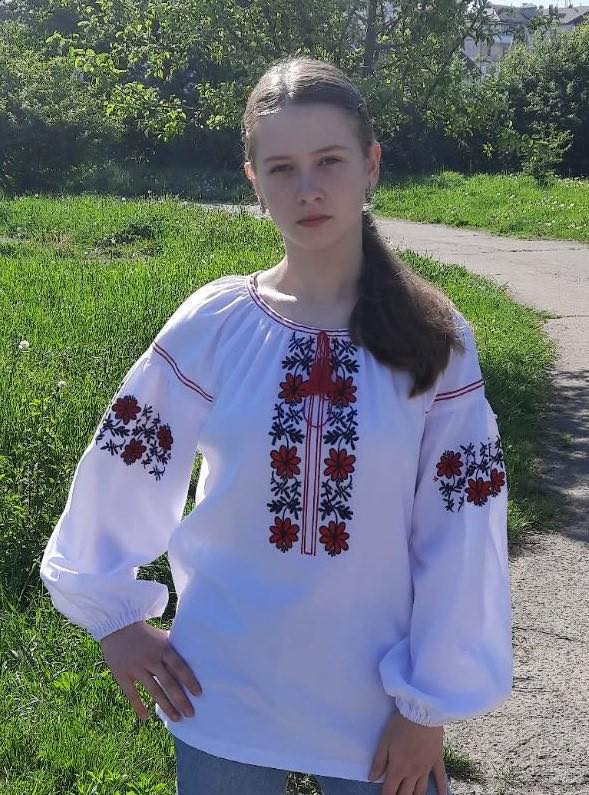
Anastasiia Drohobytska, born February 28, 2011, in Ivano-Frankivsk (Ukraine). I am a student of Lyceum №20, I takes a keen interest in local history and a laureate of regional studies competitions. Additionally, I am a tennis player.
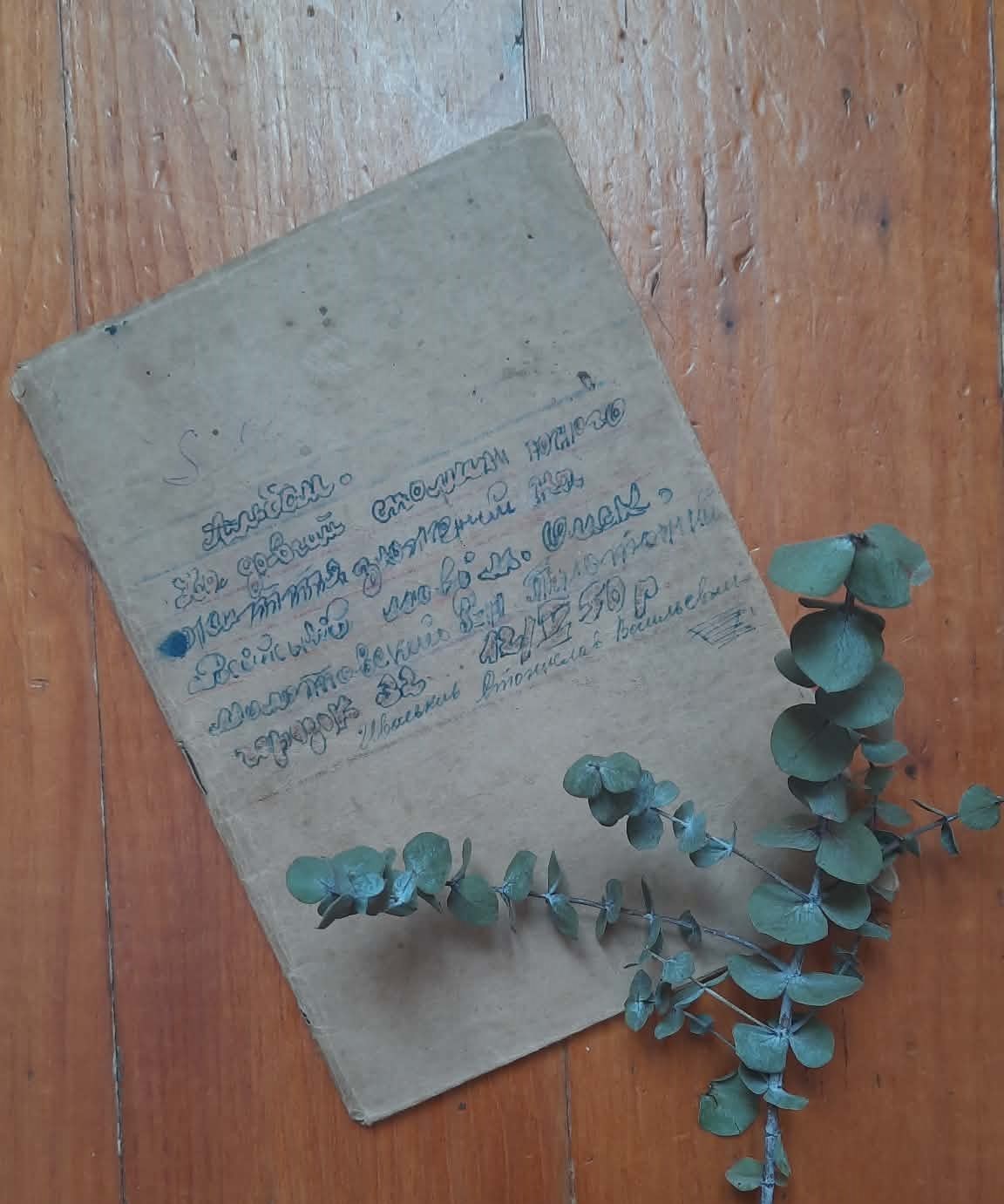
They say that very few family relics have been preserved among Ukrainians because, due to the Soviet occupation, the artificial famine (Holodomor), and repressions, people were forced to exchange them for bread or lost them during forced migrations. However, I am fortunate because a memento of my great-grandfather (my mother's grandfather) – Yevstakhiy Ivaskiv – has been preserved in our family archive. It is my great-grandfather's notebook, dated 1950, where in his youth he wrote down various quotes about love, as well as songs popular among the youth of that time. Written neatly in ink on it is: «An album for the long-standing memory of young life, compiled in the Russian language. Omsk, Molotovsky district, Palatochnyi horodok,32». Below is the date: April 12, 1950, and a signature.
Yevstakhiy was born in 1931 in the village of Stare Selo (then in the Zhydachiv county of the Lviv Voivodeship). Together with his large family, he lived through World War II and the beginning of the Soviet occupation of Halychyna. Then came the deportation on October 21, 1947, during the infamous Operation «West» (Zakhid), when thousands of Ukrainians were forcibly taken to special settlements in Siberia. According to witness accounts, the Soviet authorities ordered the deportation of sixteen-year-old Yevstakhiy's family presumably because his father, Vasyl, served as the chairman of the village council and refused to sign the lists of people slated for eviction. In the city of Omsk (modern-day Russian Federation), the family first lived in a dugout in inhuman conditions, and later in wooden barracks. There, he met my great-grandmother Maria Vitriv, whose family had also been deported on that same day, October 21, 1947, from the Lviv region.
Flipping through the pages of the notebook, the first thing I asked my mother was:
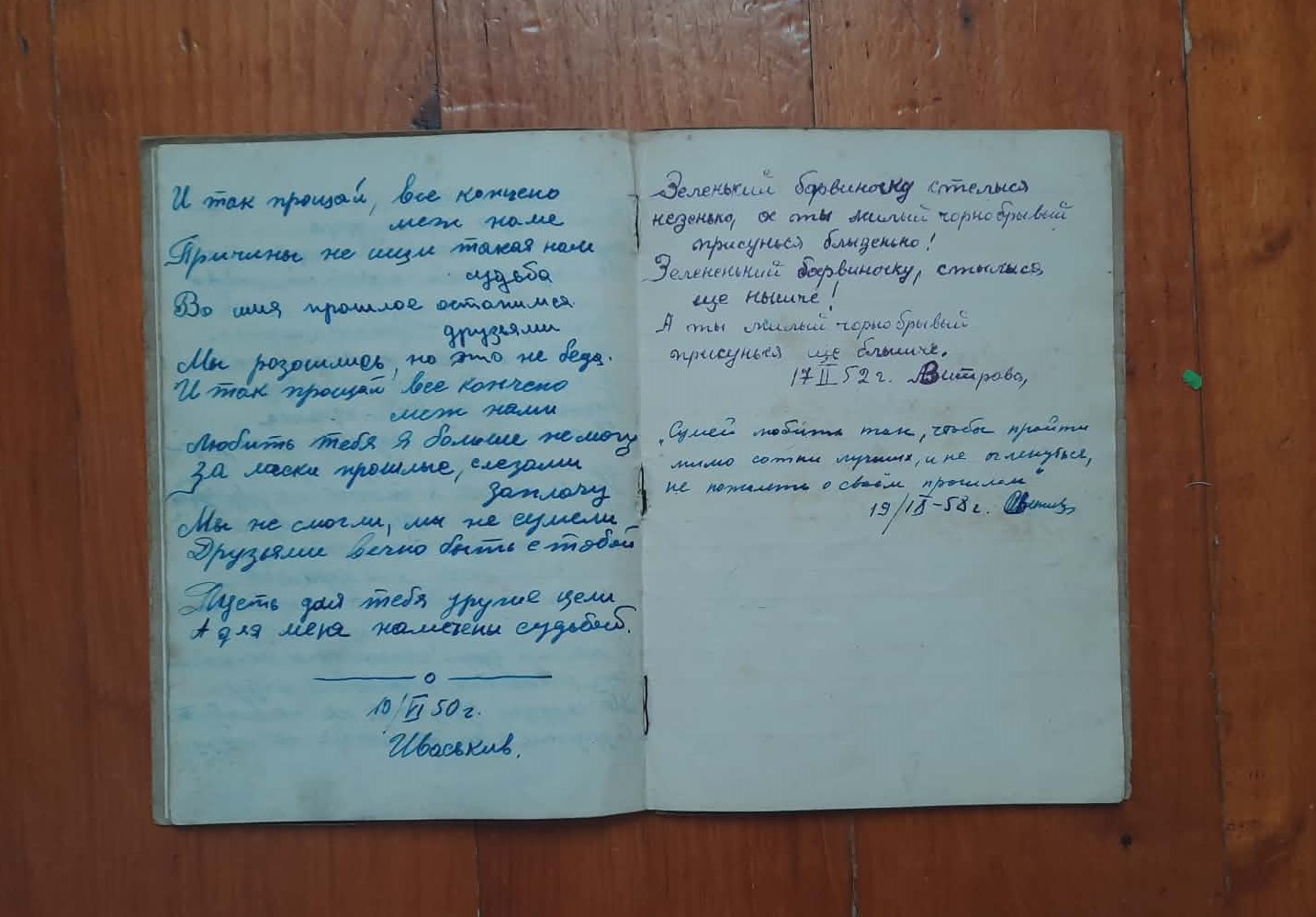
«Why are most of the songs and poems written in Russian?». This struck me deeply, as no one in my family speaks Russian. My mother replied that it was likely a tribute to the fashion of the time, but by no means Yevstakhiy’s personal position. My great- grandfather never denied his nationality and protested when they tried to register his children as Russians during the census since they were born in Omsk. I believe this is also valuable evidence of the Russification policy that the Soviet Union conducted toward other nations. Interestingly, on February 17, 1952, a new entry appeared in the songbook, written by my great-grandmother in Ukrainian: «Green periwinkle, spread low, and you, my dear, dark-browed one, move closer! Green periwinkle, move even closer, and you, my dear, dark-browed one, move even closer" (signed Vitrova).
The lovers married in 1953. The wedding was held in the barracks; they invited all their former fellow villagers and coworkers from the factory. After this, the entries broke off for several years, and only in 1958 did Yevstakhiy write: «Know how to love in such a way that you can pass among hundreds of the best and not look back, not regret your past"... By then, Maria and Yevstakhiy already had two children.
The couple lived together for 56 years. They raised their children – Vasyl and Olha (my grandmother). It was especially difficult after returning to Ukraine in 1961– 1962, when, as «enemies of the people», they were denied residency, fined, and so on. After my great-grandmother's death, memories written on various scraps of paper remained, which I find from time to time among family documents or her personal belongings. My great-grandfather left an album with old photographs, from which hundreds of unknown people look out at me – Ukrainians deported to Siberia – and, of course, this notebook.
I recently turned fifteen, twelve of which I have lived under the conditions of the Russian-Ukrainian war. For I understand that this war began with the occupation of Donbas and Crimea in 2014. Every time I flip through the pages of this notebook, I wonder: what did my peer feel when he was woken up at night and ordered to leave his home and his native country in two hours? How did he grow up in a foreign Russian- speaking environment? And do modern Ukrainian children, whom Russia has forcibly taken to its territories, keep such notebooks? My great-grandfather managed to return to Ukraine as an adult, but will these Ukrainian children have such a chance?
Right now, this notebook with its pages yellowed by time gives me more questions than answers.