
The story of Julius Löwenrosen
I remember and can still see my mother handing me many letters, documents, and photographs years ago, saying, "I am giving you the most precious treasures, sacred things—please treat them responsibly and with respect." I will never forget the urgency in her voice.
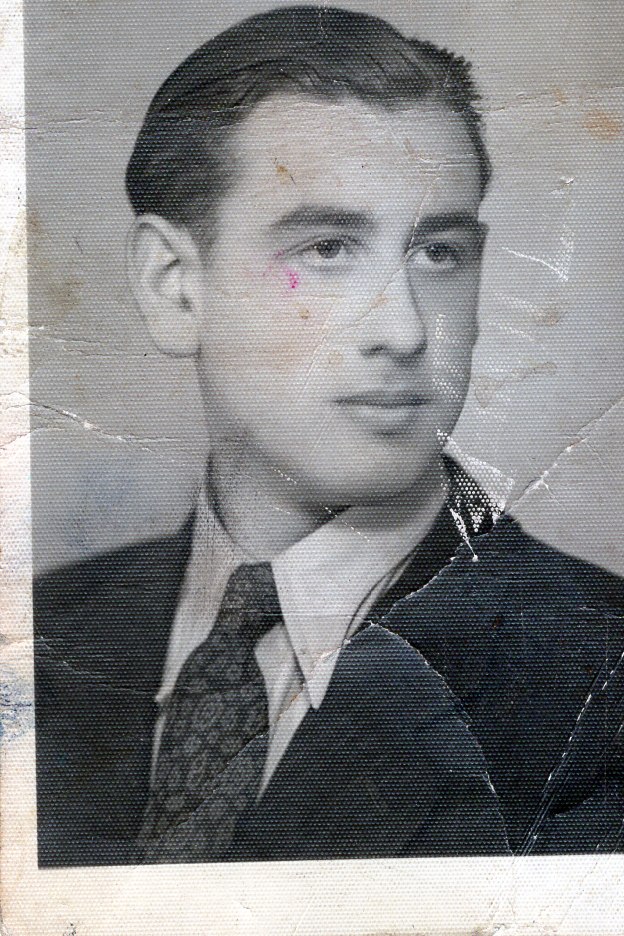
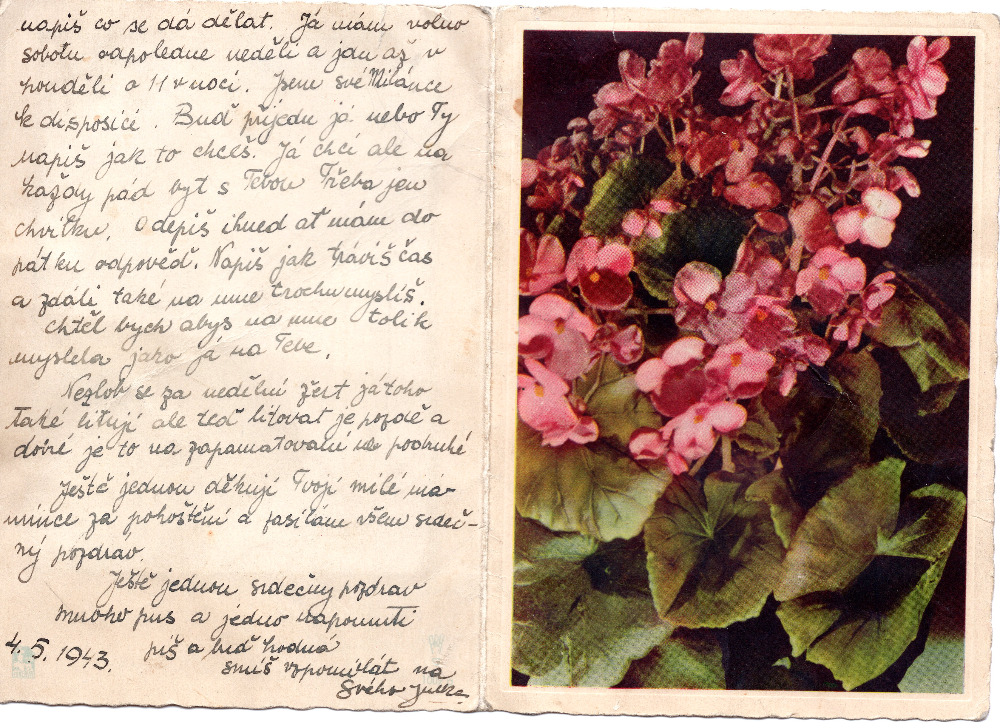
I was familiar with the numerous sincere letters, notes, postcards, period documents, and photo albums of young Julius Löwenrosen, which he gave to his girlfriend Milada, my mother, during the war. These mementos are lovingly and carefully preserved in our home archive. They tell the story of life during the cruel period of World War II.
This is the story of a Jewish boy, Julius Löwenrosen, born on March 27, 1922, in Hodonín, and my mother, Milada Gramerová, a Christian, born on July 5, 1924, in Brno. After the death of her husband Heinrich Löwenrosen, Julia's mother, née Lea Haimannová, remarried and moved to Warsaw, where Julia's younger brother Yrio was born in 1937. I have traced Julia's family tree.
Julius moved to Brno, where he had his own community of Jewish youth.
Julek was friends with Mr. and Mrs. Ulmer – Bedřich Ulmer, who was Jewish, and Helena Ulmerová, who was German, living in Brno at Dornych No. 19, where Julek also lived. This mixed couple helped Jews and other refugees a lot. They hid people, transported them, passed on information, acted as couriers, and helped with food deliveries. They gradually received news from Terezín, Sachsenhausen, Birkenau, Auschwitz. Helena sent packages to prisoners almost every day. Bread, gingerbread, honey, pastries, medicines. She added marks and messages to them, as agreed in advance. In the dark kitchen, she sewed for food and food stamps. She delivered various messages, reports, and passwords. She had a list of codes. Names and new addresses of prisoners. Most non-Aryan families had already been expelled, and non-Aryans were not allowed to write to Aryans and vice versa. They could write to Bedřich, a Jew. Bedřich Ulmer was considered a mixed marriage, so he had not yet been interned at that time.
The friendship between Milada and Julius began when they were still almost children, before the war. Milada's parents liked Julius very much and wished them happiness in their love.
Her mother encountered racism in many repulsive forms at an early age and decided not to give in and to fight against it.
Although Julius was interned with the others in Terezín because of his origins, Milada did not break off contact with him or his friends. After some time, the two young people meet again – on April 26, 1942, a group of Jewish youths is transported from the camp in Terezín to work in the Kukla mine in Oslavany.
At that time, it was a hope for survival for the Jewish boys, who were called runners, miners' assistants. Julek also moved around more freely illegally and even visited Milada in Brno.
He also visited the Ulmers at Dornych 19 and, as part of his resistance activities. Milada often traveled illegally to Oslavany to visit Julka.
Julek and Milada exchanged messages and letters among Jewish youth and secretly put up posters. Their romantic relationship was full of various complicated situations, but they never lacked courage and boldness in the face of the occupiers.
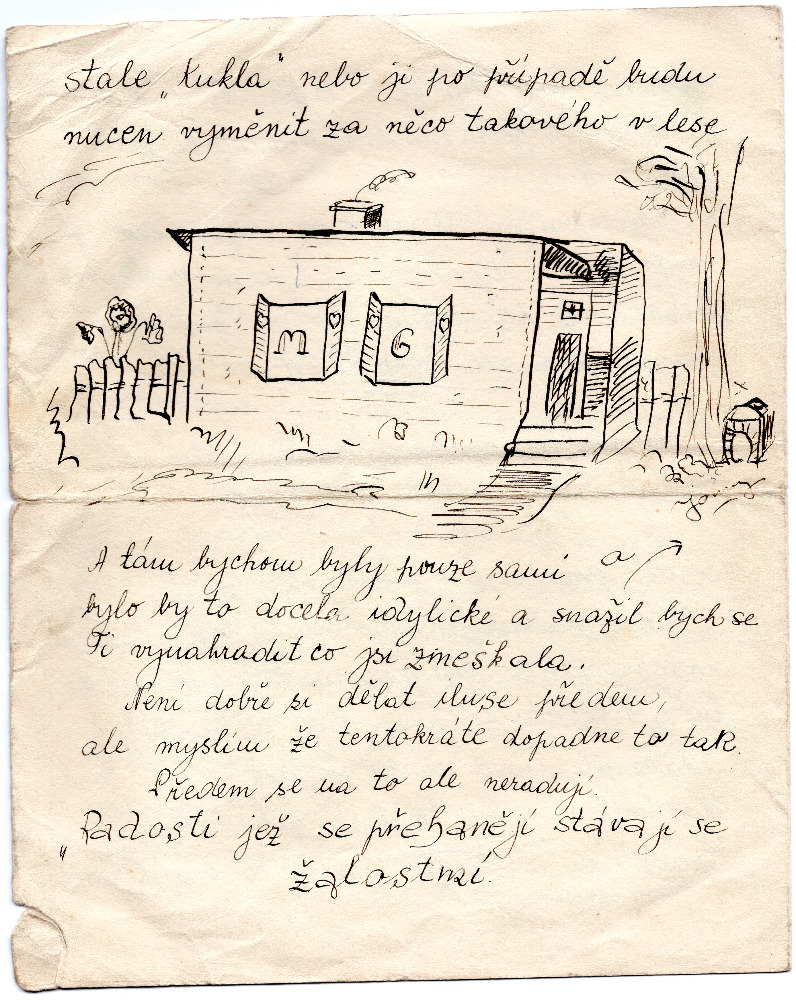
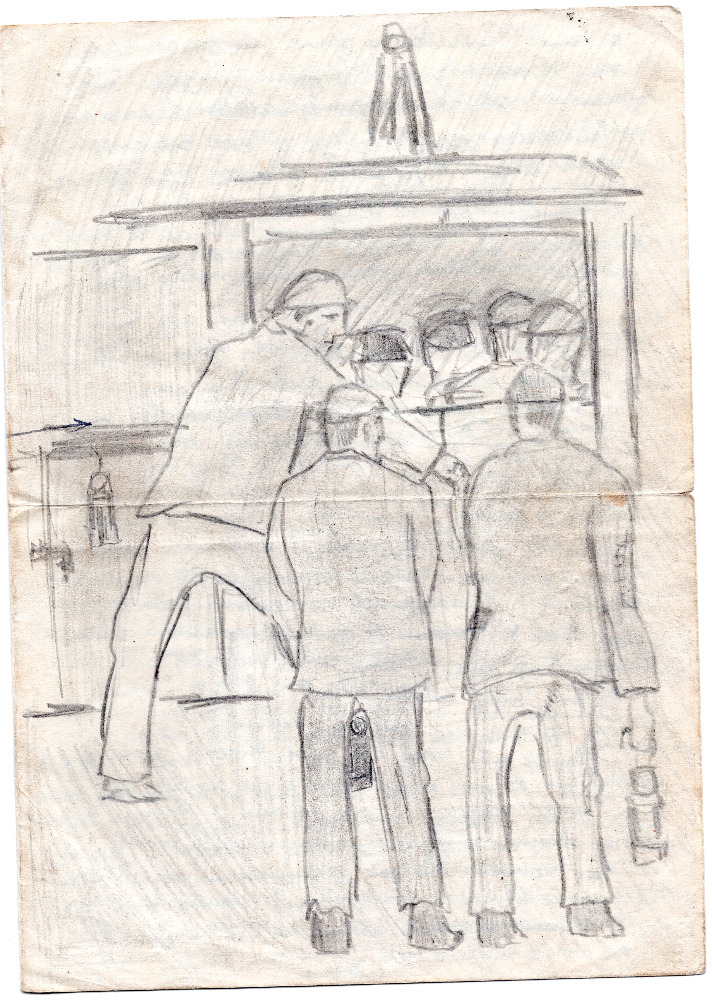
During this period from 1942 to 1943, Julek wrote Milada about 50 pages of letters and postcards, some with drawings of the Kukla mine. I am enclosing a collage of letters and photographs. At that time, some photographs of the boys with dedications were also taken, which I am enclosing. The photographs show Gerhard Mühlstein, Beer, Leo Lederer, Morgenstern, Fried, Klepetar, Max Weinstein, Fritzek, Bock, Helena Langová, and Robert Reich.
In the summer of 1943, Milada and her sister Vlasta sought refuge for Jewish boys in the Wallachian Mountains. Everything looked promising.
Unfortunately, on August 31, 1943, the Jewish inhabitants were suddenly transported back to the concentration camp in Terezín. What hope did they have left? Milada continued her resistance activities in the hope that the war would soon end and Julek would return.
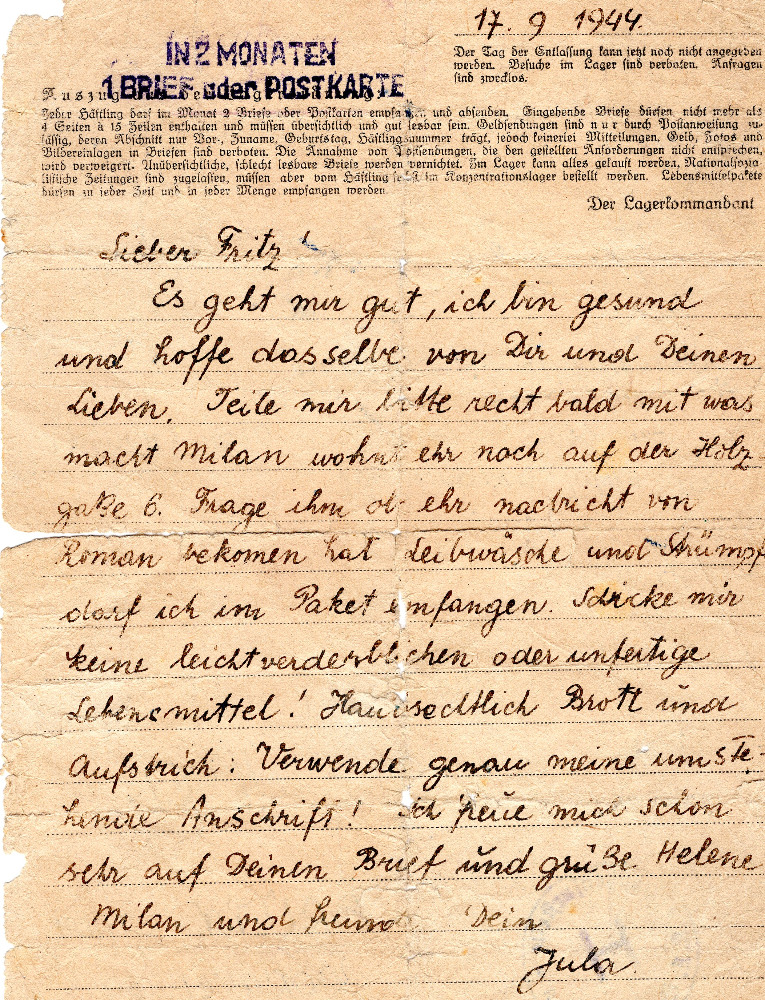
Julius sent a postcard on March 25, 1944, from the Auschwitz-Birkenau concentration camp and later, on September 17, 1944, from the Sachsenhausen concentration camp. I am enclosing these postcards.
Julius disappeared during the evacuation of the Sachsenhausen concentration camp at the end of the war. After the war, Milada often went to the train station to wait for Julek, but she never saw him again. After the war, my mother Milada spoke to a Jewish survivor who told her that Julius had lived until the end and that he had received regular packages. They said to Julek, "Julek, don't leave, this place will be liberated." But Julek replied, "I want to be with Milada soon," and got into the car. In her old age, her memories returned, and she never forgot Julek. Throughout her life, she kept his letters and photographs with love and respect.