
The Geography of Absence
About the Creator
I'm a multimedia storyteller from the USA, based in Germany. I'm pursuing my M.A. in Visual Anthropology, Media and Documentary Practices at the University of Münster. My work focuses on space-place, human-environment relationships and identity.
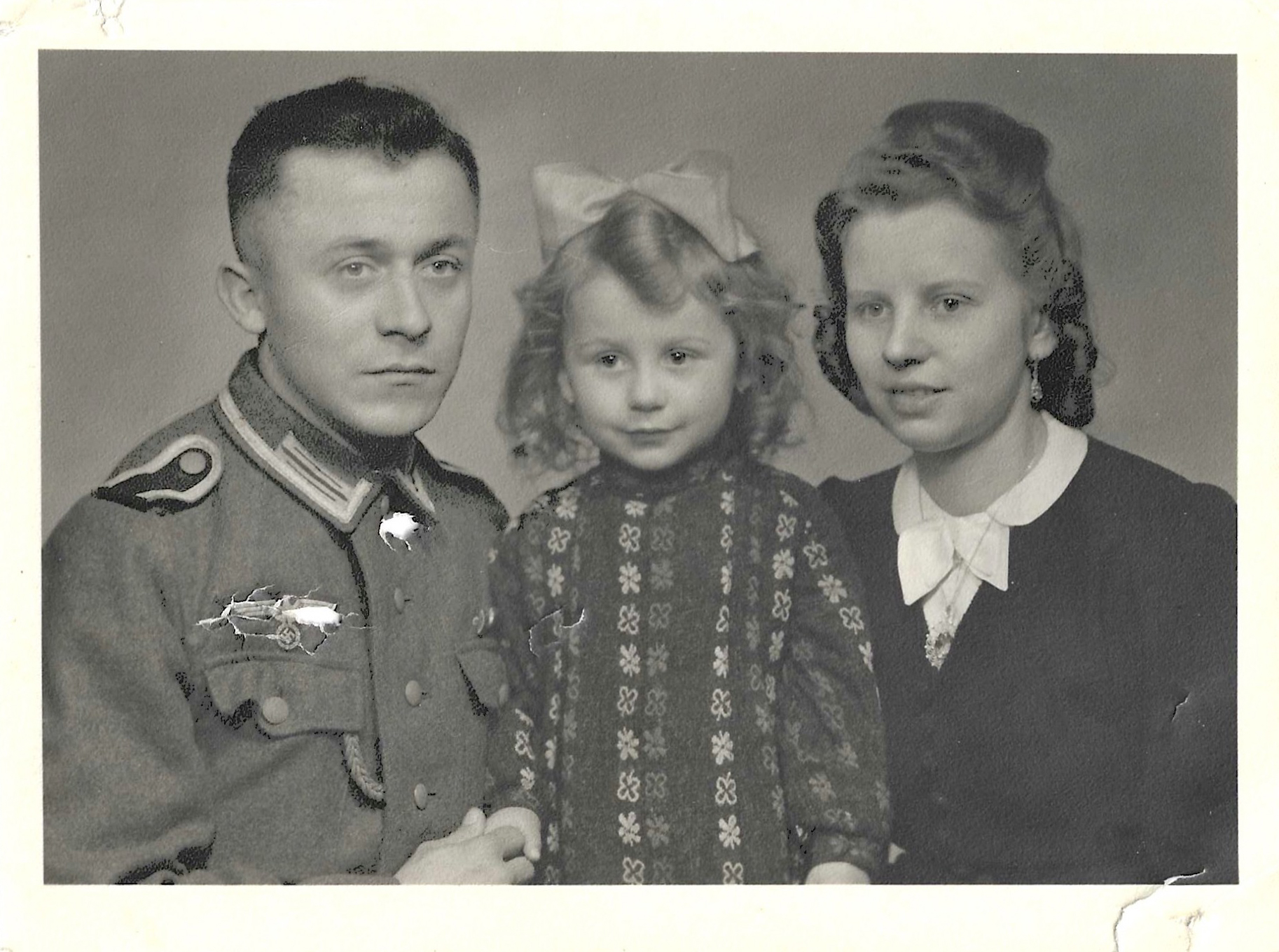
My family's most treasured heirloom is a photo. It's a typical family portrait on the surface: My great-grandpa Helmut, great-grandma "Omi" and grandma "Nana" are posing for the camera in 1940s fashion. Yet, Helmut wears his military uniform; his face is devoid of a smile, and his haunted eyes are ringed with dark circles. Omi and Nana have soft smiles that don't reach their eyes. There are two holes in the photo, one over Helmut's chest and the other his clavicle.
Photos are time machines because they freeze history, leaving you to wonder what came before and what happened after. They force us to bridge the objective physical world with our internal experiences—filling in the blanks with our imagination.
This is the last photo Nana took with her Vati and Mutti; it was taken months before Helmut went missing during a scouting mission on the Eastern Front in January 1945. His unit never returned, and my family only learned of his fate when letters stopped coming. They waited years before declaring him dead.
Weeks after he likely died, two stray bullets flew into my family's home during the Siege of Breslau in early 1945. They pierced his image—death marks. This photo represents war and loss, exodus and migration.
Helmut was conscripted into the Wehrmacht. The Mormon experience in Nazi Germany was complex because their faith didn't prohibit military service. Families split in half; while his twin sister willingly joined the Party, my family engaged in quiet dissent. Omi huddled under blankets to listen to BBC broadcasts. She visited family friends in the Judenhäuser and knew where they went when they vanished. She knew what happened 50 km away in Groß-Rosen. When Helmut visited her, he bypassed the small talk of his letters and told Omi the truth about the violence he was complicit in. Mormons knew the Gestapo monitored sectarian religious minorities closely, and they risked being reported by their own community, who would do anything to protect the congregation from scrutiny. Dissent was a severe crime against the state, punishable by death, concentration camps or worse.
One of Nana's last memories of her Vati is from around the same time this photo was taken. He was injured during the war and sent home to recover. When he didn't return on time, two officers with guns came to retrieve him. Helmut faced the threat of Sippenhaft, where the families of deserters were held responsible. The choice was his: watch his family be killed or return to the front and ensure their survival. He chose to return—a one-way ticket.
Months after the war ended, the Potsdam Conference redrew the borders of my family's ancestral homeland, Silesia. My family lived in Silesia for as long as records show, and our Polish, Czech and German roots intertwined over the centuries to become Silesian. Omi desperately wanted to stay and decided she wouldn't go willingly. After a year of watching family and friends disappear, the knock finally came for them.
This photo represents a bombed house, expulsion from an ancestral homeland and a fractured family tree: my disabled great-great-grandpa euthanized and left in an unburied mass grave by his mental institution; my great-great-grandma dead in a Czechoslovakian refugee camp; my great-great-uncle summarily executed for refusing to participate in the brutalization of Norwegian civilians; Helmut disappeared without a trace.
When Omi, Nana and my great-uncle Detlef were deported from Breslau, they exited a checkpoint where Polish officers were known to take everything but the clothes off your back. Many tried to smuggle items, but most were caught. Omi loaded Detlef's baby carriage with their remaining possessions, hiding them beneath her infant son's body. Only a serendipitous moment saved this photo: A neighbor working at the checkpoint accepted her bribe.
My family became six of the 40–60 million Europeans swept up in the world's largest refugee crisis. Omi, Nana, Detlef and Omi's mom, brother and sister-in-law were temporarily settled in a refugee camp near Leipzig. After sitting in the streets for days, they walked eight km to the station. Forty-five people were crammed into cattle cars for the 10-day journey to their new home. They were resettled in Germany's far Northwest—a people and place that felt alien. They were divided on arrival and sent to live with strangers: Omi and Detlef lived in town, while Nana went to the countryside. For years after the war, Omi felt pressured to fulfill Helmut's dream of immigrating to Utah, but she hesitated because her family and friends were in Germany. However, they boarded a ship and joined the waves of immigrants coming to America in 1953.
Growing up in Utah's Silesian diaspora, I attended parties filled with traditional food and gossip. It took years to notice what was missing: the men. The rooms were filled with matriarchs; the patriarchs were casualties of a war they were forced to fight. Their existence was reduced to photos on the wall.
Photos