
Wiktoria means Victory
About the Creator
I'm interested in art, music, and clothing design. I enjoy traveling, reading crime novels, playing the piano and guitar, playing sports, and painting. I enjoy spending time with friends.
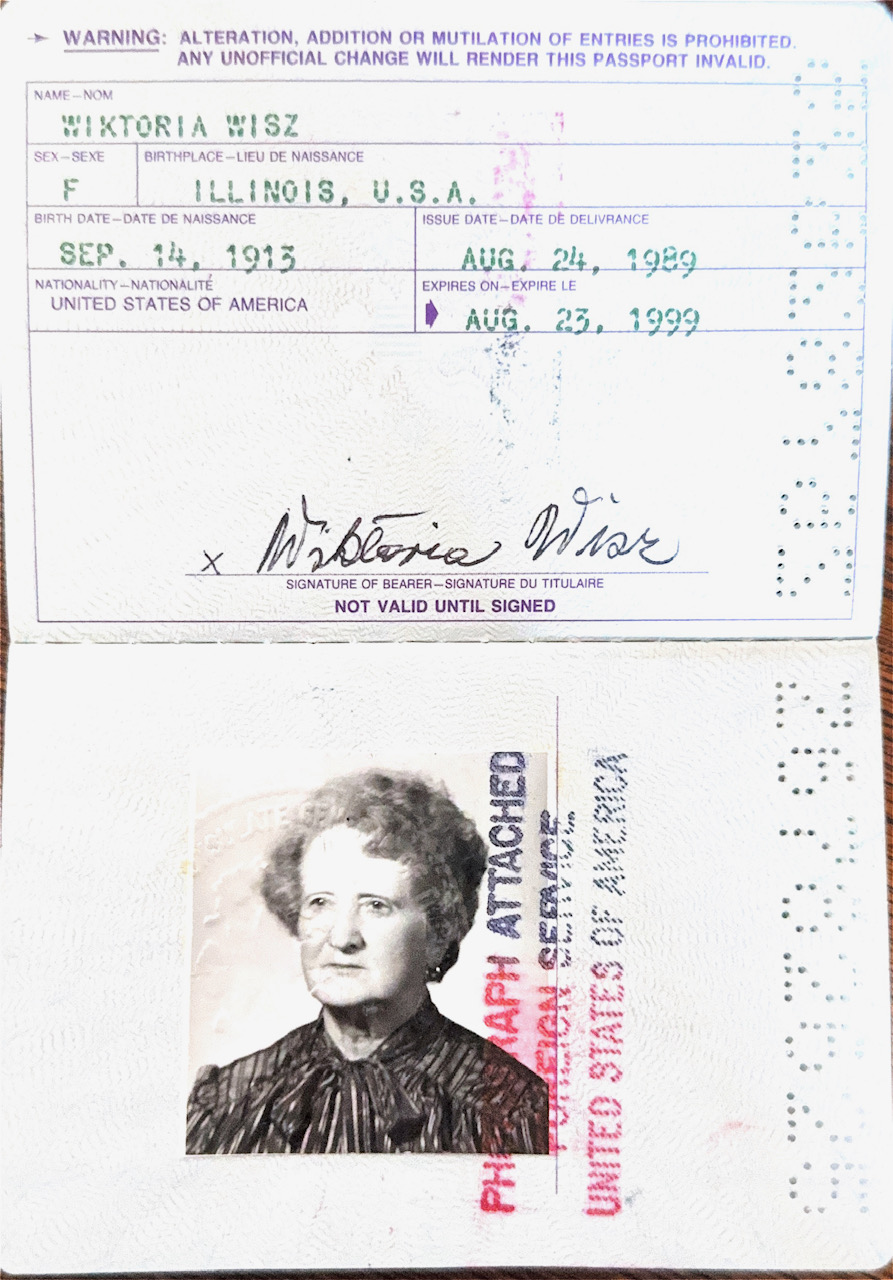
I have recently asked Dad what inspired my middle name—Wiktoria. “You were named after my grandmother,” he replied briefly. Curious, I asked him to tell me more. He then pulled one of the mysterious drawers of his desk and retrieved a dark blue passport with a photo of an older woman. “This is my grandmother Wiktoria,” he said. “Why does it say she was born in the USA?” I asked. “Because she was.” “How come? Tell me more.” We sat down as Dad began recounting the tale. My ancestors came from a small village of Strażów near Rzeszów in Galicia, in Austria-Hungary; Poland did not exist back then. To escape poverty and give his family a better life, my great-great- grandfather set out for America, leaving behind his wife and firstborn son. Their time apart grew into years, and letters came less and less often, until, finally, they stopped completely. Then, my great- great-grandmother made a tough decision. She left her son in the care of her sister and set out on her own in search of her husband. She took a train to Hamburg, where she boarded a ship bound for the USA. She found her husband, and they started their new life together in America. They had five more children, including my great-grandmother Wiktoria. In 1918, Poland regained independence, and my ancestors began to yearn for their homeland. My great-great-grandmother packed her belongings and, taking the children, came back home. For her, it was an obvious choice, for her children—not so much. Their reality suddenly changed from the lively streets of Chicago to a muddy road of Galician countryside. Riding in a wagon, they cried seeing thatched wooden houses. Wiktoria was the youngest daughter. She had already attended school in America; in Poland, she had to start from the first grade, as her command of Polish was very poor. As a result, she would often get struck with a ruler and put in detention. As she told Dad, she was proud of finishing the first grade. Bursting with joy, she ran home to show the certificate to her mom. She did not understand that the letters calligraphed on the paper read: Failed. She had to repeat the first grade, but she managed to complete her elementary education. Life moved on peacefully, and she met a boy, Alfred. Their plan to get married in September was ruined by World War II. There was no grand wedding, and on the way to the church, they had to hide in haystacks to avoid German planes shooting at civilians. My great-grandfather was well-educated. He soon joined the Home Army. As a result, Wiktoria was often interrogated; when she got pregnant, she was arrested and detained in Rzeszów Castle. She often heard gunshots coming from the courtyard. Many of her fellow prisoners never returned from their questioning. She owed her survival to her older sister Aniela, who used to run a well-prospering butcher shop before the war. Aniela bribed the guards and brought her sister food, which she then shared with others. Then, thanks to one of the neighbours lying that the child was his, Wiktoria was freed, and my grandmother was born. It was 1943. The war soon ended, but it would be years before my great-grandfather could enjoy a quiet life. Still, he was alive, unlike Aniela’s husband, killed by the Germans, or the husband of their cousin Stefania, murdered by the Secret Police. The former’s corpse was bought by his wife; the latter’s was never found, even though his wife searched for it for the rest of her life. After the war, the new powers ordered Aniela to close her business, so she decided to go back to America, the place of her birth. She later visited Poland several times, but never to stay. In contrast, Wiktoria always felt that Poland was her home; however, thanks to her sister, she could travel to the USA, first by boat and later by plane. She wanted to help her two daughters, whom her husband raised mostly on his own. With the money she earned abroad, she built a house in the countryside, the same one her mother brought her to from Chicago. Thanks to
her sacrifices, my father tasted real chocolate and oranges as a kid. It is so strange to me, as I probably have everything. Dad would often spend the winter break at his grandmother’s house. During long winter evenings, she would recount these stories. Back then, he only thought of them as fun tales. Today, he regrets he never asked her to tell him more. He was so close to her that he gave me her name, of which I am proud. Wiktoria means victory, and my great-grandmother was a victor, having won over bad times and bad people, who informed on her and her husband. She lived to be almost ninety. Near death, she returned to the times of her childhood. In the evenings, she would forget Polish and speak only in English. At a hospital, she would tell stories to doctors and nurses.
They did not speak English well enough to understand or answer why this was happening. Still, she was happy. It is a shame that she died before I was born.
Photos