Prize: €2,500 · New deadline: 1 November 2026 · Open to journalists worldwide
The year 1991 marked a turning point in European and world history. The collapse of the Soviet Union, the dissolution of the Warsaw Pact, the emergence of newly independent states and the end of the Cold War transformed the political landscape of Europe and opened a new chapter for millions of people. Building on the momentum of peaceful democratic movements such as the Baltic Way, these events reshaped societies, economies and everyday lives across the continent.
More than three decades later, the legacy of 1991 continues to influence the world we live in. How did the end of the Cold War change Europe? Which hopes and expectations were fulfilled, and which remained unfulfilled? How do the events of that year continue to shape politics, identities, communities and international relations today?
This competition invites journalists to explore the legacy of 1991 through compelling stories that connect historical change with contemporary realities. We welcome investigative reporting, feature articles, interviews, audio and video productions, multimedia projects and personal narratives that revisit the events, people and ideas that defined this transformative period.
We are particularly interested in stories that uncover lesser-known experiences, examine the long-term consequences of political transformation, and reflect on how the hopes, fears and ambitions of 1991 continue to resonate in Europe and beyond. Through these stories, we seek to foster a deeper understanding of one of the most significant turning points in recent history and its enduring impact on our present and future.

Grand Stories. Journalism Awards
The End of the Cold War: 35 Years After
How to Enter
The competition is open to journalists from all countries, including freelance journalists working with editorial offices. Participants may submit up to three original works published between 1 January and 1 November 2026 that explore the legacy of the end of the Cold War and its impact on the present day.
Entries may be submitted in one of the following categories:
• Written – newspaper articles and online publications (excluding blogs and social media posts)
• Audio – radio broadcasts, podcasts and other audio recordings
• Audiovisual – television programmes, video reports, documentaries and other video productions
An international jury will award €2,500 to the winner in each category. Winning entries will be featured on the ENRS website and promoted through ENRS communication channels.
Submission Instructions
1. Complete the online submission form by 1 November 2026 (11:59 p.m. CET).
2. Provide your contact details and confirm that you have read and accepted the Competition Rules.
3. Upload a signed consent form for the processing of personal data and the use of your image.
4. Submit your work in one of the categories listed above.
Written Category
• Upload an English translation of your article in PDF format.
• Provide a link to the published article or a scan/screenshot of the print publication.
Audio Category
• Provide a link to the published material (YouTube, Spotify, Dropbox or Vimeo).
• Upload an English transcript in PDF format.
• Provide proof of publication.
Audiovisual Category
• Provide a link to the published material (YouTube, Dropbox or Vimeo).
• Upload an English transcript in PDF format.
• Provide proof of publication.
Candidates who submitted their works by 15 Ocotber will receive confirmation of their submission by email no later than 20 October 2026. Candidates who submitted their works after this date will receive confirmation of their submission by email no later than 6 November 2026.
Read full
Competition Regulations
Regulamin konkursu
Application Form
Jury Members

Rafał Rogulski
Rafał Rogulski is the director of the European Network Remembrance and Solidarity since 2010. He studied cultural and political science at the Universities of Wrocław and Marburg, and participated in the Executive MBA programme at the Polish Academy of Sciences in Warsaw. From 2001 to 2005 he was the secretary of the Culture, Science and Information Department at the Polish Embassy in Berlin. He was an assistant and then an advisor to Professor Władysław Bartoszewski, first at the Polish Robert Schuman Foundation and the Ministry of Foreign Affairs (1998–2001), and later at the Chancellery of the Prime Minister of Poland (2008–12). In the late 1990s Rogulski worked as a journalist for the daily Życie (Life) and the bi-monthly journal Europa
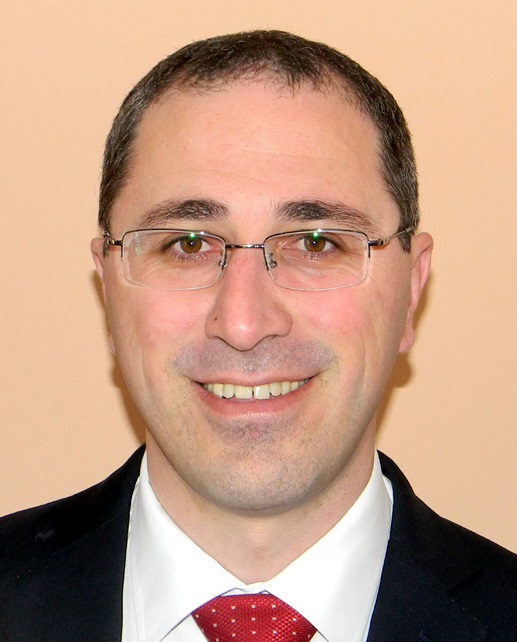
Dr Florin Abraham
Dr Florin Abraham holds a PhD and a habilitation in History and is Director of the National Institute for the Study of Totalitarianism and Associate Professor of Political Science at the Faculty of Communication and Public Relations of the National University of Political Studies and Public Administration in Bucharest. From 2012 to 2018, he also served as a member of the Board of the National Council for the Study of the Securitate Archives (CNSAS) in Bucharest. In 2016, he received the Academic Merit Diploma, the highest academic distinction awarded by the Romanian Academy. His main research interests include the modern history of Europe, totalitarianism and political communication. Dr Abraham has been a member of the ENRS Steering Committee since 2014 and coordinates Romania’s participation in the European Network Remembrance and Solidarity.

Professor Catherine Horel
Professor Catherine Horel is a senior researcher and program director at the French National Centre for Scientific Research (CNRS, Sirice UMR 8138). She is an internationally recognized expert in the modern history of Central Europe, she teaches at the University Paris 1 Panthéon-Sorbonne. She is a member of numerous international organizations, as well as the secretary general of the Comité international des sciences historiques (CISH). Her research explores the sociopolitical structures of the Hapsburg Empire, urban history, and the history of the Jews. Among her most recent books are: Cette Europe qu’on dit centrale. Des Habsbourg à l’intégration européenne (1815-2004) (Paris: Beauchesne, 2009); Catherine Horel, ed., 1908, la crise de Bosnie dans le contexte européen cent ans après (Brussels: Peter Lang, 2011); L’amiral Horthy, régent de Hongrie (Paris: Perrin, 2014); Catherine Horel, ed., Les guerres balkaniques 1912-1913. Conflits, enjeux, mémoires, (Brussels: Peter Lang, 2014).

Dr Anna Kaminsky
Dr Anna Kaminsky has served as Director of the Federal Foundation for the Study of the Communist Dictatorship in East Germany since 2001. She studied Romance languages at Leipzig University and received her PhD in 1993 for a dissertation entitled Language in Politics: The Case of the Catalan Political Movement, 1898–1917. She subsequently worked on a number of research and exhibition projects at institutions including the University of Münster, the Sachsenhausen Memorial and Museum, and the German Historical Museum. From 1998 to 2001, she was a research associate at the Federal Foundation. Dr Kaminsky is the author of numerous publications on everyday life and consumer culture in the German Democratic Republic, as well as on cultures of remembrance from national and transnational perspectives. She is a member of several academic advisory councils and boards, including those of the Berlin Wall Foundation, the Berlin-Hohenschönhausen Memorial, the Leistikowstraße Memorial in Potsdam, the Foundation of Memorials in Saxony-Anhalt and the Ettersberg Foundation. She is also a member of the Honorary Group of the Baltic Initiative and Network of Cold War Museums, as well as of Estonia’s national initiative to establish a memorial to the victims of communism.

Keith Lowe
Keith Lowe is the author of several books on Second World War history and memory, including the international bestseller, Savage Continent: Europe in the Aftermath of World War II. His most recent book, Naples 1944, is a detailed study of the social and economic effects of war on a single city. His books have been translated into 24 languages. He is a Fellow of the Royal Historical Society, and serves on the Historical Advisory Board of the LRE Foundation. He lives in London with his wife and two children.

Dr Małgorzata Pakier
Dr Małgorzata Pakier is Head of the ENRS Academic Section. She is a member of the Social Memory Laboratory at the Institute of Sociology, University of Warsaw. Pakier received her PhD degree from the European University Institute, Florence, History and Civilization Department. Between 2011 and 2017 she was head of the Research and Publications Department at the POLIN Museum of the History of Polish Jews. In 2010 she was a Research Fellow at the Center for Advanced Holocaust Studies at the US Holocaust Memorial Museum, Washington, DC. She is the author of ‘The Construction of European Holocaust Memory: German and Polish Cinema after 1989’ (Frankfurt/M. 2013) and the editor of ‘A European Memory? Contested Histories and Politics of Remembrance’ (with Bo Stråth; Oxford-New York, 2010, 2012) and ‘Memory and Change in Europe. Eastern Perspectives’ (with Joanna Wawrzyniak, Oxford-New York 2015). Her academic interests include: Europeanization of memory, Holocaust representation, social/cultural memory, museum studies, film, and recently Jewish involvement in the communist movement in Poland from a biographical perspective.

Magdalena Żelazowska
Magdalena Żelazowska is Head of the ENRS PR and Communications Department. She graduated from the Institute of Applied Linguistics at the University of Warsaw. Before joining ENRS she managed Polish Tourism Organisation’s office in New York. In Poland she worked as Marketing Manager at HarperCollins and international media companies, including Interia.pl and Bauer Media Group. She has a passion for writing and journalism, her books were published by National Geographic and other publishers.
Questions?
If you have any questions about the competition, the submission process, or technical issues related to your application, please contact the ENRS team at:
cold-war-stories@enrs.eu
We will be happy to assist you.
Organiser