Perceptions of Nazi Crimes in the Federal Republic of Germany and Western Europe
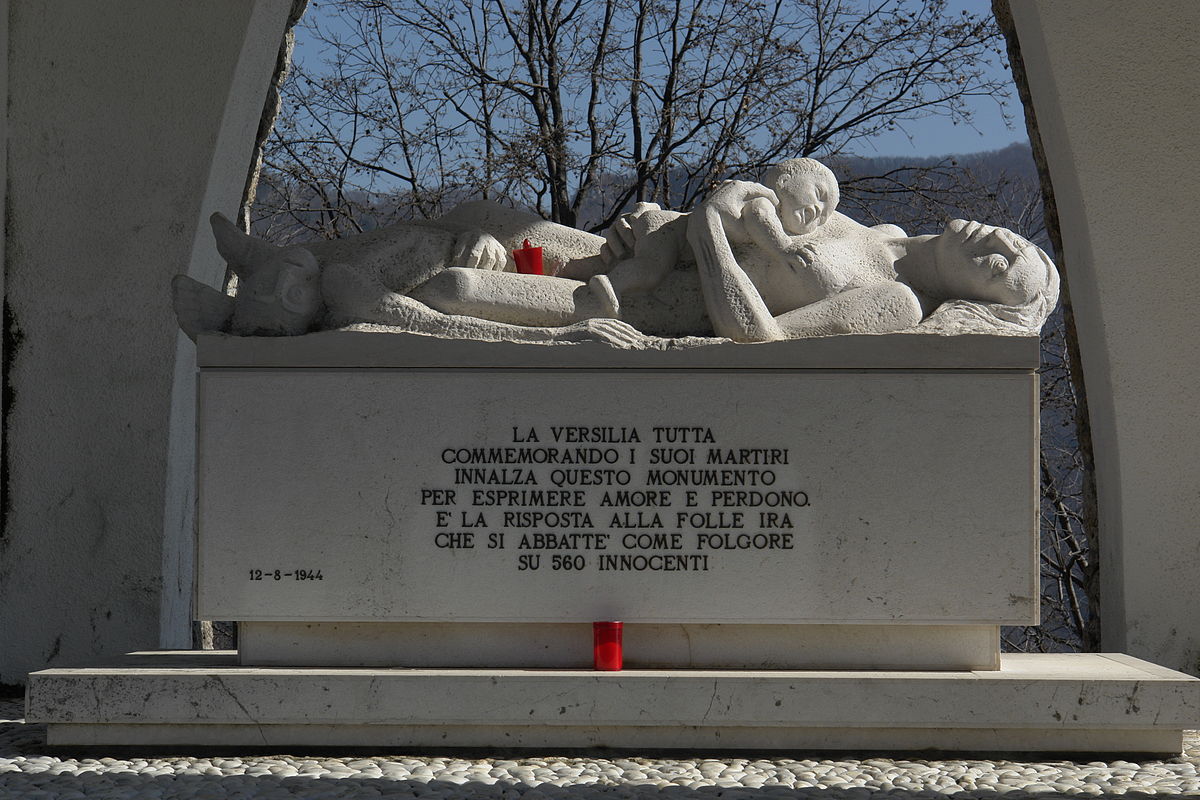
Almost seven decades have passed since the beginning of the Second World War. If we were to attempt to take stock of the forms and traditions in the different West European countries during this period which developed with the aim of preserving the memory of the victims of criminal Nazi policies, we would be left with a complex picture which has continually changed over time. But despite the national differences, two constants must be mentioned which emerge for all of Western Europe. Firstly, it took several decades before the genocide of the European Jews and the fate of the various national Jewish populations were truly acknowledged and investigated by historians.
Only a few Jewish survivors from Western European countries returned to their countries of origin from the extermination camps. And more decades passed before their personal testimonials and painful memories were accorded sufficient and appropriate space within their national cultures of remembrance. The topic only began to attract worldwide attention in the 1970s, starting in the USA and Israel. This was followed by the gradual emergence of a public discourse in individual Western European countries about the fate of their own Jewish populations.
Secondly, a further two decades passed before the realisation also prevailed in Western Europe that the majority of crimes in the Second World War were carried out by Germans and their collaborators in Eastern and Central Europe. And only very late in the day was it acknowledged that the overwhelming majority of victims, both Jewish and non-Jewish, were from Central and Eastern Europe. Of the approximately 68,000 inmates of the Dachau concentration camp who were either in Dachau, in one of its satellite camps, or on one of the forced evacuation marches when the camp was liberated in April 1945, around 18,000 came from eleven different Western European countries. Apart from the German inmates, the most numerous national groups were the French, Italians, Belgians and Dutch. And even in the “cosmos” of Dachau, only a few Western European Jews had survived to the end of the war.
After their return to their native countries of France, Belgium, the Netherlands, Luxembourg, Denmark or Norway, surviving resistance fighters were held in high honour and – if their health permitted and they so wished – were politically and socially integrated. In France as in Belgium, Denmark or the Netherlands, for many decades official and public remembrance focused on the heroic patriotic resistance against the German occupiers. Neither the collaboration of Vichy France with Nazi Germany nor the conflicts in linguistically and culturally divided Belgium where there had been a strong Flemish fascist union were initially topics for public discussion or historical research. Similarly, in the Netherlands, the pervasive attitude to occupation had been indifference rather than resistance, coupled with numerous instances of collaboration with the German occupiers. The respective situations in Spain, Greece, Italy and the United Kingdom differed from those of the rest of Western Europe:
In Spain, the Spanish victims of the national-socialist terror only came to national public attention in the last few years, as a discussion gradually developed about the history of the crimes committed during and after the Spanish civil war. Previously these events had been shrouded in silence, even after Franco’s death. In Greece a democratic society only developed after the years of military dictatorship between 1967 and 1974 were overcome. It took a further 20 years before Greek society began to examine the history of Greece during the Second World War and the subsequent civil war. Memory in Italy was also divided. The legacy of the long years of fascism under Mussolini and of the years 1940–1943, during which Italy fought alongside Nazi Germany as its ally were suppressed. Atrocities committed against the neighbouring Slovenes were not mentioned nor were Mussolini’s racial laws which had forced foreign Jewish refugees to leave Italy long before the deportation of the Italian Jews by the Germans. In the United Kingdom it took a long time before the national-socialist murder of the Jews attracted much public notice or interest. Only in the 1990s did the men and women who had been sent to England from Germany and Austria in the “Kindertransporte” of the 1930s began to publicly tell their stories. And only in 2000 did the Imperial War Museum, the most important national memorial institution, open its own exhibition on the Holocaust.
In Germany after the unconditional capitulation of Nazi Germany on May 8, 1945, the Allies immediately began to prepare for proceedings to be held in front of military tribunals. These trials aimed to call the responsible persons in the NSDAP, the SS, and the government of the Third Reich, as well as persons in industry, the sciences, the judiciary, the medical community and the Wehrmacht to account for their criminal acts. On November 15, 1945 the first big trial in front of a military tribunal commenced against 40 persons accused of crimes committed in the Dachau concentration camp. The proceedings were held on the site of the former concentration camp of Dachau. This trial became a model for 489 subsequent proceedings held against a total of 1672 accused persons. Trials continued until the year 1948. However, the American Dachau Trials were overshadowed by the Trial of the Major War Criminals held before the International Military Tribunal in Nuremberg, which attracted worldwide interest due to its widespread international coverage by the media. But in Germany, the majority of the population responded to all trials conducted before Allied tribunals and courts with indifference or even outright rejection. The German population was preoccupied with the daily struggle for survival amidst the ruins, with obtaining shelter, housing and food. Millions of refugees and displaced persons needed to be housed and fed. The trials were viewed as the business of the victorious Allies. The attempts by the occupying powers, in particular by the Americans, to confront the Germans with the atrocities they had committed and to educate them with the help of denazification programmes to become democrats elicited only apathy and indifference. While the population was quite aware of the extent of the military defeat, the moral catastrophe and the legacy of barbarism was not acknowledged.
The historian and political scientist Helmut König, who currently teaches in Aachen, differentiates between four different phases of dealing with the national-socialist past in the Federal Republic of Germany:
1. The immediate post-war period up until the creation of the Federal Republic of Germany, a period in which the occupying powers called the shots. In addition to the trials which aimed to confront and deal with the committed crimes, a number of reports and recollections of persecution and resistance were published, none of which had any particular impact on German society in general.
2. The 1950s and the so-called Adenauer era, characterised by the silence surrounding the National-Socialist crimes. The East-West conflict and the Cold War also affected the examination or discussion of national-socialism. To integrate the Federal Republic of Germany into the western alliance, convicted criminals were amnestied and released from prison and former elites of the Nazi state were rehabilitated.
3. The long 30-year phase from 1960 to 1990, during which a gradual but profound change took place in the perception and reception of national-socialist crimes in Germany. Their importance for German post-war society was acknowledged, and the “break with civilisation” which Auschwitz constituted was explored and discussed. The Eichmann Trial of 1961 in Jerusalem and the Frankfurt Auschwitz Trial of 1963–1965 led to a more general reflection on the political and moral dimensions of the national-socialist genocide for the Federal Republic of Germany. In the mid-1970s numerous initiatives were launched by private citizens in an attempt to research their local history during the Nazi period. And the topic was accorded an increasingly important place in education and research.
4. The new Federal Republic after the political upheavals of the year 1989. After the unification of Germany, public discourse focused on the official policies surrounding the teaching of history in the former GDR and on the necessity to develop new concepts of memorialisation for the big memorials in the former concentration camps Buchenwald, Sachsenhausen and Ravensbrück. And as the European Union continued to expand, the context of the discussion also expanded. The year 1995 marked an apogee in public remembrance as numerous events were held in all European countries to commemorate the 50th anniversary of the end of the Second World War and the liberation from national-socialist terror. In the ensuing years, the public discourse was largely defined by the comparisons made between the two German dictatorships. Today, 75 years after Hitler and his followers seized power in Germany, the time when people are still alive who can personally remember and bear witness to the atrocities is drawing to an end. However, the transnational discourse between Western, Central and Eastern European countries has only just begun.
translated from German by Helen Schoop