
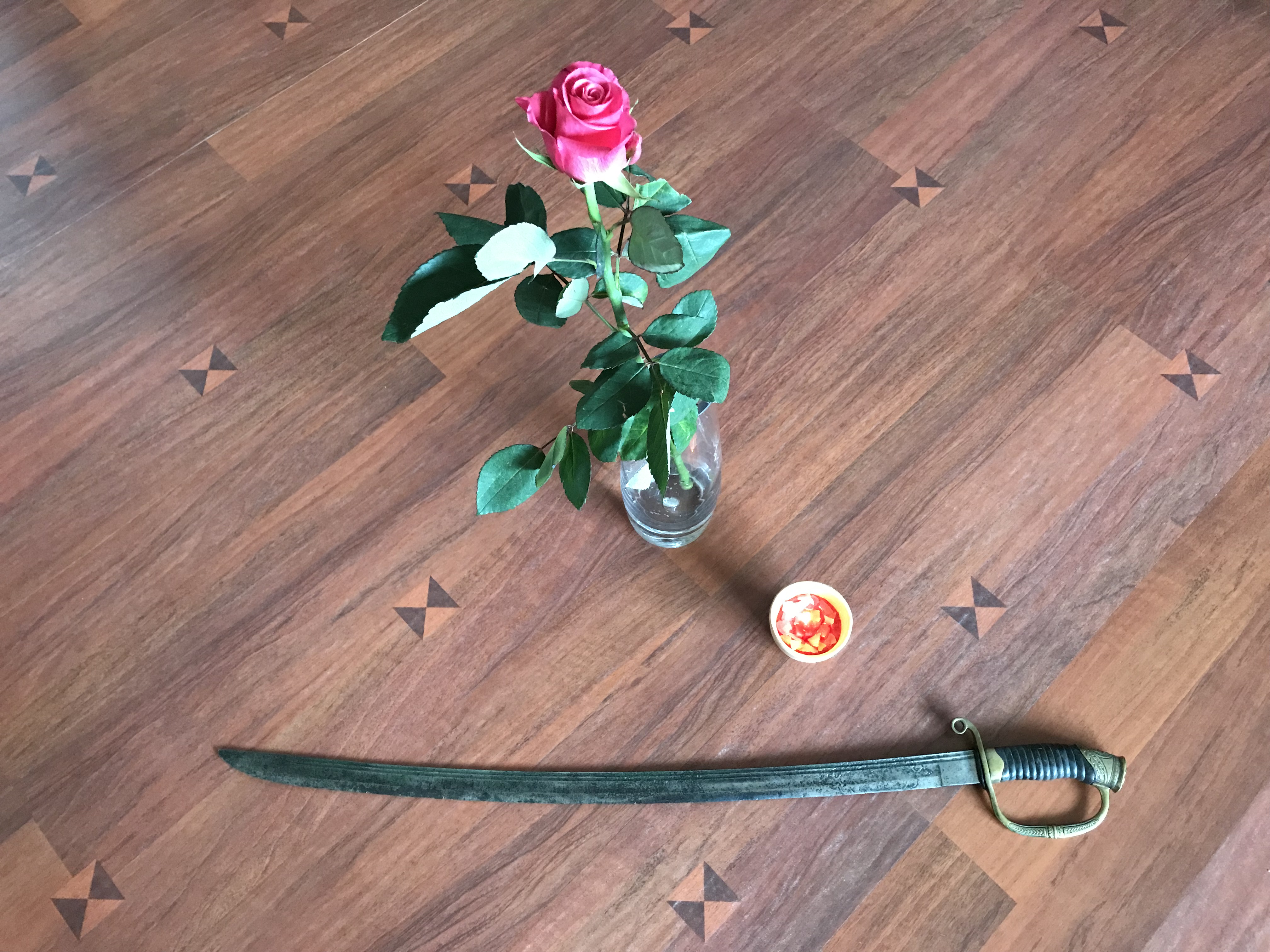
Great-Grandfather’s Sword – A Symbol of Freedom
About the Creator
My name is Lembit, I am 18 years old, and I study in the 12th grade at Kose Gymnasium. Outside of school, I am very active in sports — I play football, practice Muay Thai, and work out at the gym. Soon, I will also attend a youth football coaching
Our family’s historical treasure is a sword — not merely an old weapon, but a silent witness to the time when the Estonian state was just being born. It belonged to my great-grandfather, Vassili Kask, and accompanied him during the Estonian War of Independence in 1918–1920. At that time, swords were carried primarily by higher-ranking officers; they served both as weapons and as symbols of rank and responsibility.
The sword belonged to my grandmother’s father, who was born on December 31, 1896, on the small island of Muhu. At the time of his birth, Estonia was still part of the Russian Empire. Vassel, as he was affectionately called at home, graduated from the Kuressaare City School (1912–1914), then from the Kyiv Ensign School in Ukraine on October 1, 1916, and after the War of Independence, he completed his studies at Õisu Dairy School back in his homeland.
During the First World War, from 1915 to 1917, he fought in the army of the Russian Tsar, defending under compulsion the interests of a foreign empire. From 1918 to 1920, he took part in the Estonian War of Independence, in which the newly established Estonian state fought against Russia and Germany to preserve its independence. Small nations also have the right to exist and to decide the fate of their own state and people, though this is often a thorn in the side of larger and more powerful neighbors.
During the War of Independence, he served in the Kuperjanov Battalion as a company commander, holding the rank of captain. My great-grandfather was awarded the Cross of Liberty (VR II/3) for personal bravery, but unlike the sword, this decoration was unfortunately lost during the turbulent times that followed.
After the War of Independence and completing his studies at Õisu Dairy School, he worked on Muhu Island as a dairyman and merchant. He was the head of the Muhu unit of the Estonian Defence League and a member of the League of Veterans of the War of Independence. In recognition of his service, he received a plot of land in Virtsu from the state, where he had a house built for his parents. This farm complex — the house, the large stable building, and the granary — still stands today and remains an important link for our family to our past and our roots.
His active role in the Defence League and his military background ultimately proved fatal. In 1941, after Soviet forces had occupied Estonian territory, Vassili Kask was arrested in his home on February 24 and sent to a prison camp in Solikamsk, Perm Oblast, Russia, where he was executed on May 7, 1942.
Vassili Kask’s family — his wife and three children — were arrested and deported to Siberia on June 14, 1941. Their property was confiscated by the Soviet Union and their house looted by local villagers. Their newly built home in Liiva village — the first two-story house on Muhu Island — was set on fire by
local communists. Amid all this destruction and chaos, it is remarkable that my great-grandfather’s sword survived. It was discovered in the late 1990s, hidden in cloth in the loft of the granary at the Virtsu farm.
When it was found, the sword was in poor condition — decades in unfavorable circumstances had left their mark. Thanks to the skill of specialists, the sword was restored to its original appearance. For many years, we brought the sword to a place of honor only once a year — on February 24, Estonia’s Independence Day — when our family gathers to celebrate the birth of the Republic and to honor the memory of my great-grandfather who fought for its freedom.
February 24, 2022, gave the sword an additional meaning, as on that very day Russia launched its full-scale war against Ukraine. Since then, the sword has symbolized for us not only Estonia’s past and hard-won freedom, but also hope and faith in Ukraine’s freedom.
Our family decided that the sword will remain on display for as long as the war in Ukraine continues. This old weapon reminds us daily of how fragile peace is and how high the price of freedom can be. We must understand and remember that every day lived in peace is a blessing, not something to be taken for granted.