
Anatomy of Resistance
About the Creator
I'm a high school student from the Southwest of Spain. I am part of the association Ruta al Exilio and have participated in one of their summer camps, as I'm deeply interested in democratic memory.
Family pictures might be one of the most treasured objects a household can have. Something that might seem mundane to someone else can be the most prized possession another person can have. Even more if it gives a retrospective look into a country’s history.
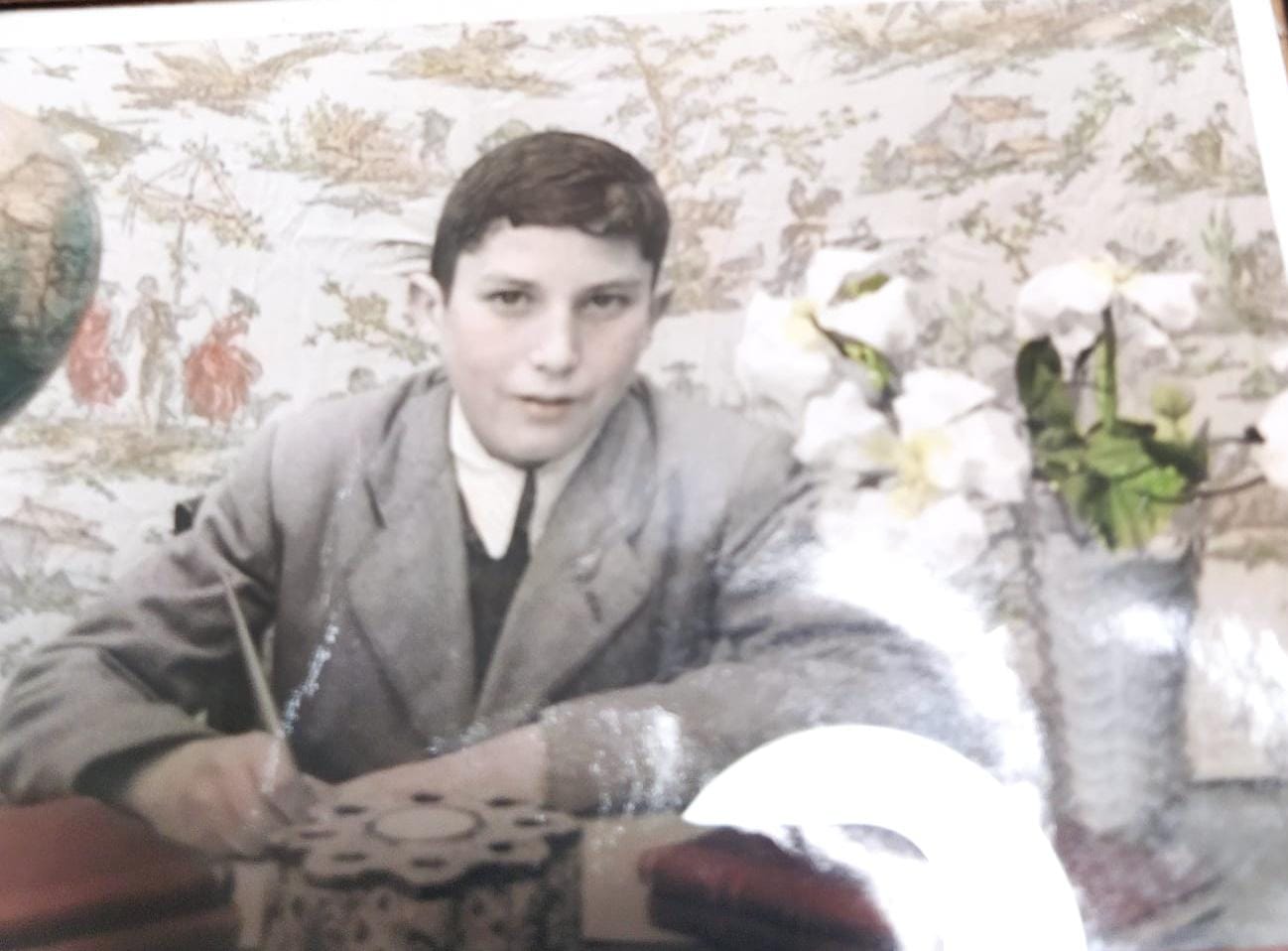
My chosen object is a photograph. These specific kinds of photographs were taken while children were in school, as once every few years, a photographer would come and get a shot of each student, with a classic, average background known to almost everyone in Spain. It was taken during the 1940s, not long after the Spanish Civil War had ended, when people were still getting used to the new dictatorship that would last decades, and the systematic repression that came with it. The subject in the picture, my grandfather, Lucas, lived in a village called Valdecaballeros, in the Southwest of Spain. His region is commonly called “the Siberia¨, as its landscape might be the exact opposite of Russia: extremely warm and dry, albeit still vast.
Valdecaballeros, like his region, did not quickly fall after the coup d'etat in 1936; there was a strong Republican feeling among everyone, including my great-grandfather. However, after strong battles in 1938, both in Valdecaballeros and the neighbouring town, Casas de Don Pedro, the Nationalist faction ended up taking the land, the same year my grandfather was born. My great-grandfather, Juan, was sent to jail for fighting against the rise of fascism in the wrong place, at the wrong time. He and other combatants were given the death penalty. Juan was lucky enough to have a friend who supported the regime, releasing him from prison. However, he wasn’t to return to his hometown, where he had spent all of his life: he had to stay in Brunete, a small village in Madrid.
The boy in the picture looks like a kid you could find in a park today. He is handsomely cute, the way children tend to be when they are still clueless about the world. He was, though, a child without a father. A child who was growing up in post-war Spain, a child who didn’t yet understand the absence of his dad (as he was rarely spoken about), but felt it loudly in his house. However, in these situations, silence means more than a thousand words. Republican families in Valdecaballeros and many other regions lived with fear every second of their lives, as repression against the families of those who had been jailed or killed wasn't uncommon.
My great-grandfather was allowed to return eventually to his hometown years later, but his family never recovered. How can someone ever get over having their father taken away for reasons everyone seems to understand but no one dares to say? How can anyone justify such violence that didn’t stop when Franco gained power? Moreover, it wasn’t just violence, but decades of repression and isolation of our own country from the rest of the world.
Decades later, in 1981, my grandfather and his brothers, now involved in the Socialist Party in Valdecaballeros, had to relive this same fear. On February 23rd, another attempt at a coup d’etat happened, reminiscent of the one 45 years before. My father has always told me how that was a solemn day in his house, his dad scared of seeing history being repeated in front of his very own eyes. Fear works that way: it can be buried and seemingly forgotten, but reappears when one least expects it.
This picture, like many others, is now treasured in my grandma’s photo album, still in Valdecaballeros. Like everything that is in there, it shows a glimpse of what life was like back then. However, everything is more nuanced than it seems. A photograph in the backdrop of a post-Civil War period might not seem like an act of resistance, but it is (it always is): daring to exist in a land that is no longer yours, a land that was taken away by the so-called Nationalists - what kind of nationalism is rooted in fighting your countryman, anyway?
History dwells in objects, even more so in the ones which apparently do not have much to show. And that is resistance.