


The life and work of Costin Corciovă
About the Creator
I am passionate about history and genealogy. I always search for stories from the past to know my ancestors better than I did before.
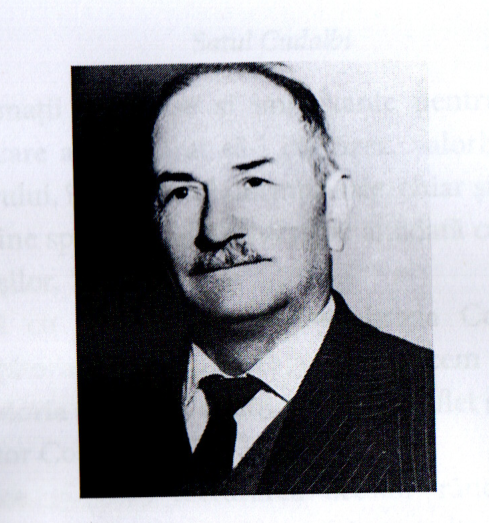
There were intellectuals in my grandmother's family who contributed greatly to the local development of the Cudalbi commune, where I live. Here I will present her uncle, Costin Corciovă, who wrote a monograph of the village of Cudalbi in 1967.
He was born in 1903, as the eldest son of Enache and
Paraschiva Corciovă. He studied at the village school,later becoming a teacher after completing his studies. He was also the director of the secondary school in Munteni during the Second World War.
Regarding local history, he wrote a monograph of the Cudalbi commune, which serves as an identity card of my locality, where aspects of culture, history and traditions are incorporated.
Regarding agriculture, according to his work, it especially evolved gradually, being modernized in the 20th century. The lands were divided from generation to generation, reaching the point that in the 20th century the fields of the Cudălbeni were so fragmented that some were 20-30 ares, and the Cudălbeni was put in the position of possessing numerous lots of this kind, known as "răzoare". The division of the lands into răzoare had a negative effect on the profitability of the soil, human work being made difficult by the too great distance between the răzoare, reaching the point that the răzoare became fallow.
In the past, the Cudălbeni used the wooden plow and the iron knife to work the land; the iron plow, with animal traction, with one or two furrows, was introduced in the 19th century. Starting with the 20th century, the cereal threshing machine appeared in Cudalbi, that is, a threshing machine in the style of those existing today, but moved by a steam locomotive, reaching the point that in the 30s-40s there were 3-4 threshing sets in Cudalbi, traditional methods gradually becoming a thing of the past. Also, after 1920, the animal- drawn thresher appeared, and in 1930, tractors with plows with 3 knives appeared in Cudalbi.
It also presents the 5 places of worship, 4 churches and a monastery, the oldest church being the Church of Saint Parascheva, built in 1855.
The traditions mentioned in the monograph written by him refer to funeral customs, such as "bocetul", that is, lamenting the deceased, wedding customs, such as "iertăciunea", a prayer through which one asks for forgiveness from one's parents before the wedding. It also presents the custom of Christmas carolling, of "mersul cu capra" and "cu ursul", "cu plugușorul", through which the coming of the New Year is announced. It also presents local crafts, such as "weaving", through which carpets, clothing and household items with traditional Romanian motifs were obtained.
In other circumstances, he was involved in the revolt against collectivization in 1958, which took place in Cudalbi. He was arrested for opposing the collectivization of the land, which brings honour and dignity to my predecessor, even if he is not in the direct line.
In conclusion, Costin Corciovă's personality stands out through the work that he left as a legacy to the inhabitants of Cudalbi commune, being a man who advocates civic spirit and dignity.