
The Sewing Machine
About the Creator
My name is Lidia Szymańska, I am 14 years old, and I am in the 7th grade of primary school in Pieszyce. The story I described was told to me by my grandfather, Zdzisław.
The sewing machine had been a permanent feature of our home for as long as I can remember. There was nothing surprising about that. My mother was a seamstress by trade, and only the complicated post-war fate of many Poles meant that she sewed only in the spare moments she could find between her duties on our small farm.
But let me begin at the beginning. As a young girl, she attended a four-grade public school in Panasówka, in the Skałat district of the Tarnopol Voivodeship. The fact that it was called a “four-grade” school did not mean that children completed their education after four years. They actually attended it for seven years, repeating the second, third, and fourth grades. Finishing such a school did not qualify a student to apply to a gymnasium. It was considered an “incomplete” education. In order to receive a “complete” education, one had to finish all seven grades of a public school.
For parents, one of the greatest concerns was ensuring that their child learned a trade that could provide a living in the future. Boys were therefore sent to apprenticeships with shoemakers, blacksmiths, carpenters, and other craftsmen. Girls often learned the trade of tailoring, since it almost guaranteed some form of livelihood later in life. That did not mean, however, that after learning the craft they would sew elegant garments for fashionable shops or wealthy ladies. In most cases, tailoring consisted of turning old clothes inside out to renew them, patching worn garments, remaking damaged clothing into outfits for children, and only occasionally sewing a dress or a suit from a piece of fabric bought in a shop after many weeks of careful saving.
The 1920s and 1930s in Galicia and Lodomeria differed little from the years under the gracious rule of Emperor Francis Joseph I. In the countryside especially, poverty was widespread, and people were mainly preoccupied with ensuring that there was enough to eat.
After finishing school, her father—my grandfather Michał, who made all the decisions in the household—went to see an acquaintance who was a tailor to discuss taking his daughter on as an apprentice. A long conversation awaited him, or rather a lengthy negotiation. No one taught a trade for free. The Jewish tailor who ran the workshop had a large family of his own to support. Eventually they reached an agreement. To begin with, my grandfather had to pay three centners of wheat and a small amount of cash to equip his daughter with basic sewing tools.
From then on, Leonka—my future mother—ran every day to the workshop to learn the trade. At least that was what it was called. During the first year she was more of a servant than an apprentice. That was simply the custom at the time, and no one found it unusual. Only after a year, when another girl arrived, did the real training begin. The tailor specialized in heavy tailoring, sewing and altering autumn and winter clothing. For a frail young girl it was demanding work. When she returned home, she was often unable to do anything because her fingers hurt so much. In time she grew used to it, her hands became stronger, and sewing eventually became second nature to her.
After completing her apprenticeship, she returned home. My grandfather could not afford to buy her a sewing machine. Help came by chance. The tailor ordered a new machine and passed the old one on to a trader, agreeing on a price. While unloading it from the cart, the old machine fell onto the pavement and its base broke. “Who will want it now?” the trader lamented as he carried it back to the tailor.
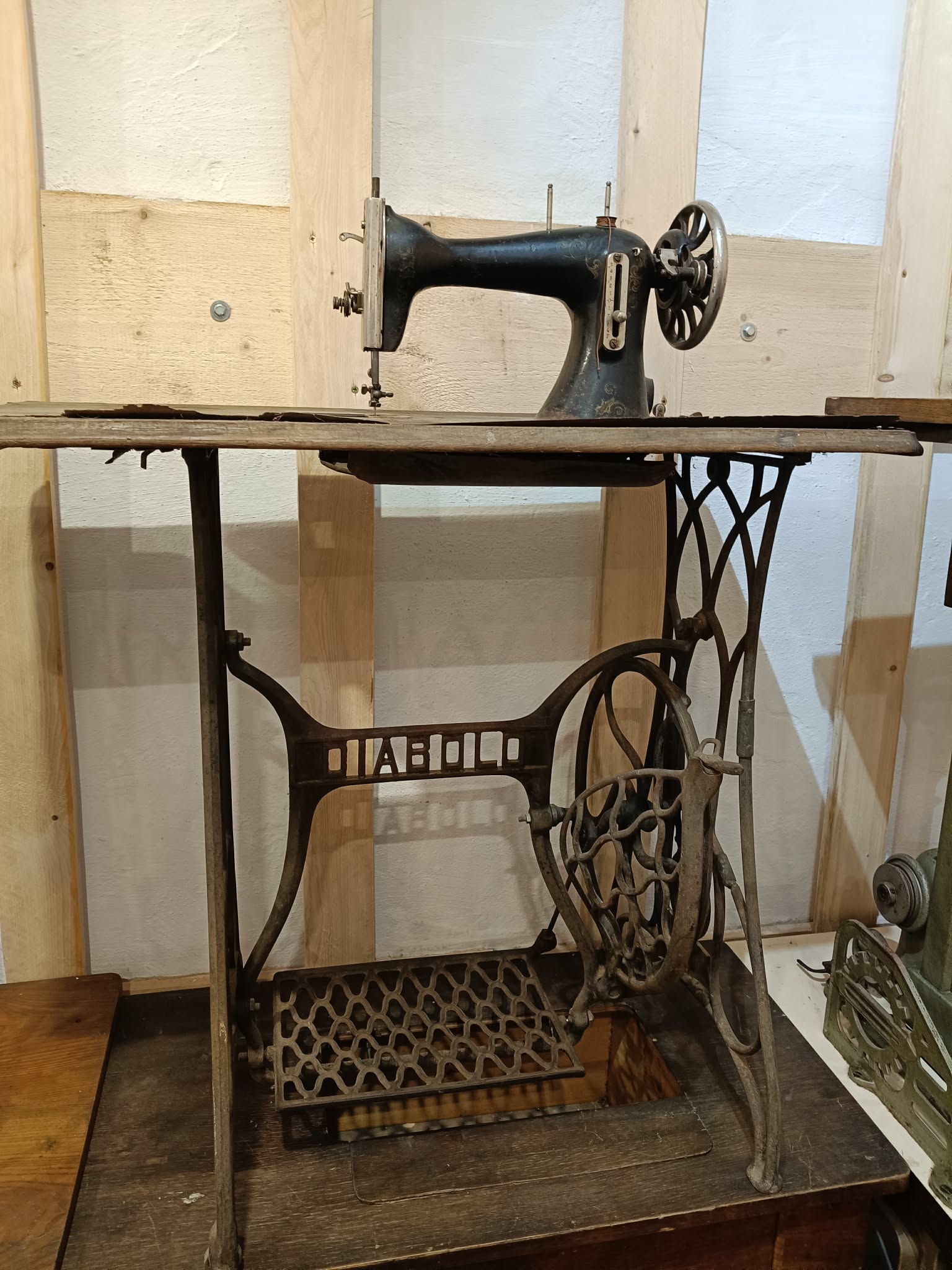
A young bachelor who often visited the very young Leonka—my future father—heard about the accident. He bought the broken machine, a DIABOLO brand, and within a week it was standing on its feet again. From thick copper sheet he fashioned clamps, drilled holes, and riveted them at the broken points. The machine could serve once more.
Then the war broke out. My father went to the front and never returned to his home. Leonka and her mother-in-law—my grandmother—found themselves on the other side of the Bug River.
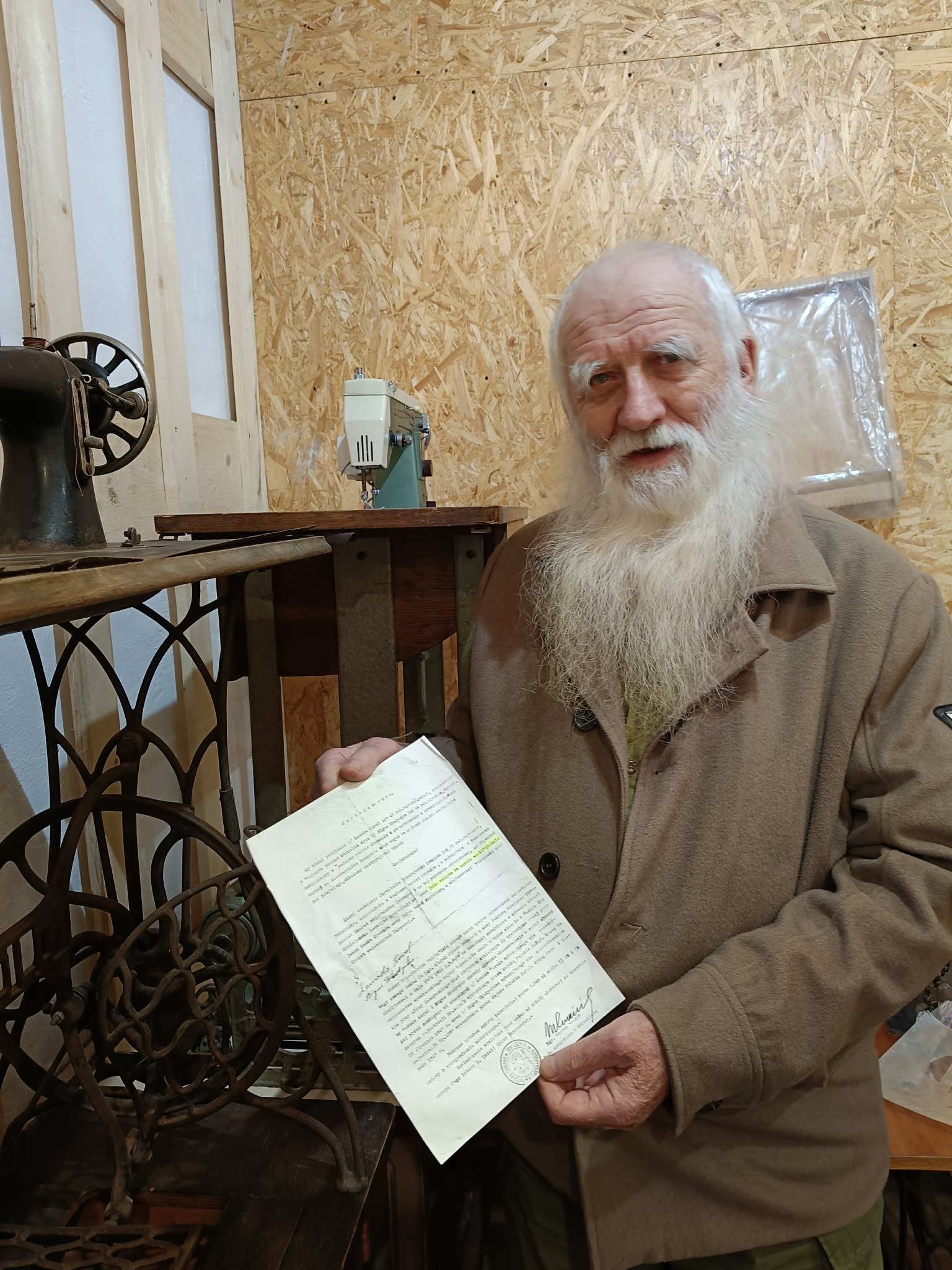
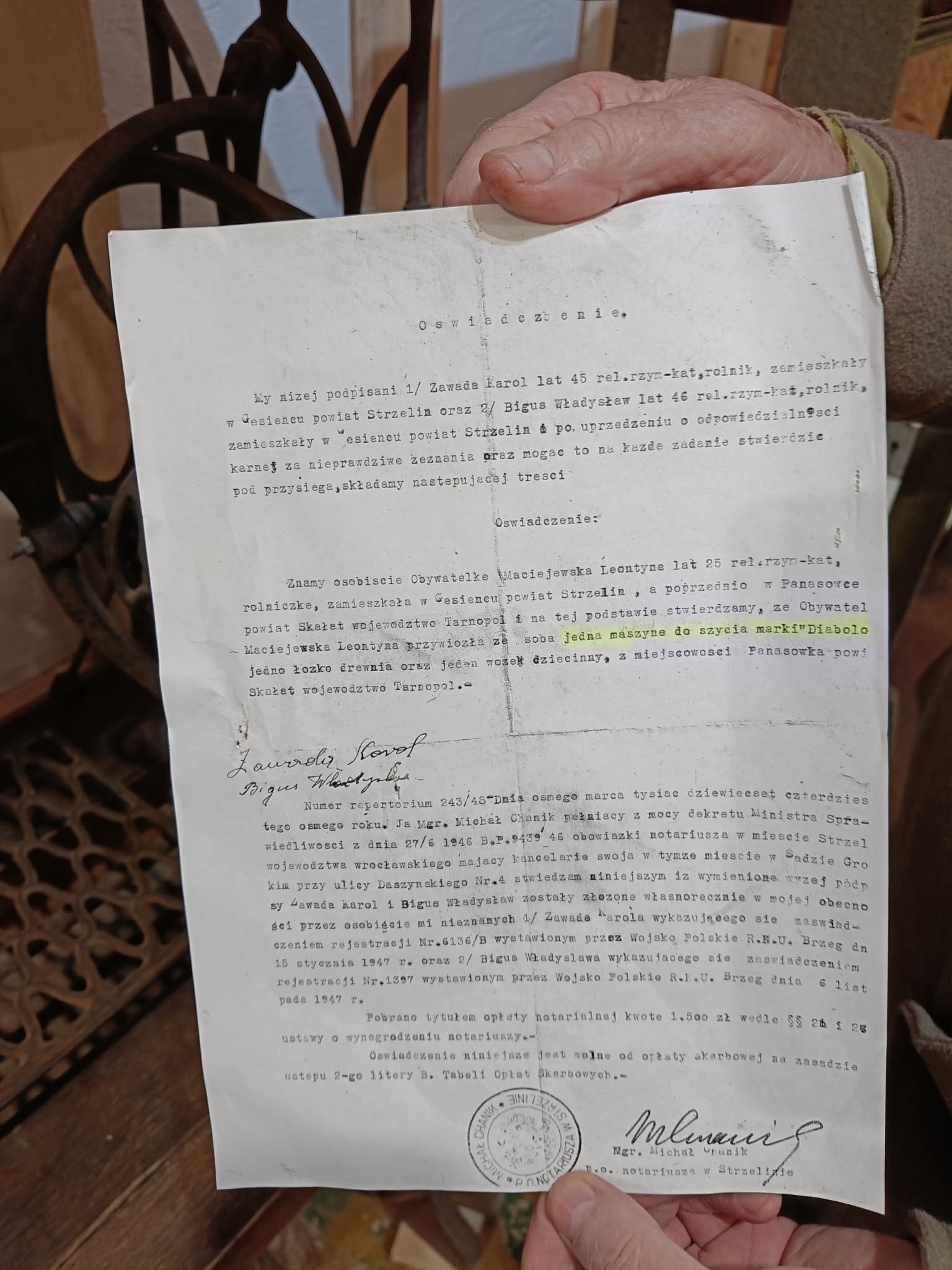
In 1946 they came to Lower Silesia. The most valuable thing they brought with them was the sewing machine, which proved extremely useful in those difficult post-war years. There were days when our room—because we had only a room with a kitchen—was completely covered with scraps of fabric, threads from removed basting stitches, buttons, and all sorts of other things. On such days I had no access to the machine. When my mother was busy with something else, I would sit on the pedal that powered it and try to swing on it. It never worked very well, because the frame of the stand always got in the way.
Before my mother began sewing, my father would service the machine, carefully dismantling its parts and lubricating them with spindle oil. By then it was already an old machine and required special care.
My mother has been gone for sixty-five years. My father outlived her by thirty years, and the machine remained with us all that time, though it was no longer used. Eventually it ended up in the attic. Yet I always remembered it, because in some way I associated it with my mother. I worried that my grandchildren—or perhaps one day my great-grandchildren—might simply throw it away as scrap metal.
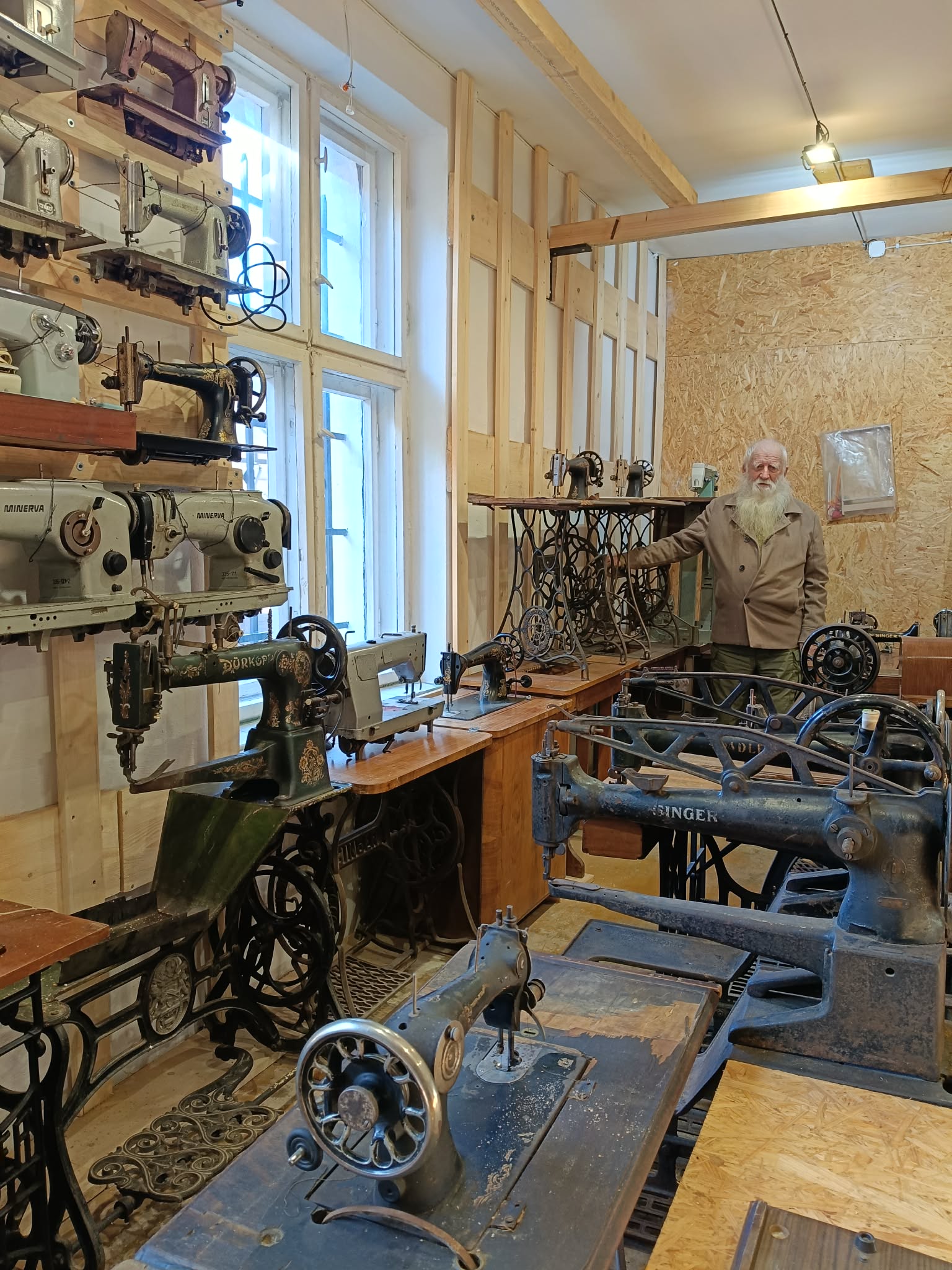
In the end, the matter resolved itself. In nearby Kamionki, Mr. Józef Przeorek established a museum in the buildings of a former textile factory. The machine found its place there among several dozen others—some very old, like my mother’s, and others from the post-war years.