
Sylweriusz Bohdan Zagrajski - the Hero of my Childhood
About the Creator
Witold, United Kingdom
You were like a great, ancient tree, my nation, like a bold oak, Swollen with the anger of ripened sap, A tree of faith, of strength, of wrath.
And they began to plough you, and carve you with a stylus at the roots, to change your voice, your shape, To turn you into a nightmare’s dream.
And here you stand alone, stripped bare, like a dead cloud behind bars, Half‑suffering, half‑dead, Covered in fire, whip, and tears. (Kamil Baczyński)
I am looking at an old family photograph of my grandmother on my father’s side. Danuta Zagrajska was born in Warsaw in 1923 and died in London at almost 101 years old. In her life, as if in a proverbial lens, the tragic fate of the Polish intelligentsia—whose lives were torn apart by two world wars—comes sharply into focus. It is almost impossible to imagine how much suffering was endured by the generations of our grandparents and great‑grandparents who lived in Poland during the interwar period. “Poland is a country of difficult freedom,” John Paul II once said in one of his homilies about his homeland. Perhaps more than any other time, the years between the two world wars demanded extraordinary sacrifice and heroism to defend that freedom.
For, as Edward Raczyński, the fourth President of the Republic of Poland in exile, wrote: “Between the schizophrenic force of Germany and the deranged emptiness of Russia, a nation tried to live – a nation that for a long time took seriously the noblest ideals of humanity: Christianity, humanism, democracy, the freedom of the human person and of faith.”
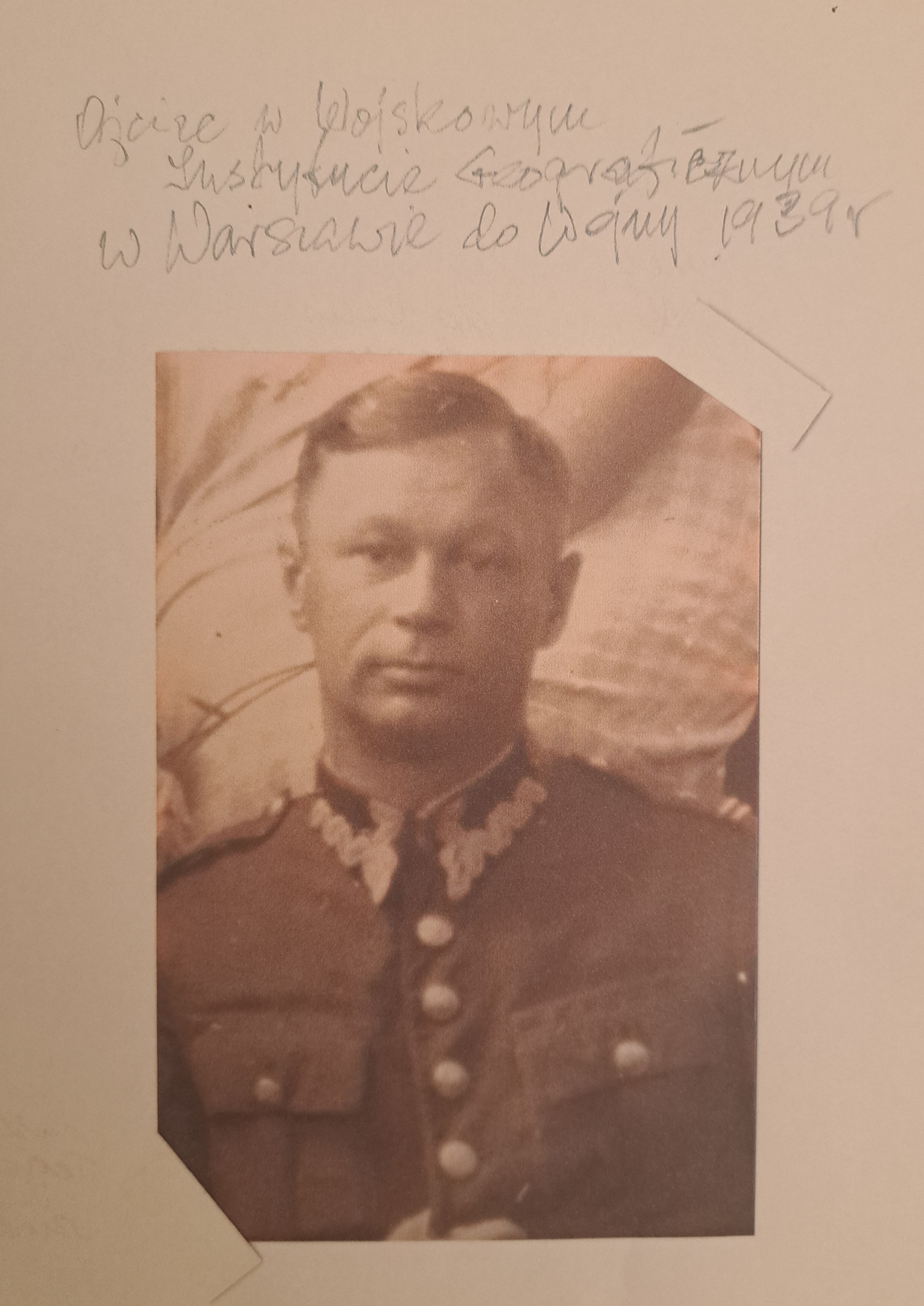
My grandmother Dana’s father, Sylweriusz Bohdan Zagrajski—the hero of my childhood—was born on 20 June 1891 in Gostynin, near Włocławek in the Kujawy region, into an intelligentsia family. His father, Erazm, ran his own notary office, and his mother took care of the home. Sylweriusz had an older brother, Andrzej, and two younger sisters, Jadwiga and Anna. My great‑grandfather’s family was a typical Polish intelligentsia household, steeped in patriotism and a strong sense of social duty. Erazm, for example, served for many years as the head of the Volunteer Fire Brigade in Gostynin. The upbringing of the four Zagrajski children was permeated with deep patriotism. Many years later, in 1945, while hiding from the dual occupiers of Poland, Sylweriusz wrote in his diary: “Every son of the Polish land should be ready to give his life in defence of his Mother‑Homeland – Poland.”
After his mother’s death in 1908, Sylweriusz was taken by his aunt and uncle to their estate, Tambowo in Russia, where he completed secondary school and then graduated from the Institute of Engineering and Surveying in Moscow. When the First World War broke out, he was mobilised into the Russian army, and when Polish armed forces began to form, he joined General Dowbor‑Muśnicki’s Corps in Belarus. He was wounded in the Battle of Kaniów in May 1918 and awarded the Cross of Valour.
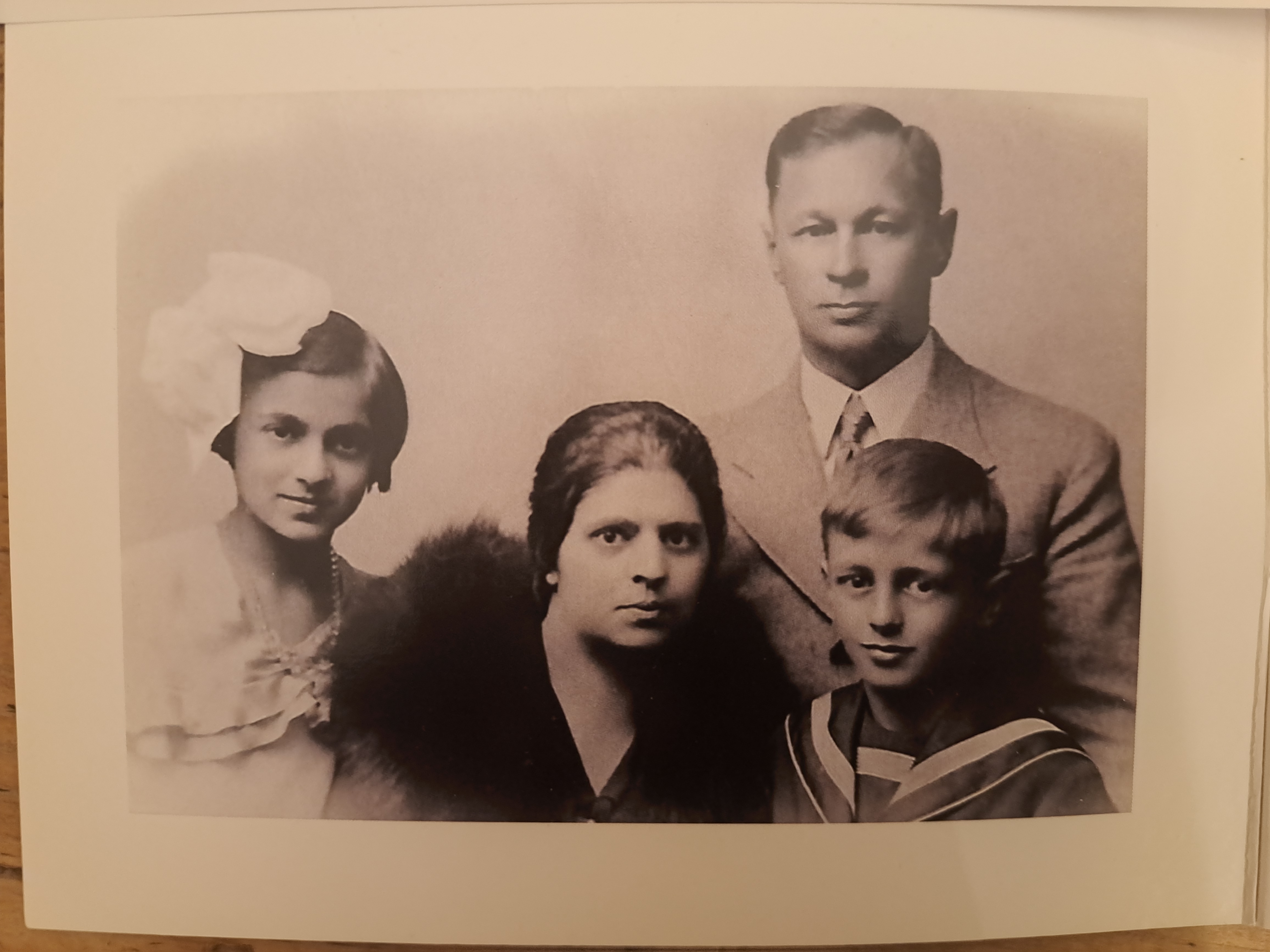
In 1920, holding the rank of lieutenant, Sylweriusz was assigned to the newly established Military Geographical Institute in Warsaw. Poland’s regained independence created an urgent need for up‑to‑date maps of the new state. After the Treaty of Riga, which ended the war between Poland, Soviet Russia, and Ukraine, Sylweriusz and several colleagues were sent to the eastern borderlands to delineate the Polish‑Soviet border. Stationed at the Duszków estate in the Vilnius region, on the property of the noble Bułhak family, Sylweriusz met his future wife, Wanda. They married in 1921 and settled in Warsaw, where in October 1923 my grandmother Danuta was born, followed two years later by her brother Andrzej. From my grandmother’s stories, I know this was a very happy time for both the Zagrajski and Bułhak families. Sylweriusz was promoted to the rank of major, and Poland was rebuilding and growing stronger.
In 1934, my great‑grandfather took part, on behalf of the Military Geographical Institute, in a scientific expedition to Spitsbergen, leading the triangulation section. Spitsbergen is the main island of Norway’s Arctic Archipelago. The Polish expedition aimed to collect geological and cartographic data, and to a lesser extent botanical, zoological, and meteorological information. The expedition was a great success, and in 1954 the Norwegian Polar Institute named one of Spitsbergen’s glaciers Zagrajski Glacier (Zagrajskibreen) in his honour.
The war in September 1939 found my great‑grandfather and his technical team conducting field measurements in the eastern borderlands. He managed to return to Warsaw and report to the Institute. Soon after, together with the Polish Army command and the Military Geographical Institute, he was evacuated eastward. He took part in the defence of Lwów, and after the order to surrender, he was taken with other officers to a transport whose passengers ended up in Kozelsk and were later murdered in Katyń. My great‑grandfather escaped this fate by fleeing at the Polish‑Soviet border. He was offered the chance to cross the “green border” through Romania and Hungary to the West, but he chose instead to return to the Vilnius region to find his wife and children, who had been at the family estate in Duszków when the war broke out.
For a short time, the whole family stayed in Vilnius, where Sylweriusz took on various menial jobs to support them. On 14 June 1941, a week before the German‑Soviet war began, while he was temporarily in Kaunas, his wife Wanda and their two children were arrested by the NKVD and deported deep into Russia, to Siberia. But that is a separate tragic chapter of my family’s history.
Meanwhile, from Sylweriusz’s diary, it is clear that he hid in the Vilnius region, where he conspired in the Home Army (AK) underground. Eventually he managed to establish correspondence with his wife, who had escaped the “Inhuman Land” with General Anders’ army to Palestine, and also with his siblings in Warsaw. On 1 November 1943, Sylweriusz wrote in his diary:
“History likes to repeat itself. We realise that very soon we will fall under the boot of the savage Red Army and the NKVD. Even the Germans know their eastern front cannot be held, except perhaps at the Oder. And so, we fall from the jaws of one monster into the jaws of another. Our ‘forest units’ are fighting the Germans almost openly. We know that by fighting one enemy we are helping the other. But I see no other way out of this terribly difficult situation. We fight for a free and independent Poland.”
And indeed, the wartime fate of my patriotic, heroic great‑grandfather was the perfect reflection of this grim truth about two enemies. The Second World War began for him with the defence of Warsaw against the Nazi onslaught, soon followed by the defence of Lwów against the Soviets, and finally by partisan fighting in Home Army units against both Germans and Soviets.
According to numerous eyewitness accounts, Major Sylweriusz Bohdan Zagrajski was killed on 17 May 1945 in the Knyszyń‑Białystok Forest, in a clash between a small group of Home Army soldiers and Soviet forces. Wounded in the skirmish, he was finished off by two NKVD men.
Honor to His Memory!