
Lázár Gelb’s Last Wish
About the Creator
György, Hungary
Something was already perceptible the previous afternoon. The guards were behaving strangely, and the air vibrated differently. Then the first to wake at dawn, venturing out into the yard, first whispered softly, then suddenly screamed at the top of his lungs: "They’re gone!" And indeed, the searchlight-equipped watchtowers gaped empty; there was no sign of the trucks or tanks. Some rushed out into the open, staring around in wide-eyed disbelief, while others did not dare leave the barracks, sensing some evil trick or a new humiliation.
Months earlier, these people had seen with their own eyes how the Germans, having learned in advance of the Red Cross’s arrival, conjured a fairytale luxury children’s camp out of the previously miserable site within hours, only to "restore" everything before the dust had even settled behind the delegation’s cars. After this, they could imagine any kind of malice.
News of the front’s approach had been coming for weeks, and the sound of shelling could be heard from time to time. However, it was only when the previously terrifyingly thundering combat vehicles became visible in the distance, bearing the Soviet flag, that they began to believe in the liberation.
Of course, fate was not kind even then. A young boy, trying to grab one of the cigarette packs tossed from a tank by the soldiers for his parents, fell so unfortunately that he ended up under the tracks. He had survived everything—the ghetto, the freezing cattle cars (gassing in the camp, for instance, had been halted days before his arrival)—he had endured starvation, escaped diseases, lived to see the liberation, only to perish under a tank tread at the very moment of freedom.
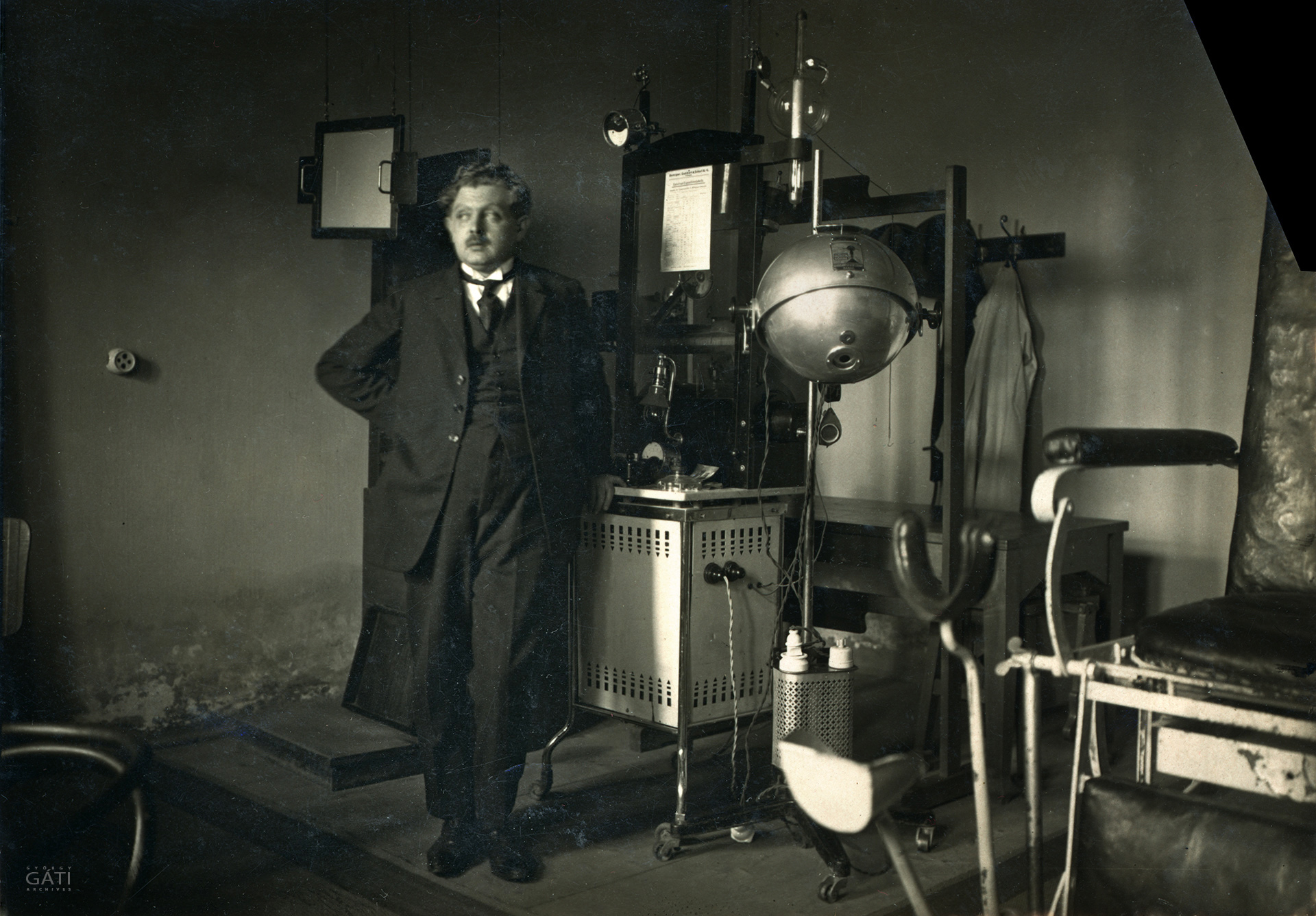
When the Soviets organized the repatriation of the Hungarian transport and provided a passenger train set for them, my Grandfather, Dr. Steiner—with his wife’s help—equipped it with medical tools and drugs from the camp hospital and declared it a hospital train. He had good reason for this. The survivors were infinitely weakened by privation, and typhus was taking its toll.
He kept a fever chart for every patient and constantly monitored their condition. Although the available stock of medicine was meager, it could still provide relief to the suffering, suppress fevers, and mitigate diarrhea. Lázár Gelb’s fever did not subside. Malnutrition and physical and mental suffering had weakened him so much that he could not fight the disease. His condition worsened hour by hour. He kept repeating only that he wished to rest in his native soil. Soon he grew quiet and died.
It seemed an insoluble task to simultaneously protect the overcrowded train from the numerous dangers posed by the corpse of an infectious patient and, at the same time, somehow fulfill Lázár Gelb’s last wish. They were still traveling through Czech territory when Dr. Steiner called for an axe, rope, and a board. He had the board cut to the height of a man, tucked it in through the neck of the clothing, guided it behind the spine, through one trouser leg down to the heel, then bound the lifeless body to the board at the waist, neck, chest, knees, and ankles, and stood it up in the brakeman’s cabin of the rear carriage.
When the train crossed the border, they had it stopped. They dug a grave near the tracks and, with the appropriate prayer, buried the "brakeman." Lázár Gelb had returned home.
Photos