
Echoes of the Hindu Kush: A Photo Album from My Friend's Grandfather's Afghan Odyssey
There’s a photo album on the shelf in Simion's study, and nobody touches it unless he says it’s okay. It’s not locked. It’s not tucked away behind old boxes or dusty stacks of papers like family treasures usually are. It just sits there in the open, with its dark spine, looking thicker than you’d expect. It is right next to the kind of books people rarely open, like an atlas or a dictionary. Still, the album has a presence, like people should keep a little distance from it. You just know, without anyone telling you, that it’s not a regular photo album. You have to ask before you open it.
Simion has invited me to see it twice. Both times, we sat at his kitchen table. He turned the pages slowly, the way you do when you’re not just looking at pictures but listening to what they’re trying to say. His hands didn't shake and his voice stayed steady. But there’s something under the surface that reminds me of a current under still water, something he’s held onto for years. He learned early on that some things, if you want to keep moving, you have to hold them tightly in place.
That album holds two years of Simion's life in Afghanistan, from 1980 to 1982. He left at twenty- two, came back at twenty-four. On paper, he left and returned to the same place, the Moldavian Soviet Socialist Republic, that narrow stretch of land caught between the Prut and Dniester rivers, swallowed by the Soviet Union in 1940, still almost a decade away from becoming the Republic of Moldova. But those two years left their mark. No official form would ever mention it, but something in him changed. Only people who’ve lived through that kind of change can really understand it.
That’s what the album is. It’s that change, made real. It’s the most important thing in the house.
To really get why this album matters and why any of this matters, you need to understand what the Soviet-Afghan War was, and what it was supposed to be, at least on paper.
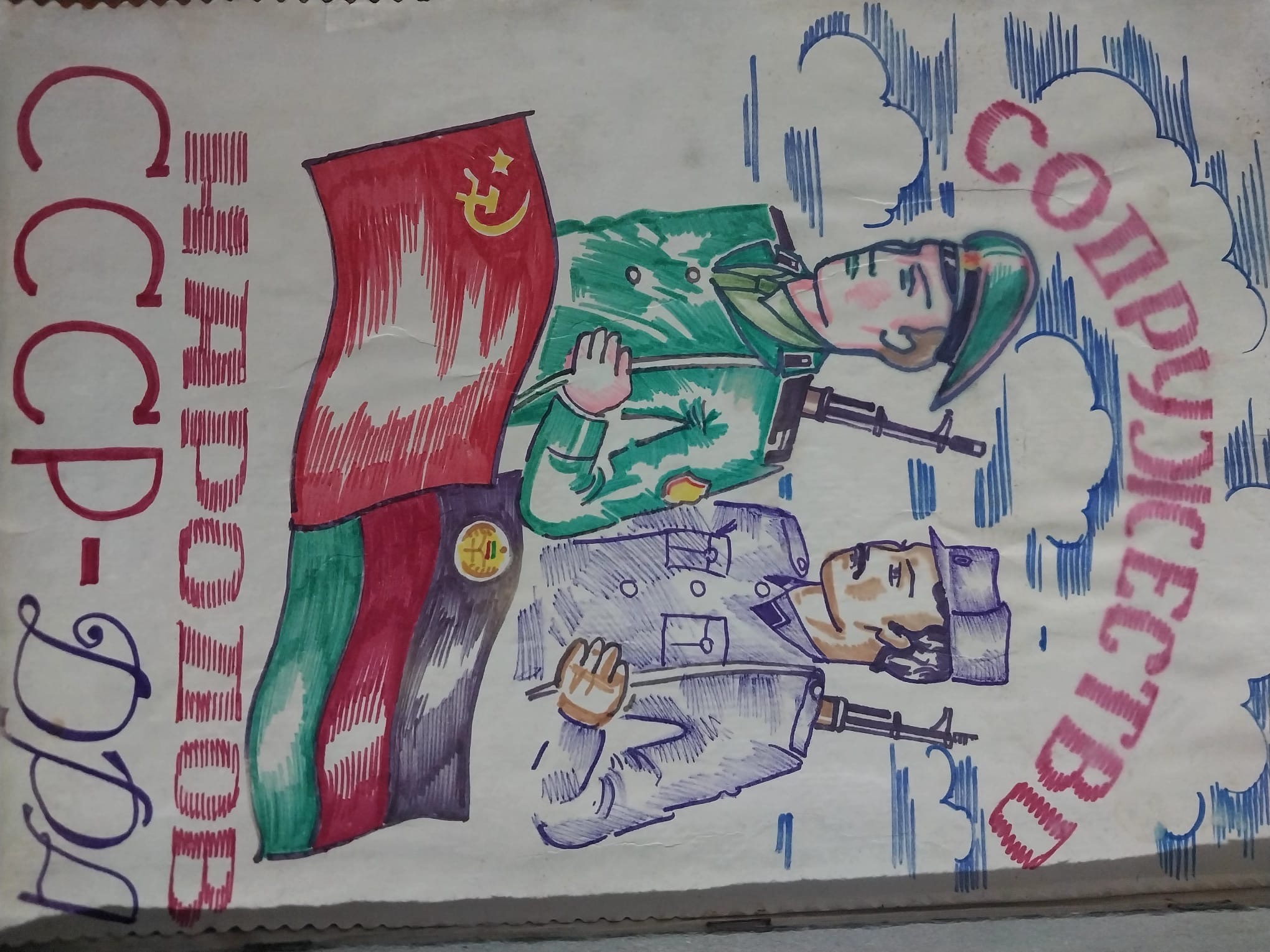
In December 1979, Soviet troops crossed into Afghanistan. The official story was almost laughably simple: Afghanistan had asked for help under a treaty, and the Soviet Union, always the loyal ally, answered the call. The troops weren’t occupiers. They weren’t at war. They were a “Limited Contingent of Soviet Forces,” sent on a temporary support mission. Officially, they were “soldier-internationalists,” doing their duty for the brotherhood of socialist nations. You wouldn’t find the word “war” in newspapers or letters home. It stayed out of the official language for years.
Behind that bland language was a political decision that feels almost surreal in its cynicism. The Politburo, led by Leonid Brezhnev; most of them old and some barely aware of what they were even doing, signed off on the intervention. They worried that Afghanistan’s shaky communist government might collapse or get too cozy with the West, leaving the Soviet Union with a vulnerable southern border. They thought they’d be in and out in a few months. Put Babrak Karmal in charge, restore order, and the troops would come home to quiet applause. Instead, they stumbled into ten years of brutal, grinding war against Mujahideen fighters who knew the land like the backs of their hands, fighters who had centuries of family roots in those mountains, and who suddenly found themselves armed and funded by the United States, Pakistan, Saudi Arabia, and anyone else eager to bleed the Soviets dry.
The Mujahideen weren’t some united army. They were a jumble of tribal leaders, regional commanders, and ideologues, sometimes as much at odds with each other as they were with the Soviets. But out in the mountains, in the valleys where Soviet convoys had to pass, they were deadly. The Soviets had trained for big, set-piece battles across the plains of Europe, tanks and armored columns, the kind of warfare their generals understood. It didn’t help them much against guerrillas who vanished into villages, reappeared on ridges, planted mines on roads that seemed safe yesterday, and slipped back into the landscape, as if the land itself wanted them hidden. The Soviets won most of the actual fights. But they couldn’t win the war.
The soldiers just kept coming. All through the 1980s, around 620,000 Soviet troops cycled through Afghanistan. Somewhere between 14,000 and 18,000 never made it home. More than 35,000 came back wounded. Almost half a million got sick of typhoid, hepatitis, infections that spread fast in the heat and dust, tearing through bodies already pushed way too far. And then there were the Afghans. Nearly a million
civilians died, trapped between a foreign army that couldn’t tell fighters from regular people and a resistance that often blurred those lines on purpose.
People didn’t talk about these numbers back then. It took years for the truth to come out. At the time, they weren’t numbers at all. Just silence.
From the Moldavian Soviet Socialist Republic which was a small place, about 33,800 square kilometers, just over four million people in 1980, more than 12,000 young men ended up in Afghanistan. Most of them were conscripts, drafted at eighteen. The system didn’t ask them what they wanted. The army simply handed them orders and shipped them off to wherever they were needed. They didn’t even know they were going to Afghanistan until they were already on their way. They didn’t know what was waiting for them until it was too late to turn back.
Moldova wasn’t some military powerhouse in the Soviet Union. It was a farm country, vineyards, orchards, quiet villages. People there knew how to get by and keep their heads down, even as empires came and went: the Turks, the Russians, the Romanians. The land changed hands, but for the people living on it, the only thing that mattered was surviving the next round. So when the Soviet Union called its young men to war, they went, just like their fathers and grandfathers had because the state demanded it, and saying no wasn’t an option.
Simion was one of them. His father taught in school and his mother worked in a collective farm office. Ordinary folks from a small town, building a careful life out of what the system gave them, pouring all their real hopes into their son. Simion was smart. He did well in school. He had dreams, or at least the start of them, the kind of half-formed ideas about the future every twenty-two-year-old carries, not quite sure what will come of them. The army took those dreams, filed them away, and sent him south.
Three months’ training. How to throw a grenade. How to shoot. How to stand in formation, follow orders, remember who outranked whom. Then a transport plane, heading into a kind of heat he’d never known, dry, sharp, unrelenting, sucking the water right out of you. And the mountains. Not like anything in Moldova. Bigger, older, almost alien. As if the earth had tried to reach for the sky and just stopped halfway.
“There is a different soil,” one Moldovan veteran told a journalist years later. “A different smell of the air.” That’s what they all said, in one way or another. The strangeness hit you first, before the fear settled in.
Letters home from Afghanistan were censored. The official line was that it was about security, but really, it kept families anxious and in the dark because it was easier to manage that way. The soldiers picked up fast on what was safe to write. They could say they were fine. They missed home. The food was okay, the heat was bearable, everything was under control. But they couldn’t say where they were. They couldn’t talk about what they saw. They couldn’t describe the specific kind of fear that comes from not knowing if the road ahead is mined, from learning to read the land for danger the way you read a face for a hint of trouble.
Families in Moldova waited for news that failed to provide any real information. They got letters filled with vague lines and long stretches of silence that, honestly, spoke louder than words. Some families received more than just a letter, a knock at the door, a visit from a military officer, a sealed box, and a sheet of paper with the usual official condolences. “Your son has fallen carrying out his internationalist duty.” That was the line. Not “died in combat,” not “killed in a war,” because, officially, there wasn’t a war; just a duty, fulfilled, somewhere most Moldovans couldn’t have found on a map before their sons were shipped off.
Inside those sealed boxes were zinc coffins or Gruz 200, how they called them. The military came up with that term, and it bled into everyday talk. Cargo 200. The name came from the weight of the zinc- lined box, sealed tight for the long trip from Central Asia’s heat to the freezing Soviet winter. Welded lids. Families were officially barred from opening them. They said it was for health and dignity, but what it really did was keep families from seeing what had happened to their sons' bodies and from asking questions, out loud, about why any of this had happened at all.
In some places, the coffins slipped in quietly. Funerals happened behind closed doors. Grief stayed inside the house, where the state wanted it to remain silent, private. But grief that spilled into the streets, that gathered in squares or markets, that started asking questions which represented trouble. The state couldn’t accept that, not when the war wasn’t a war and the dead were supposed to be nothing more than “internationalist duty” fulfilled. Across the decade, 301 young men from the Moldavian SSR came home in
those zinc boxes. Now, their names are carved into a memorial in Chișinău. For years, there was nowhere to carve them.
Simion made it home alive. That’s the fact that changes everything and the reason this album even exists. He came back in 1982, after two years of service, carrying the album. He put it on a shelf and tried to pick up his life again. It wasn’t the same life, and he wasn’t quite the same man, but he had a life to return to.
The album started almost by accident, like a lot of important things do.
One of the guys in Simion's unit was from Kyiv and his name was Dmitri, a young man who’d been studying technical drawing before the army derailed his plans. Somehow, he managed to bring a small camera past the usual inspections. Maybe it was allowed, maybe someone just missed it, or maybe Dmitri just had a knack for making things invisible when he needed to. However it happened, the camera got through, and with it came a habit.
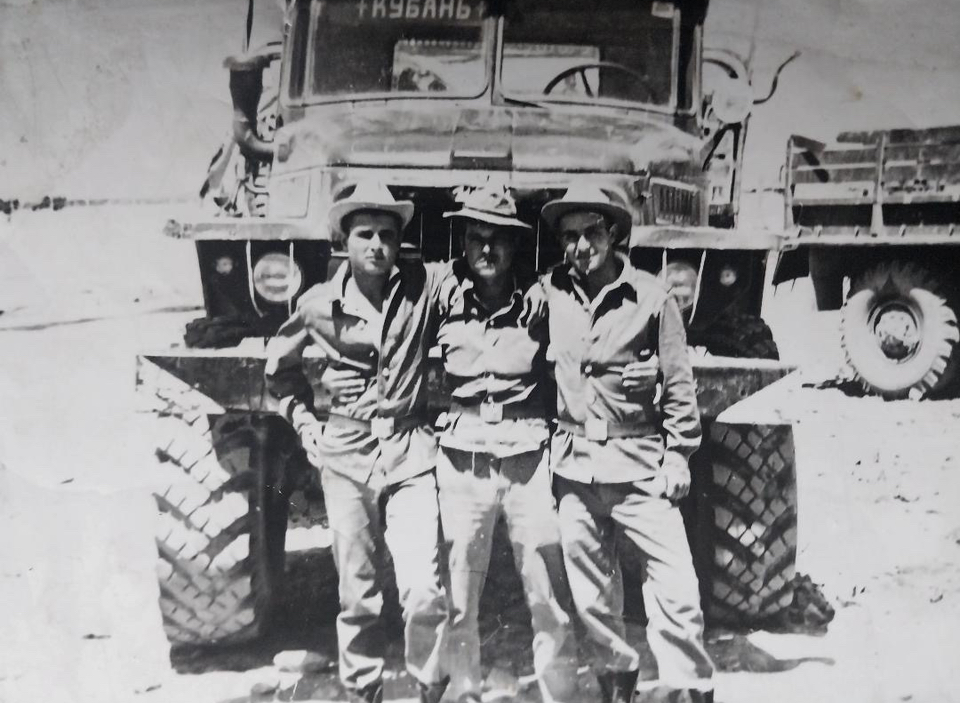
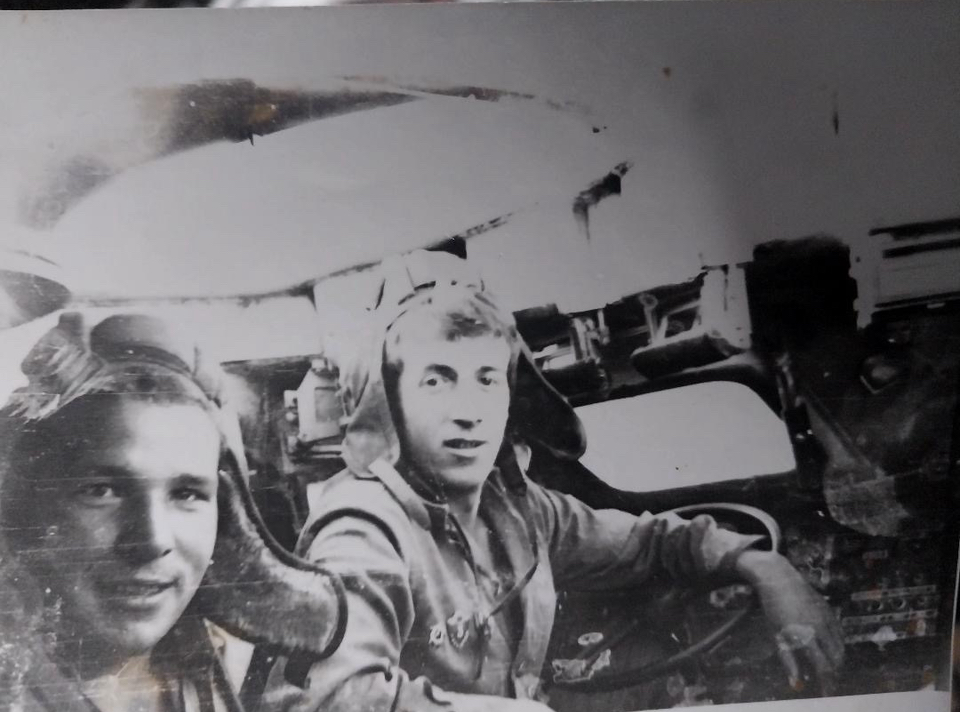
Dmitri photographed everything that would not get him in trouble or draw attention, but everything else. He was careful. He knew where the line was. He caught the mountains in that early morning light that almost made them look peaceful. The guys between patrols, playing cards, writing letters, or just sitting, lost in thought. The look on their faces when someone cracked a joke that was actually funny real laughter, in a place where even that took effort. The dust that settled on every surface. The long, empty afternoons with nothing to do but wait.
“He had an eye,” Simion says, and his voice shifts just a little, softer. Dmitri saw the things everyone else stopped noticing after a month, when the weirdness of it all turned into routine. He noticed the light, the way it landed on faces that still looked way too young to be doing what they were doing. He saw what was worth saving.
Eventually, it turned into a group project. Guys started bringing Dmitri things they wanted photographed: a letter from home, a sketch someone had made, a strange object that meant something to them. The album Simion brought home wasn’t just his story. It was a shared record, pieced together by men trying to hold on to something real, something solid, while everything else was happening to them, whether they wanted it or not.
Near the end of the album, the photos stop and something different appears. There’s just one page, a little bigger than the rest, and instead of a photo, there’s a pencil drawing. Two men, seen from behind, sit side by side on a low, dry-stone wall, the kind you find edging old roads in that part of the world. The wall isn’t much, just barely comes up to their knees. They’re looking out over a valley. You can’t see their faces. What you get instead is the slope of their shoulders, the way the man closest leans just a little toward his friend. It’s the kind of closeness that settles in after people spend years together, your body picks up the habit before you even notice. Behind them, the Hindu Kush rises up, sketched in loose, confident strokes. The mountains don’t look like a postcard. Somehow, the drawing gets the scale and the feeling right.
Dmitri made that drawing. He handed it to Simion, half-joking, half-serious, so you remember what the back of your own head looks like. Three weeks later, Dmitri was gone. Ambushed on a road everyone thought was safe, a road they’d crossed for weeks without trouble, until the day it wasn’t. He was twenty- four. Back in Kyiv, his mother got a sealed letter and a modest pension. Dmitri never finished his technical drawing degree. What he left behind, what traveled home with Simion were the few things he’d made with his own hands, the only pieces of him that made it back.
The men who returned from Afghanistan in the early ’80s came back to a country that didn’t really know what to do with them. It wasn’t that the Soviet Union lacked rituals or monuments, it had plenty, all built around the story of the Great Patriotic War. That war was the heart of Soviet myth, the story of sacrifice and victory, the one everyone was supposed to know by heart. The system knew how to honour soldiers from a war like that, one with a clear ending, a clean sense of meaning, heroes you could point to.
But Afghanistan was different. The Afghan war wasn’t even officially a war. The state grew more and more reluctant to talk about why they were there. Meanwhile, the world outside started calling their enemies freedom fighters, and the Soviet narrative fell apart. The afgantsy, the veterans, came home to a kind of nowhere. They’d served. They’d been changed, deeply and permanently, in ways they couldn’t name and
no one else wanted to hear about. The country, by and large, acted as if they’d just been off somewhere ordinary.
PTSD was everywhere, but nobody called it that. The Soviet system didn’t really recognise combat trauma as something medical, something you treat. Men came home to nightmares, constant watchfulness, an inability to sit with their back to a door and people told them to just get on with life. Many couldn’t. Alcoholism, joblessness, divorce, early death, these became the reality for thousands. Of the 12,500 young men sent from Soviet Moldova, about 8,500 made it into the post-Soviet era. Four thousand died after coming home, many before they reached fifty. Their war kept killing them, long after the state had declared it over and filed it away as a “limited contingent operation.”
Simion managed. He found work, built a family, made a life. He kept the album on a shelf in his study. Sometimes, if people asked, he’d tell them about it. Sometimes he wouldn’t. He learned to tell the difference between people who truly wanted to know and those who just asked out of habit, expecting something dull. He got good at that.
After Moldova broke away from the Soviet Union in 1991, the Afghan War became something people wanted to forget. The new government desired a complete separation from all Soviet influences, and that war which was turbulent, mournful, and never fully theirs, fulfilled the requirement. Veterans carried the mark of that system just by having served, even though they’d had no choice in the matter. It was deeply unjust. They hadn’t asked to fight in Afghanistan, any more than they’d chosen to be born under the Soviet flag. But convenient injustices usually persist.
For nearly twenty years, Afghanistan veterans in Moldova experienced little aside from tactful oversight. Official recognition was almost nonexistent, and material support was even scarcer. Veteran groups pushed for benefits, but government officials kept finding ways to stall or dodge. School textbooks skipped over the war; there were no national memorials, no days of remembrance, nothing official to acknowledge what these men had done or lost. In 2000, when the government tried to cut even the few benefits left, veterans and their supporters gathered in Great National Assembly Square, the same place where Moldova had declared independence, and demanded to be seen. They weren’t asking for much. Just not to be wiped o
It took until 2011 for Moldova to set aside a day- February 15th, the anniversary of the last Soviet troops leaving Afghanistan, to mark the war officially. That year, for the first time, hundreds of veterans marched through Chișinău not as anonymous individuals but as part of a national event. Officials laid flowers at a monument. A coalition politician admitted, carefully, that the war had been wrong, but the blame didn’t belong to the men who fought it. Journalists spoke to veterans who mentioned they were glad to finally be recognised. That word "finally" kept coming up. It said more than anything else about those lost years.
That first commemoration came thirty years after Simion returned home. He’d been carrying his album for three decades by then, and the country had stayed silent about what was inside it for just as long.
Now, each February, President Maia Sandu stands at the "Sons of the Fatherland – Holy Memory" Memorial in Chișinău and speaks the numbers aloud: over 12,000 Moldovans sent to Afghanistan, 700 wounded, 301 who came back in zinc coffins. Veterans gather, shaking hands with old friends they haven’t seen in forty years. One of them said at a recent ceremony, “We remember those who died. They didn’t live to see these days, and we want peace. We don’t want our grandchildren to see what we saw.” It’s a start. Only a start.
When Simion shows Dmitri’s drawing, he doesn’t say much. He smooths the corner with his thumb, the paper has started to lift away from the backing, a little rebellion after all these years and he looks at it the way people do when they already know every detail but still need to see for themselves. Not for answers. For reassurance.
I once asked why he keeps the album on the shelf, out in the open, instead of tucked away. He took his time, like he always does, thinking it over with that carefulness you develop when you learn, early on, that careless words can land you in trouble.
“If I put it away,” he finally said, “then it’s only mine. This way, it’s his too.”
That’s the whole idea behind a family treasure, boiled down to its essence. The album isn’t just a record of Simion's own past, though it’s that, too. It’s a vessel for someone else’s life. It proves Dmitri existed: that he could catch the light on a mountainside, that his hand could draw something gentle out of a landscape that never gave much gentleness to the men sent there. The album keeps Dmitri real. As long as it sits on the shelf, where someone might notice and ask, he’s more than just a name on a casualty list in Kyiv, more than a sealed box delivered to his mother’s door with a pension and nothing else.
He’s the person who saw two soldiers on a wall, gazing out at a valley they never chose, and thought: this is worth remembering.
We’re still piecing together the story of the Soviet-Afghan War, and Moldova’s chapter isn’t finished yet. The numbers are set now: 12,000 young Moldovan men sent to fight, 301 never making it home, and 4,000 more coming back only to die too soon. In Chișinău, there’s a memorial. Every February, officials show up with flowers, and veterans, some not seeing each other in forty years, shake hands and say, “Many memories, not good ones.” Slowly, the war is making its way into Moldova’s official story and what the country is, what it’s been through.
But there’s a big difference between the official story and what people actually remember. Only things like a photo album can fill that gap. The state can put up monuments and hold ceremonies, but it can’t sit with you at the kitchen table, turning the pages one by one, pointing to a sketch and telling you what the artist was like, what he said, how he laughed. The state can’t explain what it felt like to be twenty-two, dropped into mountains you’d never heard of, in a war they wouldn’t even call a war, holding a camera you weren’t supposed to have because deep down you knew: if no one records this, it’s like it never happened.
Svetlana Alexievich, the Belarusian writer who later won the Nobel Prize, spent years in the late ’80s listening to Afghan War veterans and their families. She included their stories in her book Zinky Boys, named after the zinc coffins, that brought dead soldiers home. Over and over, the people she spoke to described two things at once: the unforgettable experience of being changed forever, and the total silence they came home to, a silence that erased everything that happened.
Simion's album is another kind of record, quieter but just as stubborn. It’s full of young men who loved their parents, grew up with the vineyards and markets and village schools of Soviet Moldova, the collective farms their fathers worked. Then they got sent off to a place with none of that, and they tried through cameras, sketchbooks, and just the urge to create something lasting out of something awful to hold on to their own existence.
At the back of the album, there’s a drawing. Not a masterpiece, just a pencil sketch by a twenty-four- year-old who once studied technical drawing before the army took over his life. He made it in the field, hardly the place for meticulous work. But there’s something rare in it: tenderness. Two faceless figures sitting on a wall, leaning toward each other the way people do when they’ve found someone to share the worst with, and they know how much that matters. The mountains aren’t drawn as threats, no ambushes, no dizziness from the altitude, none of the constant anxiety of patrol. Just mountains you can look at, quietly, from a low wall in the late afternoon.
Dmitri made that drawing in Afghanistan. He gave it to his friend before he died. His friend brought it home and still keeps it, on a shelf, for anyone who wants to see.
That’s what family treasures do. They’re not just for storing away. They keep something alive, someone’s presence, a single moment, a way of being that would vanish otherwise. Sometimes, they keep even more: the reality of an experience that a whole country was told to forget, the stubborn truth of a history that’s only now, step by shaky step, starting to be told the way it really was.
Moldova in 2026 is still wrestling with the shadows of the twentieth century. The country’s story is convoluted: Soviet annexation, the devastation of World War II, the grind of collective farms, the thrill and perplexity of 1991 independence, then years of economic hardship that sent waves of people abroad, searching for something better. Russia still looms next door, never quite sure how to treat Moldova’s independence. Within all that, the Afghan War stands out, a wound left by a state that doesn’t even exist anymore. It happened for reasons nobody ever really explained, inflicted on young men who had no say. Then, as quickly as it began, the state tried to erase it, to make it invisible.
Those veterans are old now, in their sixties and seventies. They’re the last ones who remember what it felt like: the thick air, the oppressive silence of a zinc coffin in a living room where a family waited for
news that never sounded right. When they’re gone, those details go with them. What’s left will be what survives on paper, a photograph, a line of handwriting, a drawing kept on a shelf for decades.
I think about this when I sit with Simion and the album. He’s kept it out, where it can be seen, deliberately, not just for himself. He’s making sure there’s a record, something for the next person, someone younger, who only knows the Soviet-Afghan War as a footnote in history books. Someone who would never otherwise know that a young man from Kyiv, just twenty-four, stopped in the middle of all that and made a drawing because something about that moment mattered.
That’s what the album does. It fights off silence. It insists these things happened, insists on the reality of the people and the friendships forged in terrible circumstances, friendships that survived, penciled onto a page that’s held up better than you’d think. Paper, like memory, can last.
The album doesn’t look like much. The spine is dark, a bit faded. Pages stick as you turn them, not damaged but just crowded with photographs, notes, scraps tucked into corners. Every page feels dense, heavy with attention. Most of the photos are black and white. The mountains behind them never seem to change.
At the very back, there’s the drawing: two men on a wall, mountains behind, patient and unmoving. The pencil is faint in spots, years have pulled at the lines, but you can still see them. Two men, leaning in, looking at something outside the frame.
I don’t know what they saw. Simion probably doesn’t either, not for sure. The drawing stays quiet about that. What it tells you is simple: two people stood together in that place, at that moment, and one of them decided it was worth remembering. Not the mountains, not the war, not the slogans but just two people, alive and present.
The one who drew it is gone. The one who kept it is here. The album waits on the shelf, holding Moldova’s history, the Soviet Union’s history, the story of twelve thousand young men who went where they were told, and the three hundred one who never came back. It waits for whoever’s willing to open it and look.
I was invited to look. I’m still thinking about what I found there.