
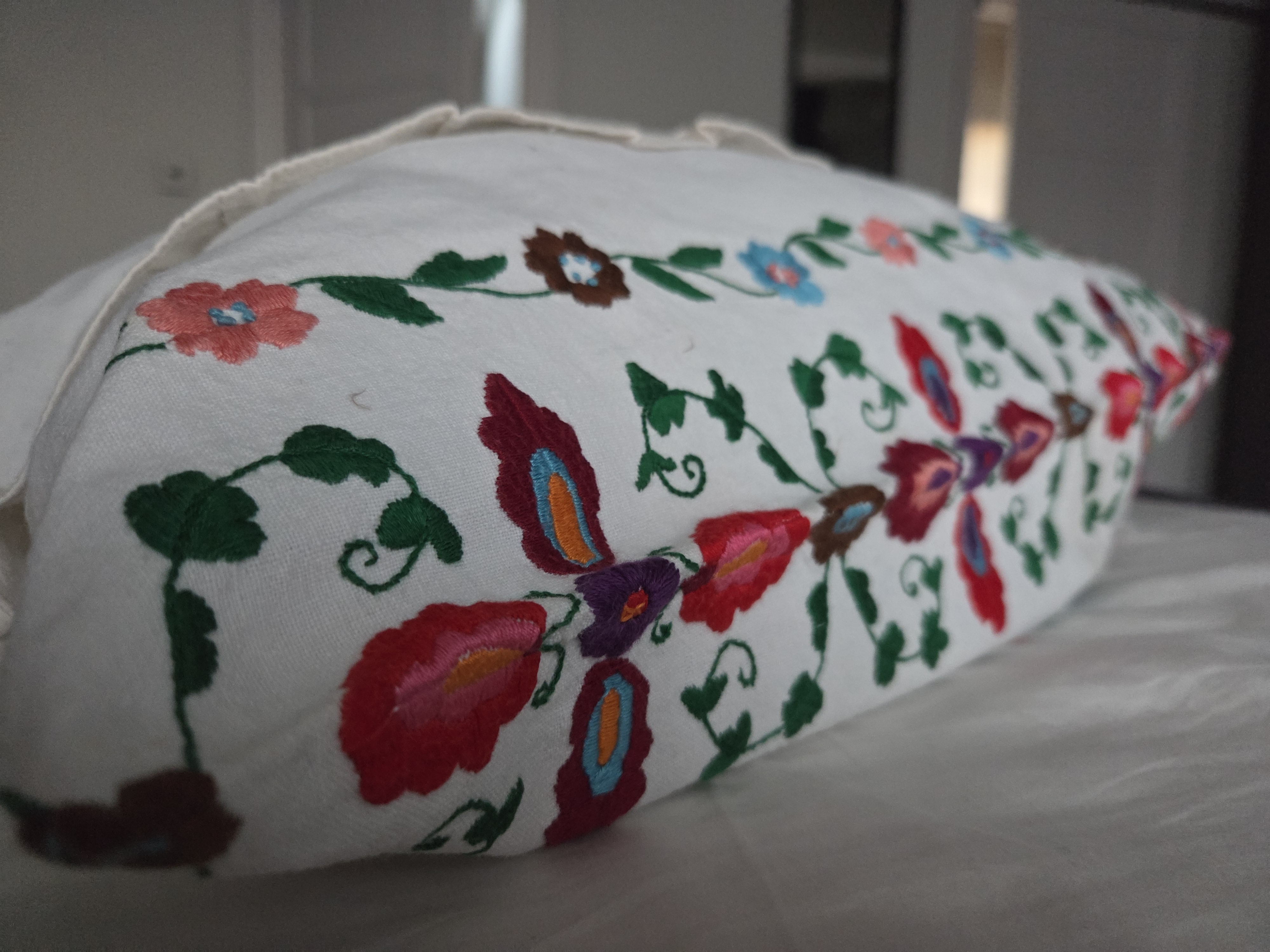
The Embroidered Dowry
About the Creator
My name is Ana. I'm 11 years old and I live in Romania. I like reading playing board games.
My family treasure is a piece of my great-grandmother Ana’s dowry. A few days ago I asked her to tell me how it was back in the days when she was younger.
My great-grandmother was born and lived almost her whole life in a small village in Transylvania. She got married when she was 18 years old, and her husband was 17.
She said that in her dowry there were 10 pillows, two duvets, a blanket, 10 pillow cases which were embroidered and nine which were simple, made out of cloth. She also got woollen coverlets and sheets, some with lacing. She took the dowry in her husband’s home. Other dowries, like land and forests, and two oxen, were negotiated by the two families. The piece of dowry from my home is a pillowcase which was embroidered by my great-grandmother’s sister Marioara.
My great-grandmother and great-grandfather first got married at the mayor's office, and only two years later, when my great-grandfather had to go to army training for three years, they held the wedding at the church. The party was held at his house, which had three rooms, in the house’s garden and in the barn. She said that they invited almost the whole village and that there were tables everywhere. They had some large pots, which belonged to the village, in which they made soup. The villagers put together many chickens from which they made the soup and steak, and eggs from which they made cakes. I like this part of the story because it was like the whole village was a big family. At the wedding, there were Roma musicians from a nearby village who played the violin and the accordion, and sang. Many Roma were part of the community and had jobs. For instance, the ironsmith made horseshoes and iron tools for the fieldwork and the household.
After my great-grandfather finished army training, he and my great-grandmother were afraid that a new war would come and that he could be recruited for the war. They had lived through World War II just a few years back. The solution they found was for him to go work in the mine, because miners were not recruited into war, because people needed coal. In later years, because of working in a mine, he became ill and died when my mother was 11.
During my great-grandfather's illness, my great-grandmother learned to give injections, even though she was not trained as a nurse. Soon, the doctor who sometimes came to the village started sending other villagers to her to give them injections, and she continued to do that for many years. She did not have a lot of medical equipment, only one glass syringe, which she sterilised in boiling water.
She worked mostly in the field, even though she stayed home while her two children were small. “When they got older, they stayed home with my mother-in-law, and I went to work in the field”, she said. They worked in the field all week, and on Sundays, the youth of the village organised dances. There were also village parties, and on the King’s Day every year there was a big celebration.
During the Communist period, her parents were declared kulaks (“chiaburi”), which was a category of rich peasants, and they took almost all their animals. They took most of my great grandmothers’ animals, too. She was forced to become a member of the Collective and she still had to work in the field every day but did not receive a salary.
“In winter, when there was no field work, we spun and weaved with a weaving loom, to make towels and napkins out of hemp and blankets out of wool. I weaved 10 coverlets with my sister, but the remaining rolls of thread are still up in the barn’s attic, waiting for someone else to weave them”, she said.
I think my great-grandmother’s story moved me because one single event - World War II - changed her life almost completely. It was because of the war that she and her husband decided that he should go in the mine, which caused his death, and also because of the war that the communist period came and made her family’s life much harder. I do not think I will ever forget this story.