
One Youth One Flower of Hope
About the Creator
I’m Mara, a Year 7 student at MVPA School in Malta (Media Art Form). I love listening to interesting and fun stories from my family’s history and turning them into illustrated stories that I give as gifts. This story is a gift for my grandmother.
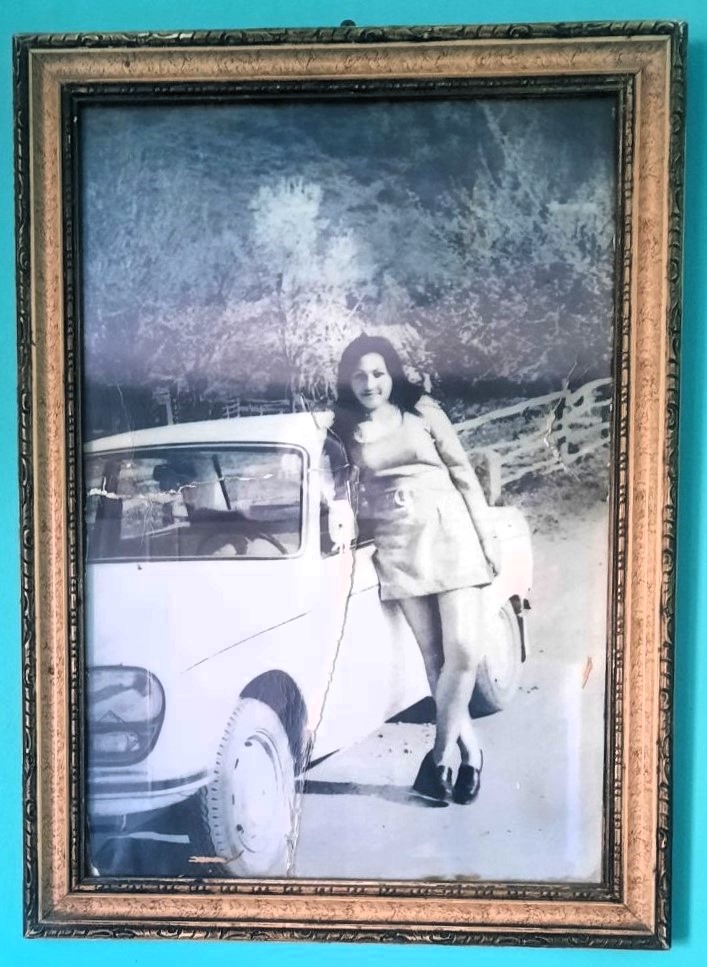
On my grandmother’s bedroom wall hangs a beautiful black-and-white photograph that I have always admired. It is more than just a picture. To me, it feels like a window into another time. In the photo, she is eighteen, leaning against a white car, looking relaxed and happy, almost like someone on a film poster. The photograph is in black and white, but my grandmother told me that her dress was red and the car was white. She was born in 1957 in Montenegro, which was then part of Yugoslavia, a country she still describes as “phenomenal,” where people felt safe and believed in progress. Although her parents’ memories of World War II were still vivid, the country was moving toward a brighter and more peaceful future.
She says she could never have imagined that the country in which the photo was taken, Yugoslavia, would one day disappear from the map. The land still exists, but the ideology and spirit that once united it have faded. Back then, the world seemed steady, full of peace, hope, and good music. The photograph captures a moment of pure optimism, long before borders shifted and maps were redrawn during the civil wars of the 1990s. As a child of peace, raised on stories of the war her parents had survived, she could never have imagined that such history might repeat itself or that the world she knew would one day disappear.
At that time, the girl in the photograph could not have known where life would take her, from Montenegro to Ljubljana in Slovenia, later to Belgrade in Serbia, where she gave birth to my mother, and eventually to Zlatibor, where she finally built her home. Back then, all of these places were part of one country, Yugoslavia, and moving between them did not feel like crossing borders but simply like traveling within the same homeland. Yet for her, the image is not about politics at all. It is about youthful joy: sewing fashionable dresses with her sisters using patterns from magazines and imagining a big, peaceful world waiting ahead.
While the photograph shows how she looked, her treasured vinyl records reveal the true soundtrack of her youth and of the moment captured in the image. Carefully kept in a box are LPs from Jugoton that brought both local and international music into Yugoslav homes. These were the songs that surrounded her when the photograph was taken, shaping her youth, dreams, and everyday life. Music was precious then, and she saved for months to buy records by The Beatles, Boney M., ABBA, and many beloved local artists. As she says, “We listened to the best music, timeless music.” Even today, those songs still sound as powerful as ever.
My mother stands between our eras. She grew up with cassette tapes and CDs, each one forming the soundtrack of her own youth, now placed beside my grandmother’s vinyl, creating a small family archive of different generations and their memories. My own music, in contrast, exists mostly in the cloud, weightless and invisible. More and more, I understand that physical objects, especially ones like that photograph, are the only pieces of history we can truly hold.
My grandmother no longer owns a gramophone, but we hope to find one soon. I feel that if I could hear the soft crackle of the needle she has so often described, it would be like stepping into the world I know only from her stories. I imagine that sound carrying me into the past, where I am sitting in that white car beside the blue-eyed girl in the red dress, both of us singing along to the iconic song O jednoj mladosti (One Youth) by Josipa Lisac.
“One youth, one world of hope Grows quietly in your heart.
Others build this world for you With only a little true truth in it.
Who knows, perhaps another world is waiting for me.
Who knows, even in the darkness, a beautiful flower sometimes grows. Maybe, who knows, I will be one of the lucky ones,
One among a thousand, perhaps it will be me. Who can know?”
Every time I read these lyrics, the photograph on the wall gains new meaning. It makes me wonder what legacy I will leave behind. If one day my own granddaughter asks about my youth, what will I have to show her? A playlist link? A digital folder? Or something real, something she can touch, hold, and place into that same treasure chest of memories?
I am beginning to realize that my own youth is just as magical, even if it feels ordinary now. Just as my grandmother remembers her world through photographs and the sound of her vinyl records, I believe that one day I will look back on these moments with the same deep nostalgia, with my own soundtrack.
I cannot predict the future, just as my grandmother, Slavica, could not have known where her journey would lead. The girl in the photograph did not know what lay ahead, yet she went on to build a meaningful life. Digital memories have their place, but physical objects carry a presence no screen can ever replace. And, as the song says, “Who knows, perhaps another world is waiting for us.”