
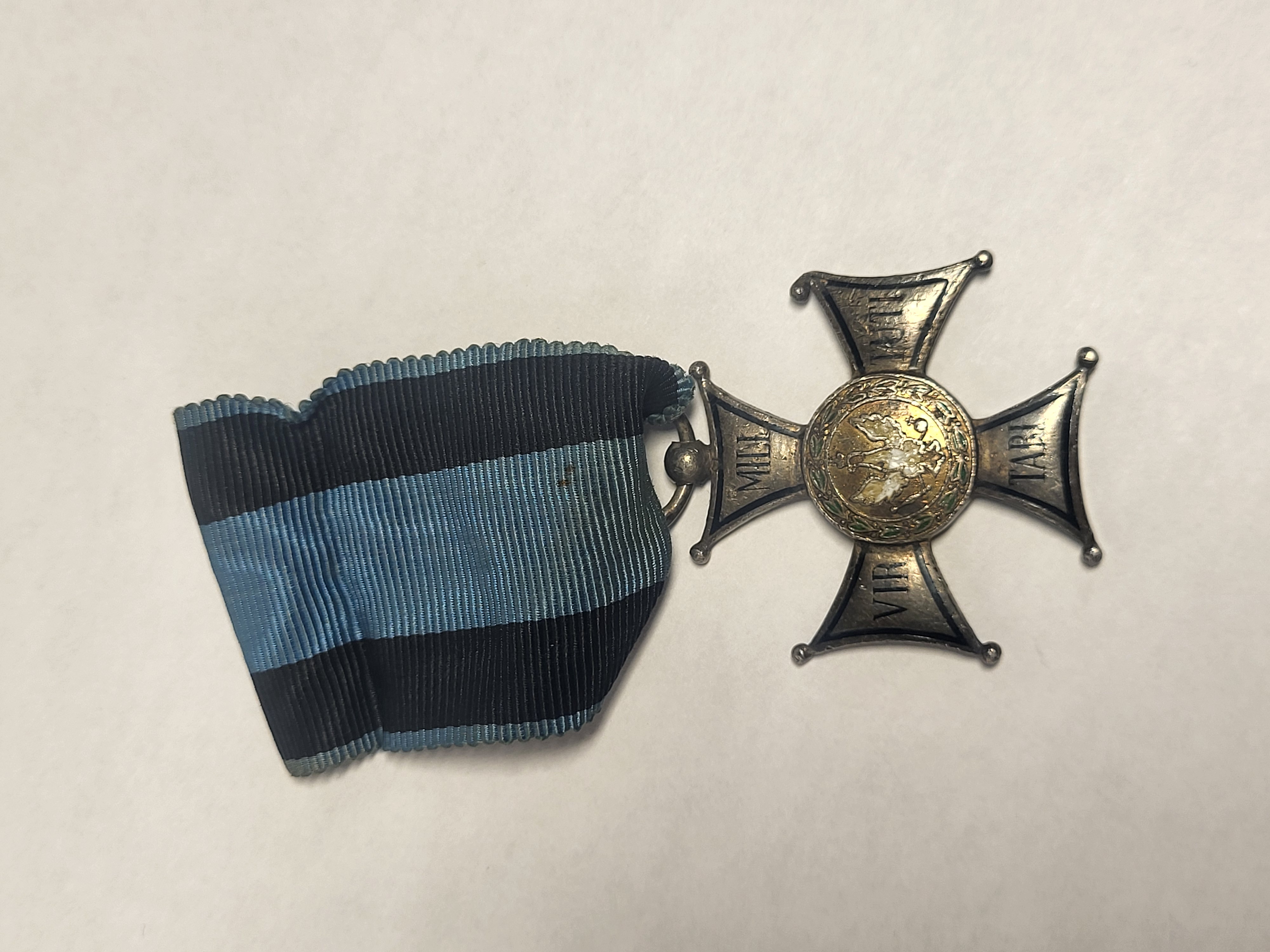
A family treasure - the Cross of the Order of Virtuti Militari
About the Creator
My name is Wojciech, I'm 12 years old, and I'm in the fifth grade of primary school. My greatest passion is football,I want to be a footballer in the future. I'm interested in history thanks to my grandfather, who often tells me stories from the past
A family treasure of which I am immensely proud is the Cross of the Order of Virtuti Militari – the highest Polish military decoration, awarded for bravery and heroism on the battlefield, awarded continuously since 1792. The competition made me interested in family heirlooms and my grandfather told me about the history of our ancestor and showed me his orders. Today I can talk about it, but for many decades the history of this decoration had to remain hidden. The turbulent history of Polish meant that the cross was kept secret, and the story about it was passed on only in the closest family circle, in whispers and with great caution.
In my family, the Order of Virtuti Militari was awarded to Wilhelm Henrich for his participation in the Polish-Bolshevik war. He was born on May 28, 1894 in Łodyna and died in 1959 in London. He took part in many battles and battles, including in 1920 in the decisive strike from the Wieprz River, which was of great importance for the fate of the war and the independence of Polish. During World War I, he was seriously wounded in the leg, which prevented him from further frontline service. Instead, he was assigned to intelligence work, where he could still serve his homeland using his skills and experience.
Before the outbreak of World War II, he established a counterintelligence post in Stockholm directed against the Soviet Union. In the army, he held the rank of second lieutenant, and during the Polish-Bolshevik war he served in the structures of intelligence and counterintelligence, among others against the ZSSR. For this reason, after the Soviet army entered Polish in 1939, he was forced to flee the country. He emigrated to England and never returned to his homeland.
In exile, he continued to work for Polish. Among other things, he was involved in the training of parachute jumpers – the Cichociemni, cooperating with the brigade of General Stanisław Sosabowski. Despite his enormous merits for the Polish nation, courage on the battlefield and comprehensive education, after the end of World War II he shared the fate of thousands of Polish soldiers remaining in exile. His knowledge and skills were not properly used or appreciated. He worked as a baker’s assistant, and his co-workers were not aware that a man with such an unusual and heroic past was working next to them.
After World War II, he could not return to Polish, but the memory of him never faded in our family. After his death, the memorabilia of Wilhelm Henrich was kept by his friend until 1970. At that time, my grandfather and his mother went to London to pick them up. It was not legal to transport these souvenirs to Polish — my grandfather, risking a lot, transported the Virtuti Militari Cross hidden in his socks so that it would not be picked up at the border.
Today, this souvenir is of great importance to our family. It is passed on to subsequent generations as a symbol of memory, identity and history. Thanks to it, we tell not only the fate of one man, but also the history of Polish and the struggle of Poles for independence. The values carried by the Order of Virtuti Militari remain relevant even in today’s turbulent times. They teach courage and readiness to risk one’s life in defense of others, honor and acting in accordance with moral principles even in extreme conditions, sacrifice and putting the good of one’s homeland above one’s own safety, fidelity to one’s oath and comrades-in-arms, and responsibility for the decisions made.
I am proud of the fact that my ancestor was awarded the Order of Virtuti Militari. This award is not only a testimony to his personal heroism, but also a symbol of the values on which the Polish patriotic tradition is based — courage, honor and responsibility for the fate of the homeland. At the same time, I am aware that as a descendant of such a great hero, I am obliged to nurture and promote patriotic attitudes and to set an example of a worthy successor.
The fate of Wilhelm Henrich and the Order of Virtuti Militari awarded to him show the dramatic history of Polish and Poles: the struggle for independence, emigration, the oblivion of heroes and the difficult period of the functioning of the state under the tutelage of the USSR until 1989. At the same time, they are proof that memory, honor and values can survive even the most difficult times.
Thanks to the competition, I learned about the history of my family against the background of the turbulent fate of Polish, which I would not have had the opportunity to learn about during ordinary lessons at school or in any museum.