
Our little piece of family treasure
About the Creator
Im 16 years old and currently in Transition year in secondary school.I live in Waterford City, Ireland. I really enjoy listening to podcasts and history is one of my favourite subjects in school.
My maternal grandfather, Liam (William) Murphy has an interest in history and his family tree. He and one of his cousins living in Dublin, Ireland, have researched into their family history and together they have gathered many official records including birth certs, baptism certs, marriage certs, census records, and plenty of old family photographs. My starting point for this project was conversations with my grandfather while flicking through old family photos.
My grandfather's own knowledge and stories are where I got most of my background knowledge to kickstart this project.
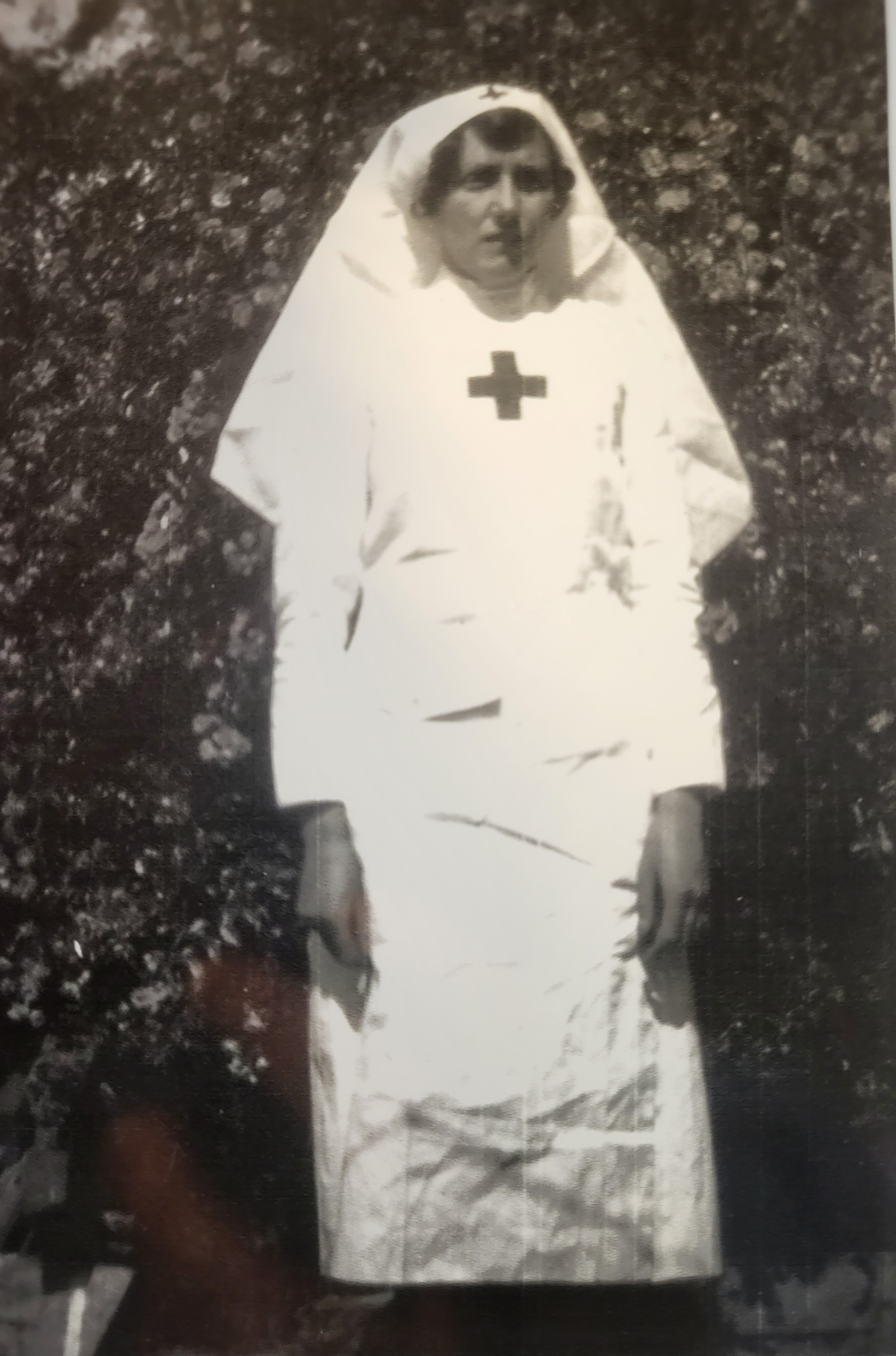
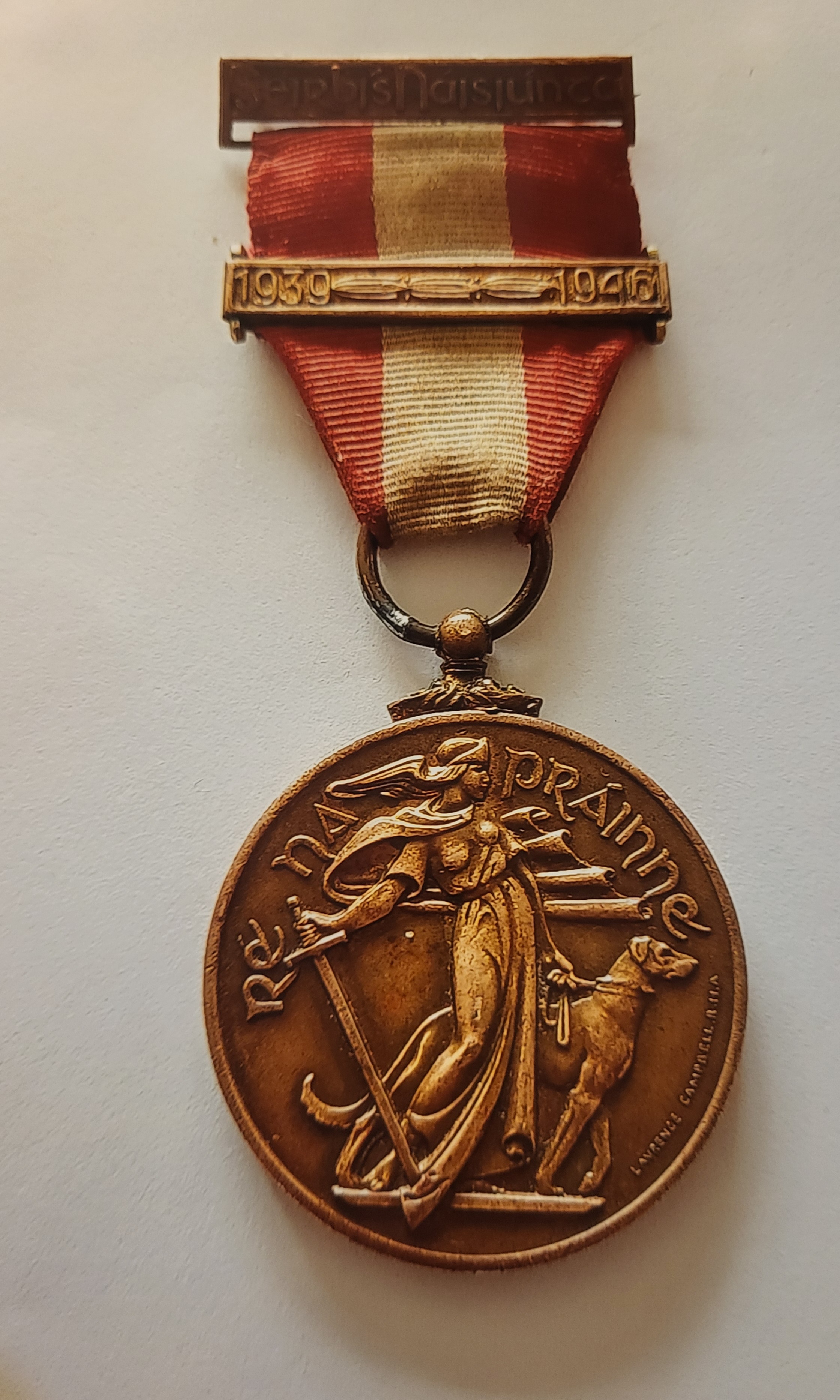
While looking through pictures with granddad, two pictures sparked my interest, a picture of his mother, my great grandmother, Madge in what appeared to be an old nurse's uniform and a picture of a military medal. Grandad has the medal, the little piece of family treasure, wrapped up for safe keeping in a carved box.
I was intrigued and needed to investigate further and discover if there was a grand story in it. I had several questions.
Was she a nurse or a First Aider in Ireland during World War 2?
Why was she honored with a medal and by whom?
My maternal great grandmother Margaret (Madge) was born on October 21st, 1913, to Bridget (Breen) and James Hannon. Margaret lived with her mother, father, and elder sister Mary, in Moyglare, Rodanstown, Co Meath from 1913 to 1918.
They lived in house no 3 Moyglare. According to the Census of Ireland 1911, it was a small 3 roomed house with only one window to the front of the house. The landlord was a Captain JF Tuthill who owned 4 of the properties, living in ‘The Big House’ at no 2. This large 18-roomed house had several outhouses and 12 stables where James worked as a groom.
A week before the end of World War 1, Margaret’s father James died on 4th November 1918 from influenza. This was a devastating loss for the family. The influenza was most likely Spanish Flu. Margaret was 5yr, her sister Mary 6yr, and her mother Bridget was pregnant with a son at the time. They were lucky not to have caught influenza too. The pandemic struck Ireland between Spring 1918 and Spring 1919, claiming approx. 23,000 lives and infecting 800,000 people in just 12 months.
There was no social welfare or protection for widows and orphans at that time, so they moved back to her mother's family (Breen) and hometown of Gowran,
Co. Kilkenny. Margaret’s 24yr old Uncle Jack Breen also died of influenza on 16th Nov 1918. Bridget’s family were farm laborers, and Bridget took what work she could, trying to young raise three young children. Unable to cope, her eldest daughter Mary went to live with Bridget’s elder sister and her husband in Dublin City.
Tragedy struck Margaret and her family again when on 9th November 1928, her younger brother Seamus suddenly died of meningitis at 9yr. Margaret was 15 years old at the time, and this was just 10 years after the death of her father. No doubt these personal losses influenced her wanting to help people and contribute to the war effort later in life. With the Irish Red Cross, she found her opportunity to volunteer and train as a first aid responder. After finishing basic schooling in Gowran village Margaret got a job in ‘Gowran Castle’ (The Big House in the village) to help support herself and her mother. She was a domestic servant in the house, probably a house maid or cleaner.
The Second World War broke out in Europe in September 1939 with the Nazi invasion of Poland. Ireland declared itself a neutral country in the conflict.
Madge turned 26yrs old in October 1939.
Before the war, the Irish army only had around 8,000 men. After the war started thousands joined the army to defend their country in case of invasion by Germany. By 1940 the army had 37,000 men. Another 250,000 joined the Local Defense Force (LDF) as part time/volunteer soldiers. The LDF later became known as the FCA (Fórsa Cosanta Áitiúil)
This period of Irish history was known as “The Emergency” and got its name from a law called “The Emergency Powers Act” which was passed in 1939. This law saw the Irish government go to great lengths to keep Ireland neutral through strict censorship. Newspapers, plays, poetry, and books, could not show a bias towards either side fighting the war. However, Ireland still favored the Allies in the World War.
So, to the black and white photo of Madge in what appears to be an old-fashioned white nurse's uniform with a Red Cross on the chest. I wondered, what was the story behind it?
Grandad told me that his mother wasn't a nurse nor worked in St. Luke’s hospital in Kilkenny City. The symbol on her uniform didn’t mean a medic or a nurse. It’s the internationally protected emblem of The Red Cross. It is unclear where Madge first learnt of the Irish Red Cross or FCA but in 1939 she began to volunteer for the Irish Red Cross locally in the Kilkenny- Carlow branch. As well as this she continued working her long day job at Gowran Castle. Under the FCA divisions she was a member of the Regiment of Ossary.
I’m not sure what exactly she would have done as I couldn't find any sources of what the Red Cross did in Ireland during World War 2, and according to grandad she didn't speak much about it later in life.
She most likely took part in a variety of regular drill scenarios of what to do in case of a German invasion or bombing or an incident involving mass panic and casualties. She would have been part of an emergency response team and received first aid and medical emergency training. If necessary, she would have been able to organize multiple civilian casualties in a field hospital in the event of a disaster. She would have been trained to follow instructions, be organized, stay cool and collected under pressure and focus on helping the injured.
The little piece of family treasure
Then to research the medal- the little piece of family treasure. I looked up images of Irish war time medals, and I also searched using the inscriptions on it.
Through my research I found that the medal was awarded by the FCA for 1-2 years of service during The Emergency and was first awarded in 1944.
Irish translations:
Seirbís náisiúnta - national service
Ré na práinne- the age/era of urgency
An fórsa cosanta áitiúil- the local defense force
The Ribbon is scarlet red and can have either 1 or 2 white stripes in the center. The ribbons for the Local Security Forces, Air Raid Precautions Agency, First Aid Division of the Irish Red Cross, and the Volunteer Aid Division of the Irish Red Cross all have one large stripe.
While other Divisions including the 26th infantry battalion, navy and air corps, army nursing services, and the maritime inscription have ribbons with two smaller disconnected stripes.
There is a bar at the top of all the Medals, which reads "Serbís Náisiúnta." If a person completed an extra two years of service during The Emergency, then they would be awarded an extra bar with "1939-1946" inscribed on the front. Up to two extra bars could be earned, both having the same design.
With this added information I can confirm that my Great Grandmother was a member of the Irish Red Cross during The Emergency, because of the single white stripe and not in the army nursing service like I wondered. Her medal also has a second bar, so I know she volunteered with the Red Cross for at least 4 years. It makes sense to believe that Madge was awarded her medal in early 1947 in recognition of 7yrs or service. She got married in April 1947 to Daniel Murphy and as was expected at the time in Ireland, would have had to give up her work, both paid and voluntary to become a housewife.
Taking about my family tree, discussing oral family stories with my grandad about previous generations and where they lived and worked was enjoyable and rewarding. My grandad is very proud of his mother, that she had trained to help people and be available for several years, if required, during “The Emergency” (WW2). He helped me to look up the Census of Ireland 1901 C 1911. I got to build on clues and information that he had gathered. I learnt to be thorough in my research, and cross reference dates on sources as a lot of the times differing ages are given on official documents.
I hope that you have enjoyed reading about my discussions C research with my grandad about one of our families puzzling grand stories and discovering the facts about my great grandmothers WW2 service medal- In my grandad’s eyes, and now mine, our little piece of family treasure.