
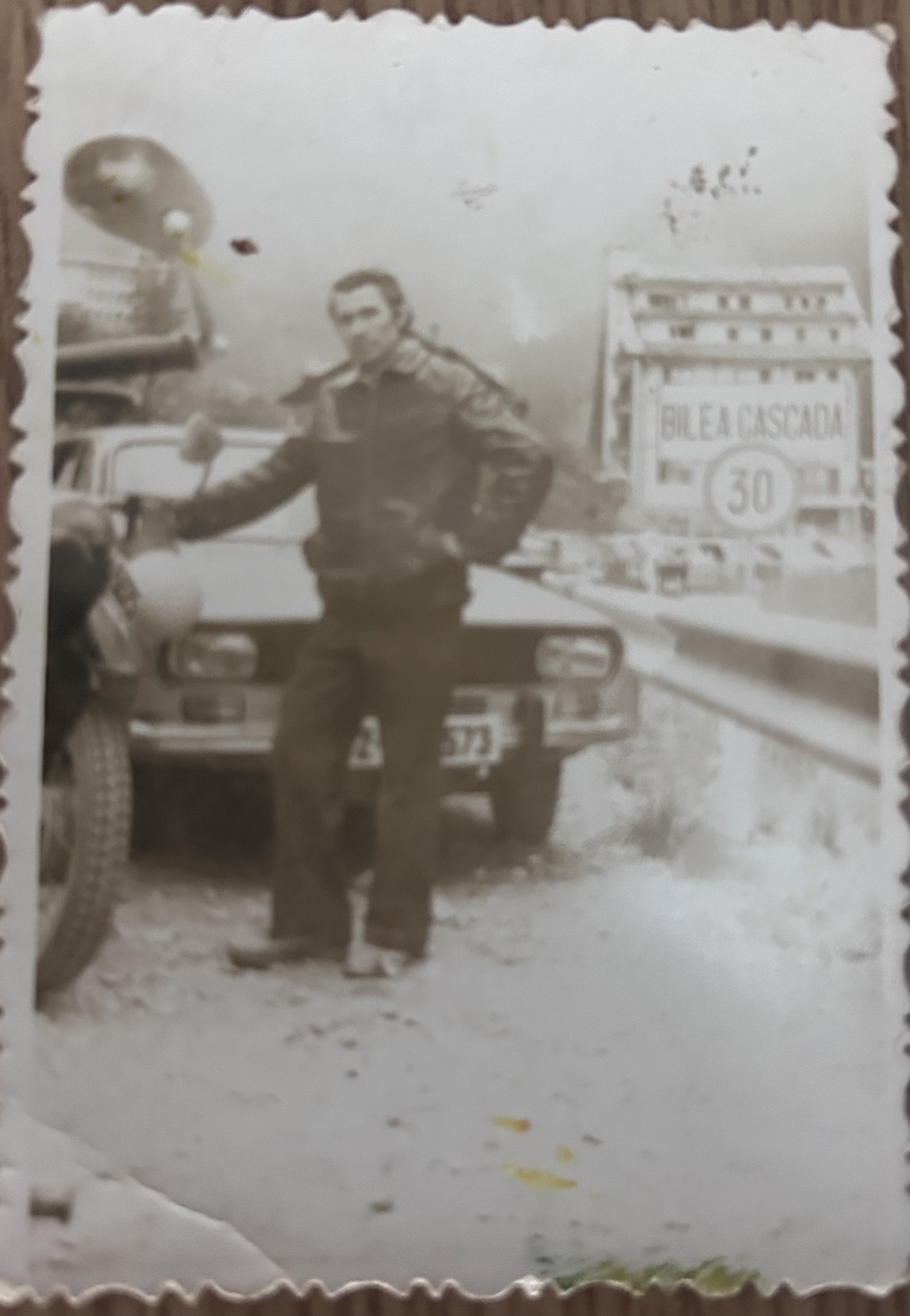
A CZ, an MZ, a Grandfather, and the Dream of Freedom on Two Wheels in a Communist World
About the Creator
I am a student in the 10th grade of the national college spiru haret tecuci .I am a travel lover and curious to learn about family stories
Hello! I am in the 10th grade and I have realized something: history is not only found in books — it is right next to me, sitting in the armchair in the living room, talking to my grandfather. He was born on June 9, 1938, and lived through the full whirlwind of those times. Now he is 87 years old and has gone through situations that we usually see only in movies or video games set in the communist era.
While talking to him in his small apartment that still carries a faint communist atmosphere, he told me about his life — not using grand words, but simply, about what it was like to be young in a time of limited needs and limited freedom. It felt as if we were opening an old book with yellowed pages, full of stories.
My grandfather is a man with warm hands marked by work accidents and kind eyes. But when he talks about his youth, his eyes light up and become moist, showing a mixture of nostalgia, pride, and a hint of sadness.
He did not have an easy life at all. His biological mother died when he was just a baby, so from the age of two he was raised by a stepmother. His father was a locomotive mechanic, always on the road, and there were six children at home. My grandfather was the oldest and, as it often happened back then, he carried the heaviest burden.
His stepmother called him “The Ant.” Not because he was small, but because he worked hard and was resilient, just like his grandmother from his mother’s side, who was short but never stopped working. At the age of 10–12, he was already taking care of his siblings, working in and around the house, while also going to school. Even though he helped all his brothers study and worked for them, later on they pushed him aside, telling him directly that he was “not one of them” because they had different mothers. Imagine sacrificing yourself for someone and receiving that kind of reward. That was his first shock.
Around the age of 14, my grandfather left for vocational school to become a mechanic. Even though the school was in his hometown, he stayed in a dormitory and only went home once a week. For three years he trained as a lathe operator. After earning his qualification, he got a job at the Bearing Factory in Bârlad, a medium-sized town in eastern Romania, marked — like many towns during communism — by strong industrialization.
At 20, he joined the army, since military service lasted two years at that time. When he returned, he went back to work at the factory as a lathe operator. In the following years, he was promoted to the Quality Control department. There, using micrometers and measuring tools, he inspected parts and stamped them with the official approval mark. Although the salary was higher — 1,800 lei — he said it was the unhappiest period of his life. For seven or eight years, he felt he was wasting his life just looking at parts he had not even made himself.
“I felt useless,” he told me. “I wasn’t happy.” It was work without craftsmanship — like being part of an assembly line of uniformity.
In 1960, at just 22 years old, despite a difficult youth behind him — factory work from the age of 17, school years, then the army — his biggest dream was not a car, an apartment, or a high position in the Party, but a motorcycle. It was a time when the “prosperity” promised by the communist regime was only beginning to appear timidly, while daily life was often grey. Buying something valuable, like a motorcycle, was a real challenge.
His first motorcycle was a Czech 125 cc model — a rarity in Romania at that time, when domestic production was just beginning and imports were limited. It was a small step toward freedom. He bought it second-hand from a carpenter in Bârlad, after years of saving and sacrifice. He did not even have a driving license when he bought it! He taught himself how to ride in open fields outside town, wearing a helmet so nobody would see him.
When his father found out about the “crazy thing” he had bought, he beat him so badly that he remembered it his whole life. That was how parents solved problems in 1960. But my grandfather did not give up. He was stubborn and insisted on following his passion for engines.
The motorcycle meant escape — the desire to explore new places on two wheels. He was also passionate about geography. He adjusted the engine carefully until it ran perfectly.
Eventually, in 1966, mainly because of family pressure, he sold it.
During one of his trips through the country, passing through Câmpulung Muscel, a small mountain town, he saw a job announcement: “Lathe operator wanted.” That moment marked a new chapter in his life. He had an even bigger dream — to buy a more powerful motorcycle.
With the money from selling the first bike and a bank loan taken without his parents’ knowledge, he gathered the necessary sum — though repaying it was difficult. But he fulfilled his dream: an MZ 250 cc motorcycle, bought from a specialized store in Bârlad for 11,600 lei
— an enormous price, almost eleven monthly salaries.
The motorcycle was nicknamed “The Frog” because of its tank shape. It was considered a technical marvel at the time, capable of reaching 100 km/h quickly and even riding on one wheel.
“It was dangerous,” my grandfather said, “but you felt free.” You flew along the roads as if the whole world belonged to you. The engine purred softly, and the suspension made you feel like you were floating. Nothing else existed — just you and the motorcycle. It was a way of feeling in control of your own life in a system that tried to control every step you took.
That same year, he met his second great love — my grandmother, Geta. They married quickly and moved to Câmpulung Muscel, where he could return to real craftsmanship and prove his skill and creativity.
They lived there for 15 years. My uncle Remus and later my mother were born there. My grandfather was respected and admired. Even the local Party secretary once asked to take a ride on his MZ. It was a small personal victory — a subtle form of rebellion and individuality in a controlled society.
Life under communism, as my grandfather describes it, was a constant struggle. Even when living standards slightly improved in the 1970s, shortages and ideological control remained.
Getting spare parts, tires, or even gasoline could become an adventure. His motorcycle was not just transportation — it was a symbol of luxury earned through sacrifice.
But life struck hard. Their first child passed away, and the pain was so deep that they could not remain there. They returned to Bârlad to start over.
Later, another tragedy occurred — a violent accident that marked him deeply. After 14 faithful years, the MZ was sold. It was no longer a symbol of freedom, but a painful memory of a shattered dream.
And yet, my grandfather does not speak only with sadness. Except for the accident that scarred him, there is still pride in his eyes when he talks about how he overcame hardships, how he loved, worked, saved money, and followed his passion despite all obstacles — and for a while, truly felt freedom on two wheels.
When I look now at my 87-year-old grandfather and my grandmother, I realize their life has been a marathon. They endured the loss of a child, relocations, hard labor, and betrayal from family members.
But despite everything, his eyes still sparkle when he talks about his MZ. I understood that his passion for motorcycles was not just a whim — it was the only way he could breathe freely in a closed system that tried to limit him.
It is their story — my grandparents’ story — and it feels powerful because through them I understand a different face of communist life.
It is about remaining human, even when life tries to break your plans.