
Wojna Polsko-Bolszewicka: losy mojego prapradziadka z Białej Gwardii
About the Creator
My name is Polina Hetman. I am a pupil of the 10th Form of Klovsky Lyceum 77 in Kyiv, Ukraine.
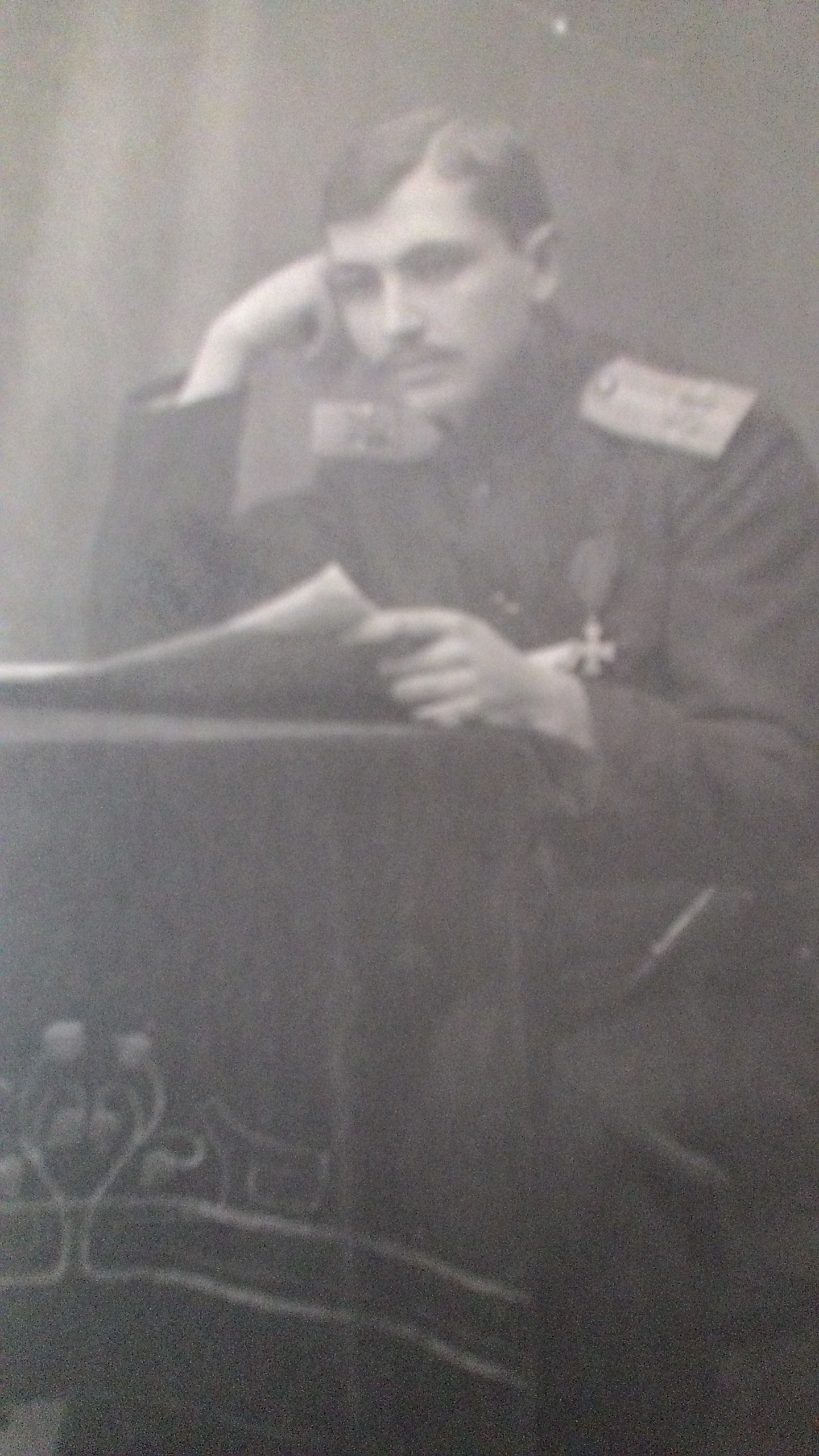
This is a photograph of Anatoliy Оleksandrovych Chykylevsky, the father of my great- grandmother, Victoria Anatoliyivna Chykylevska, and my mother’s great-grandfather on her father’s side. My great-grandmother passed it on to her son, my mother’s father, who passed it on to my mother, Iuliia Getman. While still alive, my great-grandmother would tell my mother the family legend associated with this photograph, quietly, so no one would hear, mixing Ukrainian and Polish words.
Anatoliy Оleksandrovych Chykylevsky, born in1893 year, is originated from the Taganrog region. He belonged to the Don Cossack estate and served in the 42nd Don Cossack Cavalry Regiment, which formed part of the Separate Cossack Brigade of the 3rd Army Corps of the Novorossiysk Region within the Armed Forces of South Russia (AFSR), under the command of Major General Skliarov. During the Russian Civil War, he held the rank of esaul in the Cossack forces and also served among the officer corps of the White forces with the rank of cavalry captain.
Anatoliy Оleksandrovych Chykylevsky was married to Maria Gryshko, a native of Taganrog. As an esaul, he was entitled to accompany military campaigns with his family - a tradition deeply rooted in Cossack military culture and preserved during the Civil War. In the context of the retreat of the White armies and persecution by Red Army units, Cossacks - fearing repressions directed against them as a “hostile estate”- often took their families with them. Being pursued together with other Cossacks, Anatoliy Оleksandrovych Chykylevsky likewise decided to take his wife and young daughter, who shared with her parents the hardships of military marches and subsequent emigration.
As a member of the 42nd Don Regiment, Anatoliy Оleksandrovych Chykylevsky participated in military operations on the side of the Armed Forces of South Russia. Following the retreat of White units from Right-Bank Ukraine, he became one of the participants in the so-called Bredov March - a forced winter retreat of AFSR formations under General Nikolai Emilievich Bredov toward Polish positions in early 1920. Conducted under exceptionally severe conditions, this march became one of the most dramatic episodes in the history of the White Movement.
The Cossack units, including the 42nd Don Regiment, were disarmed while retaining certain privileges accorded to the Cossacks as a distinct military category. After internment, the destinies of many officers and Cossacks diverged: some were later evacuated to Crimea, others joined anti- Bolshevik formations established on Polish territory, while still others remained in emigration.
After the conclusion of the Bredov March and the agreement between the Polish High Command and General Bredov in February 1920, Anatoliy Оleksandrovych Chykylevsky underwent internment in Poland. In accordance with the Polish system of distributing the so-called “Bredovites”, Cossack units were assigned to several camps. Anatoliy Оleksandrovych Chykylevsky and his family were interned in the Dąbie camp near Kraków, one of the principal sites for housing White and Cossack formations.
Conditions in the camp during the initial months were severe: accommodation in poorly adapted barracks, shortages of food, clothing, and medical supplies. Infectious diseases, particularly typhus, were widespread among the internees. Officers were frequently separated from enlisted men, disrupting established military organization and discipline. At the same time, Cossack units in certain cases enjoyed limited privileges compared to the general mass of internees: they were permitted to store personal cold weapons separately, and following the sale of privately owned horses, some Cossacks possessed modest financial means, enabling them to purchase provisions and essential goods from local inhabitants.
Despite the hardships of camp life, the Polish period left a cultural imprint on the family. Chikilevsky’s daughter, Victoria Anatoliyivna, my grand-grandmother, through interaction with the local population and camp administration, acquired proficiency in the Polish language. She later preserved this knowledge and transmitted it within the family.
Like many former officers of the AFSR, Anatoliy Оleksandrovych Chykylevsky spent several years in emigration and internment. In 1926, however, he was repatriated to Soviet Russia. He initially resided in Polotsk, where he was registered and lived for some time under Soviet supervision, and later moved to Vitebsk. Subsequently, apparently seeking to relocate southward - possibly closer to traditional Cossack settlement areas - he settled in the village Redkivka of the Chernihiv Region in Ukraine. During the Soviet period, he worked as an accountant at the local timber enterprise.
In 1937, amid the mass repressions of the Great Terror, Anatoliy Оleksandrovych Chykylevsky was arrested by the NKVD as a former officer of the White forces and participant in anti-Bolshevik formations. Following his arrest, he was transferred to the prison in Tomsk. His family was administratively exiled to forced settlement in Tomsk, in accordance with the practice of collective responsibility applied to relatives of so-called “enemies of the people.”
On 19 August 1937, Anatoliy Оleksandrovych Chykylevsky was executed by decision of an extrajudicial NKVD body. His death became one of the many tragedies that befell former members of the White Movement and the Cossack estate during the Great Terror.
His daughter, Victoria Anatoliyivna, later married in Tomsk. Her husband was a native of Altai Krai and served in Tomsk; subsequently he participated in the Second World War. After the war, Victoria Anatoliyivna, together with her mother and husband, relocated to Kyiv, where the family ultimately settled and was later buried, in particular Victoria Anatoliyivna Chykylevska in 2012.
During the period of the so-called Khrushchev Thaw, Chykylevsky’s case was reviewed. His daughter succeeded in securing his official rehabilitation. In the rehabilitation documents, he was identified not as a former esaul and participant in the Bredov March, but as an accountant at a timber enterprise - the civilian profession he had held during the Soviet period. Thus, decades after his execution, his name was officially cleared of the charges brought against him in 1937.
The name of Anatoliy Оleksandrovych Chykylevsky is included in the Book of Remembrance of the Victims of Stalin’s Repressions in the Tomsk Region, which, in the interests of historical justice, was founded by the grandson of one of the executioners who carried out the executions. By coincidence, the village of Redkivka in the Chernihiv Region is unfortunately uninhabited today within the Exclusion Zone following the Chernobyl disaster of 1986.