
Polish history reflected in my great-great-grandfather's life.
About the Creator
I am an 8th-grade student in Cracow, Poland, and I love sports. My two favourite sports are football and snowboarding. I also enjoy learning languages.
I would like to tell the story of souvenirs left by my great-great-grandfather, Leon Barysz (1888–1949). His life was closely connected with the tragic history of Poland. Leon Barysz was the grandfather of my grandmother, Anna Harnik (1942–2021). My grandmother never met him. Whenever she spoke about him, there was always a sense of mystery.
When my grandmother Anna passed away, my mother Iwona got the family photo album. In it, there are three photographs from the 1930s showing my great-great-grandfather.
Leon Barysz was born on November 18, 1888, in Lwów (today Lviv, Ukraine), so he shared the same birthday as me. Between his birth and mine, 123 years passed – the same number of years that Poland was under partitions. My great-great-grandfather was born under the Austrian rule. He spent most of his life in the Eastern Borderlands (Kresy), territories that were taken from Poland by the Soviet Union after the World War II.
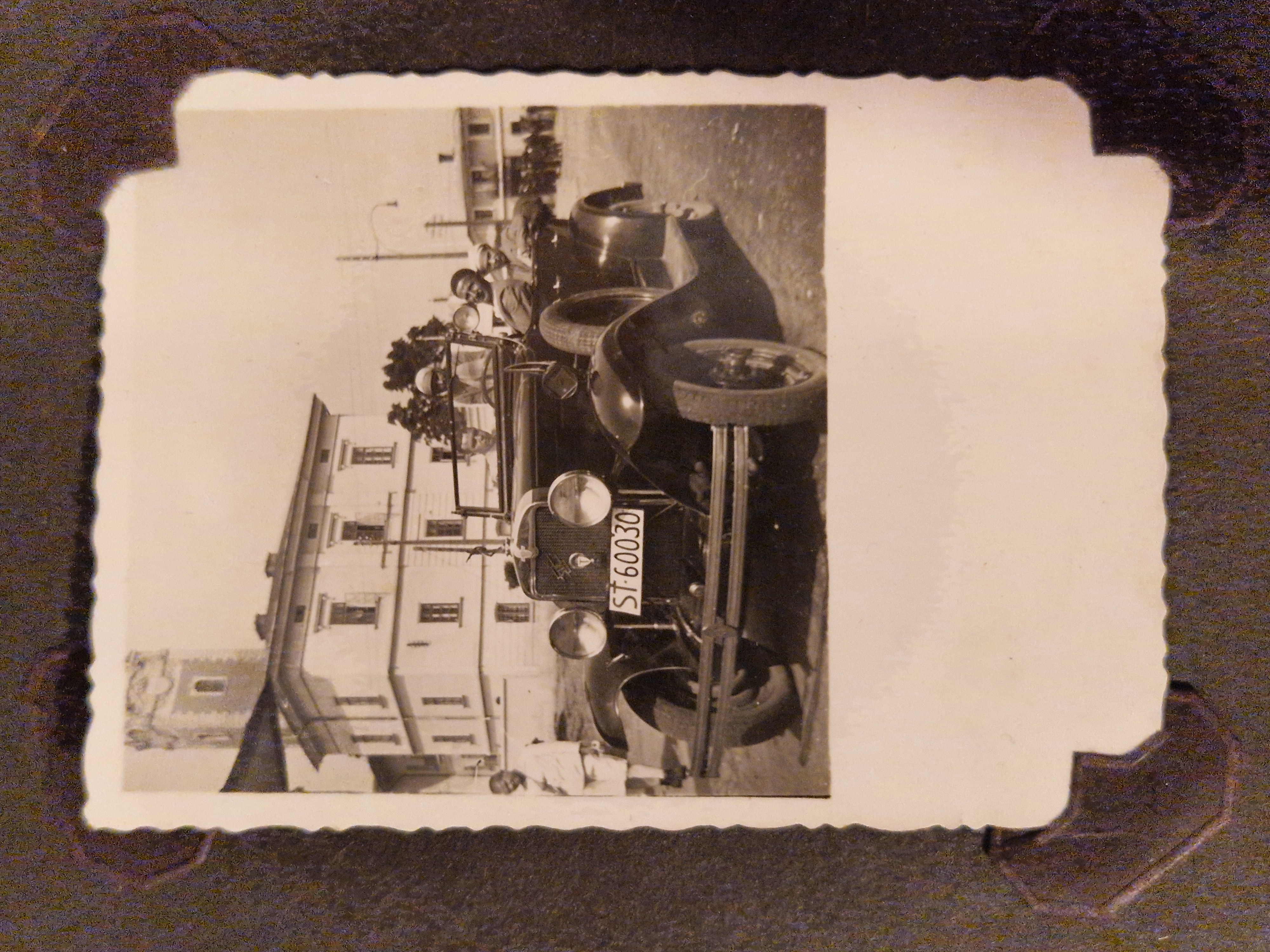
The first picture comes from that region. My great-great-grandfather is sitting in a car, possibly Fiat, with other gentlemen in the main square of a small town. The car registration plate begins with the letters “ST”, which indicates the provincial city of Stanisławów, now Iwano-Frankiwsk in Ukraine. ChatGPT suggested that the town where the photo was taken might be Śniatyń.
My great-great-grandfather graduated in law from the Jan Kazimierz University in Lwów and later defended his Ph.D. at the Jagiellonian University in Kraków. In 1914, he joined the Polish Legions and fought for Poland’s independence. From that time on, he belonged to the Piłsudski political camp.
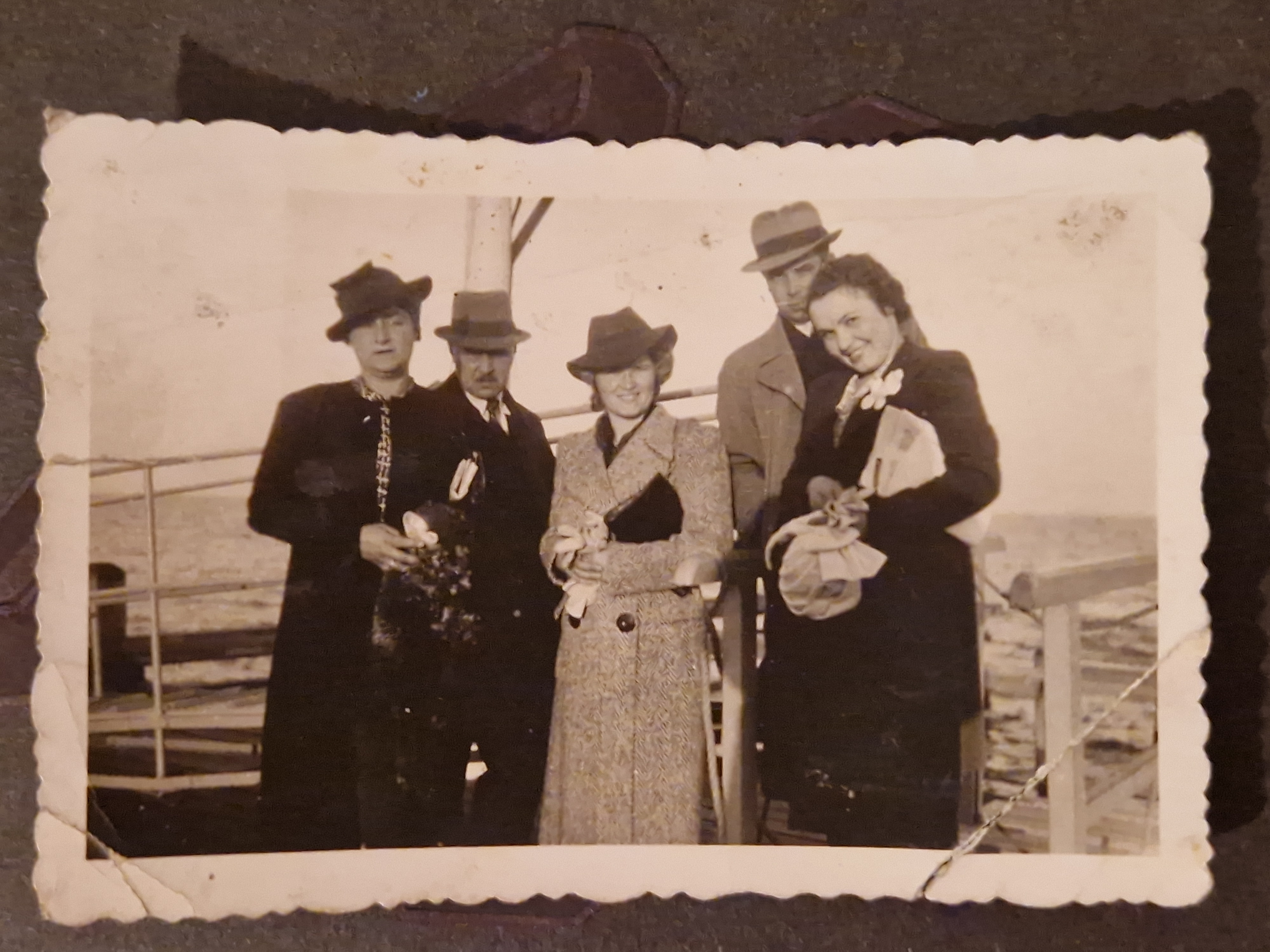
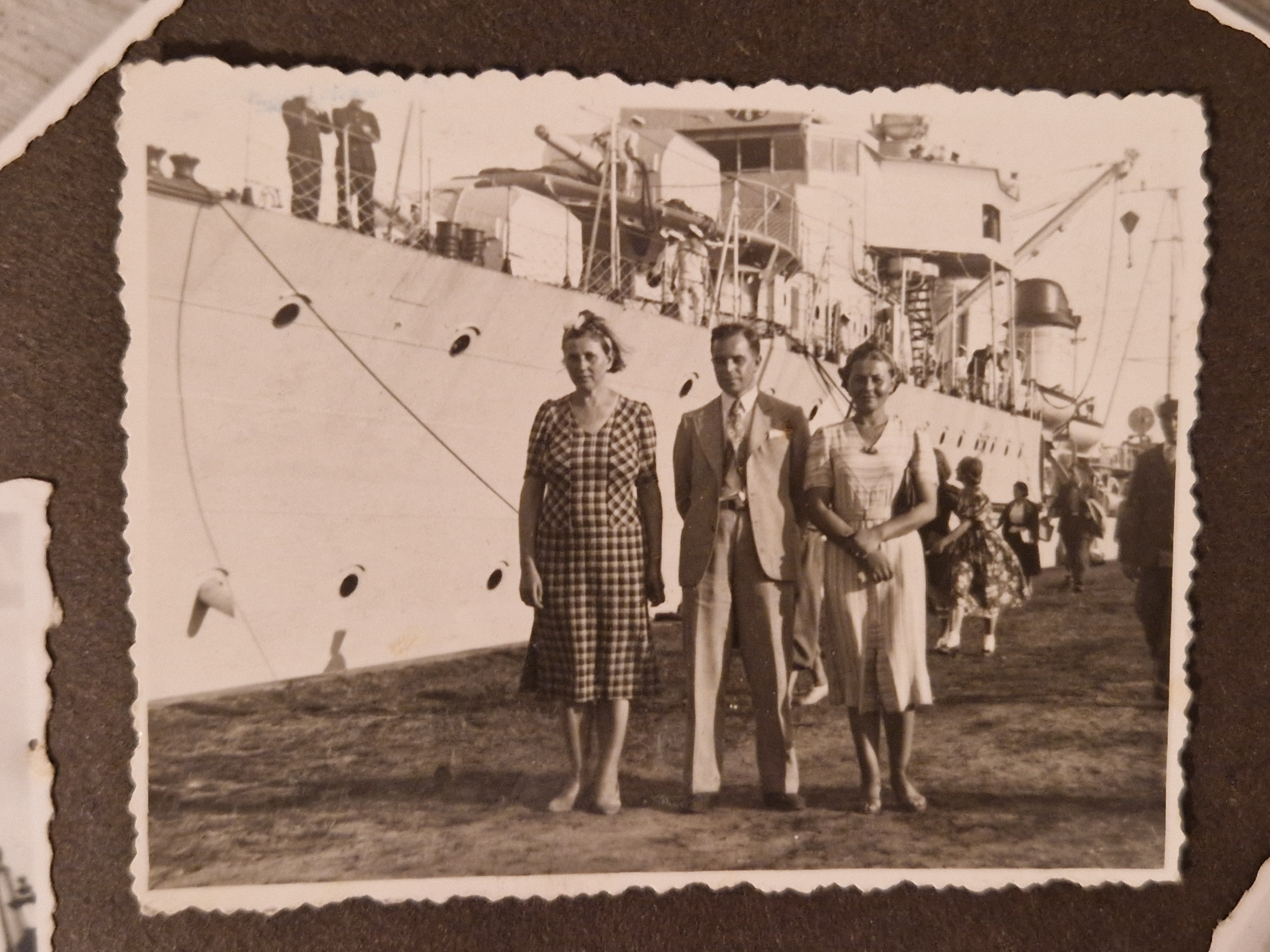
During the interwar period, he worked as a lawyer and manager in the judiciary, government, and banking sector. From 1935 to 1939, he served as director of the Bank Gospodarstwa Krajowego (the National Development Bank). The other two photographs come from that time. In one of them, he stands on a harbor with a warship visible in the background. It is difficult to tell where this photograph was taken. The last photo shows him together with his wife – my great-great-grandmother Helena – among a group of elegantly dressed people. In the background, we can see the railings of a ship and the sea. On the back of the photo, it says: “Photo taken on the day of Wojtek’s baptism, 25.09.1938” and there is a stamp reading “Foto Elite Gdynia.”
As we can see, all the photographs are carefully prepared. The people are deliberately posed. It is clear that in those times, people did not take as many random photos as we do today. The pictures are printed on decorative photographic paper with ornamental borders. Although they are small in size, they show many details because of their good quality.
After the outbreak of World War II, Leon Barysz was evacuated to Romania and then to Palestine. In Tel Aviv, he served as a delegate of the Najwyższa Izba Kontroli (the Supreme Audit Office of Poland) in the Middle East. He received many important orders and medals, including the Order of Polonia Restituta, the Krzyż Niepodległości (the Cross of Independence), and the Krzyż Walecznych (the Cross of Valour).
After the war, he lived in London because he could not return to communist Poland for political reasons. Together with his wife Helena, he died in unexplained circumstances on June 12, 1949. According to family accounts, he was murdered because he knew too much. Just as at the beginning of his life, Poland was once again not an independent country.
Leon Barysz was buried in a cemetery in London. I hope that one day I will be able to visit his grave.