
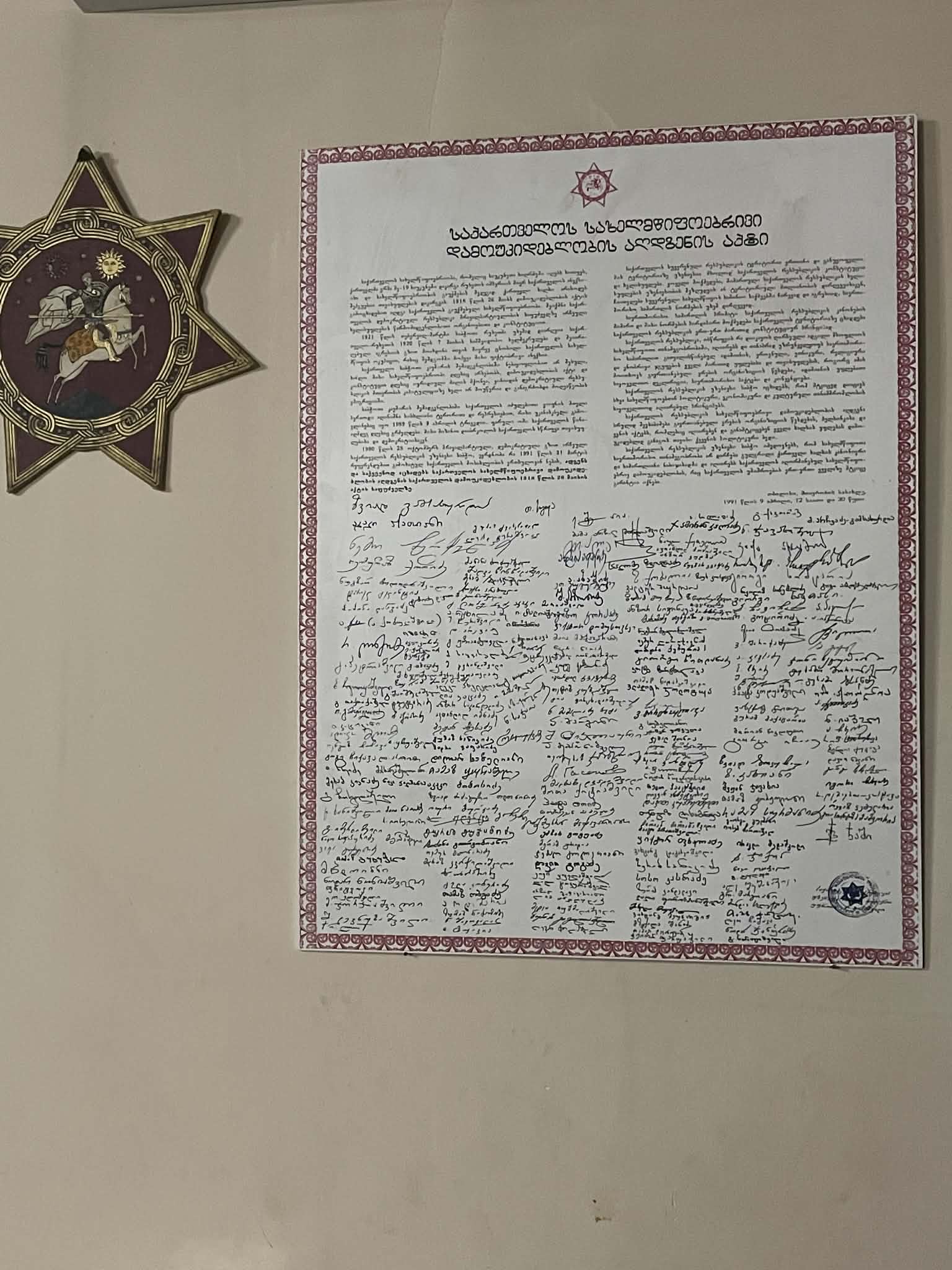
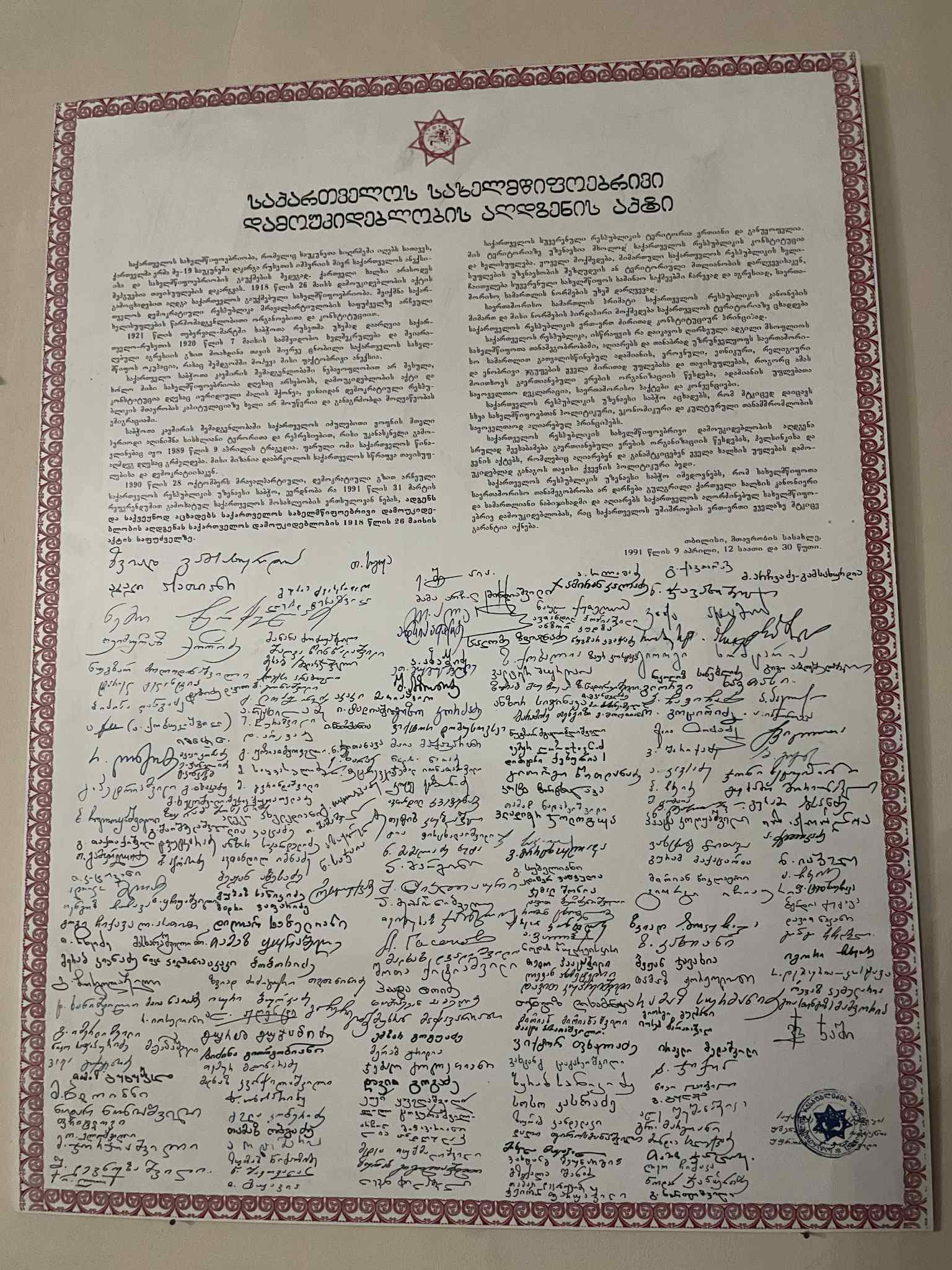
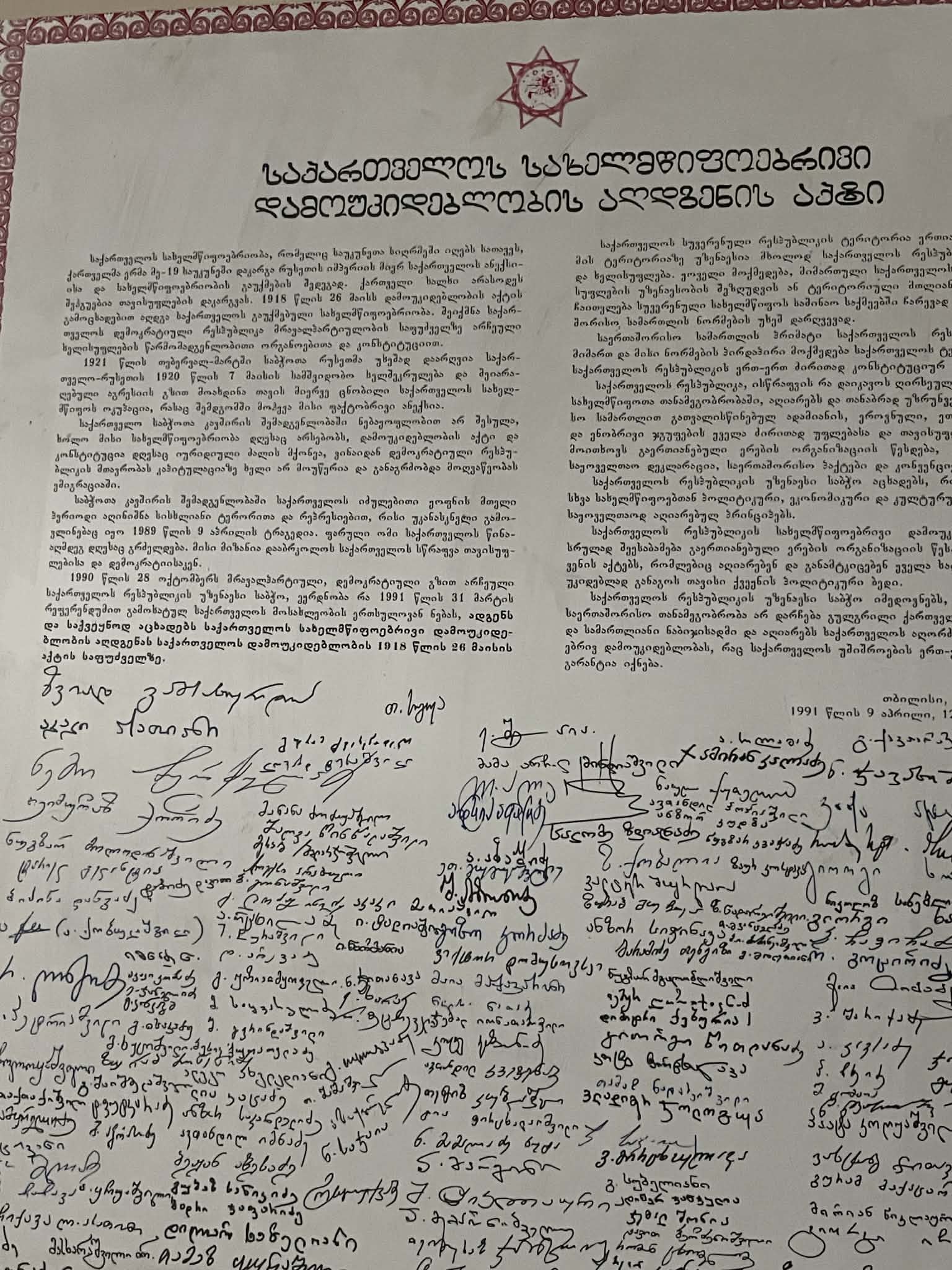
The Act of Restoration of State Independence
About the Creator
I am a tenth grade student at Shavnabada Gymnasium. I'm interessted in history, literature and art.
My country has a long and rich historical past. Its history begins in the pre-christian era. Over the centuries our homeland has experienced periods of strength and decline, unity and fragmentation. In XIX century, Georgia’s separate principalities lost their independence and were gradually annexed by the expanding Russian Empire. Georgia declares independence only in 1917, during the revolutionary changes in Russia, which later led to the downfall of the Russian Empire. However, this independence lasted only 3 years. In 1921, the red army invades our country and Georgia becomes a part of a new Russian state_ The Soviet Union. Life under the new regime was not easy, especially during the 1920s- 1930s. Many people lost their lives due to their loyalty to national independence and traditional faith.
Supporting the country’s independence, being a Christian or opposing communist ideology was dangerous. The government was trying to raise new generation loyal to communist ideology, often through distorted versions of history. My grandma was a history teacher and she noted that young people knew nothing about national heroes such as, Kakutsa Cholokashvili, who led a rebellious attack against USSR. Students were taught that Georgia willingly joined Soviet Union and lived in a “brotherly family’’ to build bright future with other soviet countries. The rebellion was suppressed and its organizers and supporters were punished. Schools taught nothing about this tragic event, so that in the public consciousness, Georgia wouldn’t be seen as a nation that fought for independence. They partially managed to achieve this goal and by 1940s few people remained loyal to the idea of national freedom. Those who learned true history of the country mostly did it at home. For example, the first president of Georgia, Zviad Gamsakhurdia, the son of a renowned classicist, learned the real history. He influenced his peers and these young boys fought against the ideology often through illegal means and tried to revive the fading spirit of freedom among people.
In 1980s the USSR began to weaken. The authorities couldn’t rule over the people through communist ideology anymore, so reforms known as “reformation” began. This reforms led to a revival of national ideologies in lots of Soviet republics. The national liberation movement was also revived in Georgia.
My father was a member of this national liberation movement. He was only 23 when he was actively involved. They often organized protest rallies, they published underground newspaper-magazines, tried to restore erased history and to awaken national spirit in people’s hearts. On the 28th October, 1990, the first multi-party elections were held, which was won by the national alliance named “Round table-free Georgia’’. My father was a member of this alliance and was selected as a Majoritarian MP of Samtredia and he was soon appointed a prefect of the town. Following the elections, supreme council declared the restoration of Georgia’s independence on 9th of April, 1991. My father also signed The Act of Restoration of State Independence among many others. This photographs show a copy of the document, as far as I know, the original has been lost.
The new government didn’t last long since it faced numerous opponents. An armed coup took place in our country. In December of 1991 the armed opposition attacked the Georgian parliament, where my father was with the president and his supporters. These attacks continued until 6th of January, 1992. This day Gamsakhurdia and his followers escaped the parliament building and left the country. My father also left with the president, but he returned shortly after. He was persecuted by the authorities for 3 years. He had to move often from one place to another and couldn’t go home to his family. The Opposition won and they invited Edward Shevardnadze as a president, but throughout this period my father was among the supporters of Gamsakhurdia, fighting for the national government. Gamsakhurdia and his followers were eventually defeated and many of his supporters went into exile. Those who stayed in Georgia were imprisoned. Including my father and his friends. They were accused of being members of Gamsakhurdia’s faction and treason. The prosecutor demanded the death penalty for my father and others, but the court sentenced them to 13 years in prison. Life was hard for my father’s mother, and sister who was dismissed from her job, because of my father’s political beliefs. Even the relatives were in danger simply because of their association with them. Despite the risks grandma and aunt never left my father’s side.
Over time, the situation changed. The authorities didn’t want to have political prisoners who began hunger strike demanding their release. As a result the authorities were forced to set them free.
This story fills me and my brothers with pride. I’m deeply grateful to my father, who managed to endure hardships and contributed greatly to our country.