
A Century Woven in Wool (The Story of the Kavtaradze Family)
About the Creator
My name is Sesili, I am 13 years old, and I'd like to take part in this project because I think it will give me a great experience.
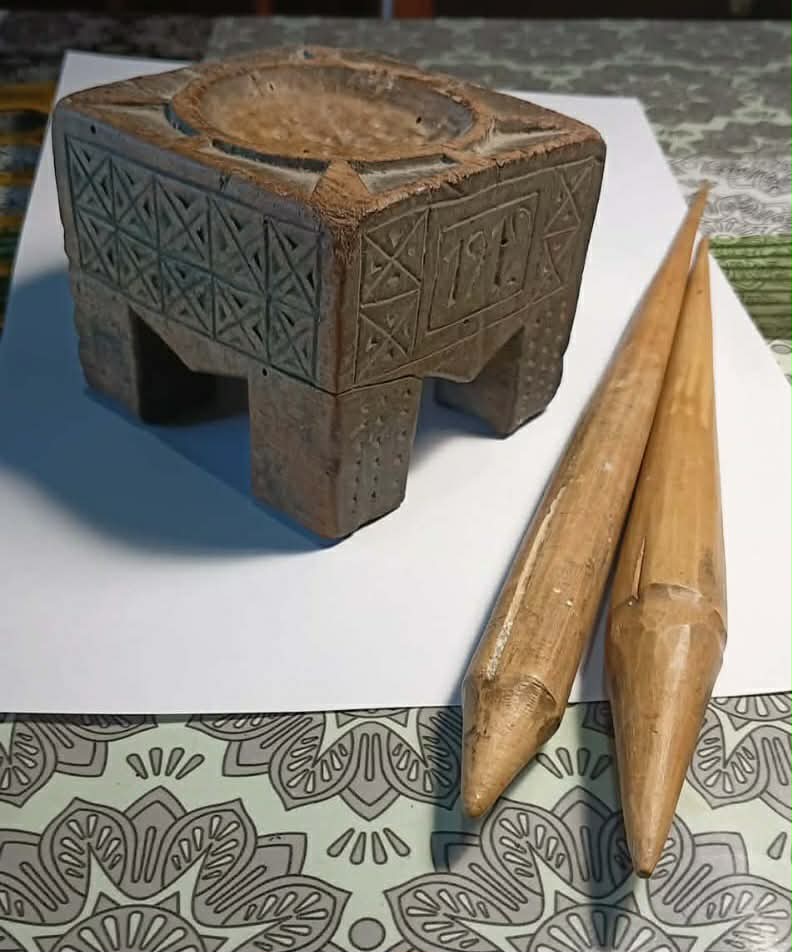
The treasure of my family is a traditional threading device which is carved from wood. It is a wool processing board with two finger sticks. The date which is engraved on the photo indicates that this device was made at the beginning of the 20th century, in particular it was made in 1912. Throughout the history of my family this thing has passed down from generation to generation and still keeps the method how wool was harvested in the highlands of Georgia. The geometrical figures which are engraved on the wood are not only decorations. At the same time, they are the expression and proof of the craftsmanship and aesthetics of that period.
This device is the witness of the social and historical life of the highland of Eastern Georgia. This was the hardest period of Georgia, the time span of the First World War, the short span of Independence and further soviet occupation. The main task in the highlands was self- preservation. This kind of devices were vitally important. With the help of this device women made Georgian traditional woolen cloaks so called Nabad and rugs and carpets. These things helped families to survive during strict climatic conditions and a time of war.
The finger stick was made by my great grandmother`s father Abrami. In the past it was a family tradition to weave carpets. Carpets were kept for a long time. Weaving was the work of women. That`s why mothers always presented carpets to their children.
Except for its material value it keeps my family history. This device was called “Jara” in the past. It was made from wood. As I mentioned earlier this thing was made by my great grandmother`s father in 1912. Soon he got married, but in week he had to go to war.
He was captured twice during the war. At first, he tried to escape with the Ukrainian. When they thought they had reached safe territory and asked for some bread they failed. They were taxed. They were caught again and were obliged to bake bread for the Germans. After 4 years he again tried to escape successfully. This time he escaped with the Armenian partner. They came back to Georgia after the war was finished in 1919.
Abrami and his wife Masho had 6 children. Masho started knitting and wearing by their tradition. This job went on. Even today we have one carpet which belonged to her daughter, Mariami. This carpet was woven in 1952.
The tradition was following. The women who could knit and weave got together one particular night which was called “Vighamaot”. They sang songs and in the light of a lamp they wove wool, knitted different things. They always had different roots, onion sheets with them to make natural paints.
Processing of wool in the highlands is the part of the oldest culture. The process consisted of several stages: wool spinning, weaving, dyeing with natural paints. While spinning the finger stick the wooden stand ensured the tension of the thread. As a result of this on the looms were made beautiful, difficult, intricate ornament decorated stuff.
The story was told by Abram's only living son, Gabriel Kavtaradze, my great-grandfather, on my mother`s side.