
Between Meadow and Folk Art: The Romanian Sheepskin Vest.
About the Creator
My name is Sofonea David, I am 17 years old and I am interested in many things. I enjoy reading and have over 300 books in my room and I am also interested in science, as I have had a keen interest in the world of technology for several years.
I must admit that my family on my father's side has a very rich history and was also a wealthy and well-known one in the Olt Valley region (Romania) in the past (especially in the interwar period). I have also learned a lot about my mother's side of the family recently, but many things and family treasures have been lost over time. In contrast, my family still has quite a lot from my father's side that has been more or less preserved, such as a traditional Romanian-style waistcoat. My great-grandfather, Dumitru Sofonea (who crafted the above-mentioned waistcoat), had five children in his day. One of them, Dumitru Sofonea (Jr.) was recognised by the Romanian Ministry of Culture in 2011 as a ‘tezaur uman viu’ (living human cultural treasure) with UNESCO recognition for ‘preserving, conserving and passing on intangible cultural heritage’ and was awarded the ‘Ordinul Meritul Cultural’ (Order of Cultural Merit) by the Romanian president in 2015! He is known to have crafted, sheepskin coats and waistcoats for King Michael I (being known as ‘Cojocarul Regelui Mihai’ (King Michael's furrier) and Princess Margareta, for the poet Tudor Arghezi, the billionaire Ion Țiriac, the former Romanian President Ion Iliescu and even for the dictator Nicolae Ceaușescu.
So, my great-grandfather taught his craft to his son, who later, as I mentioned, gained recognition for it.
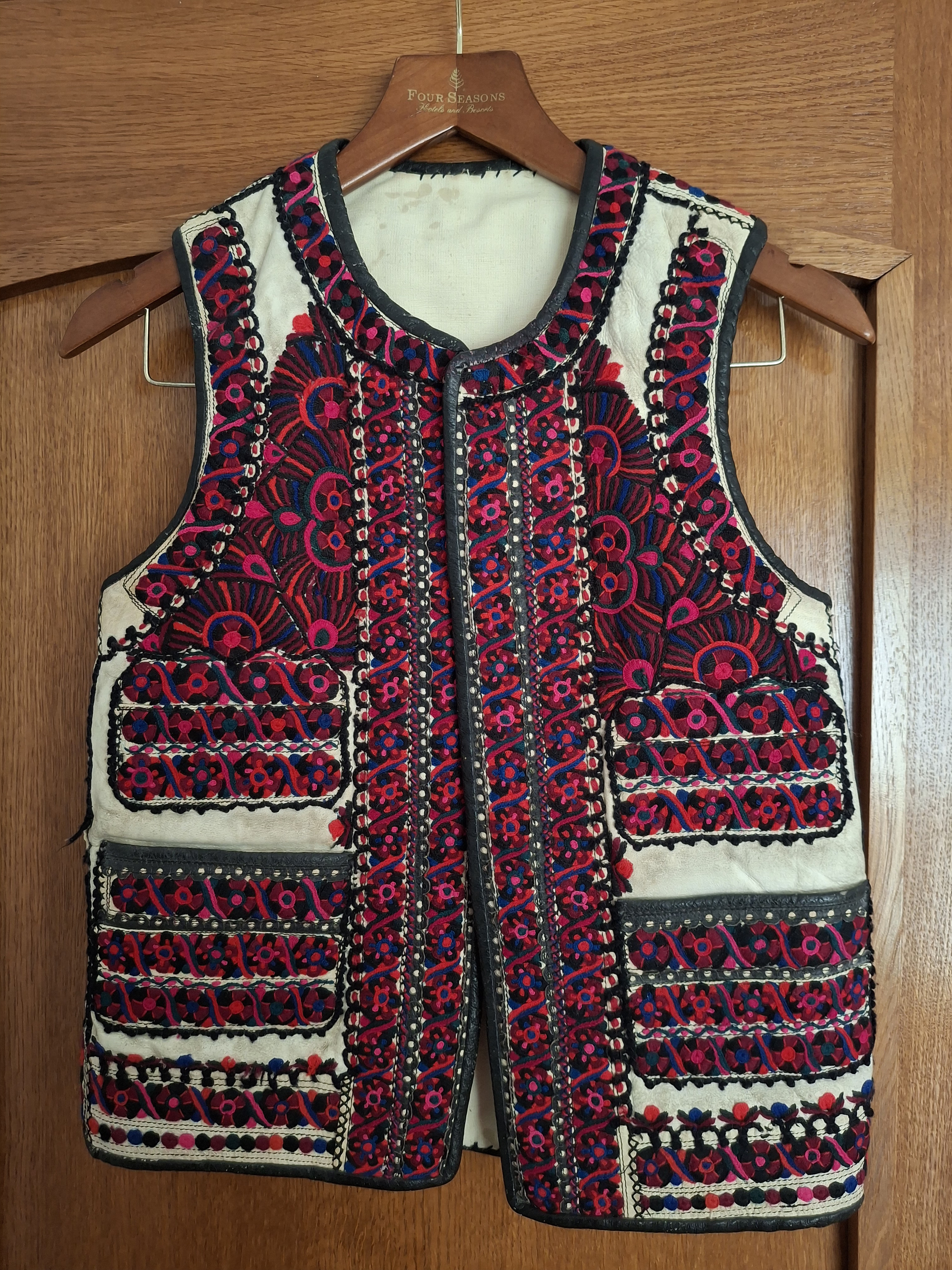
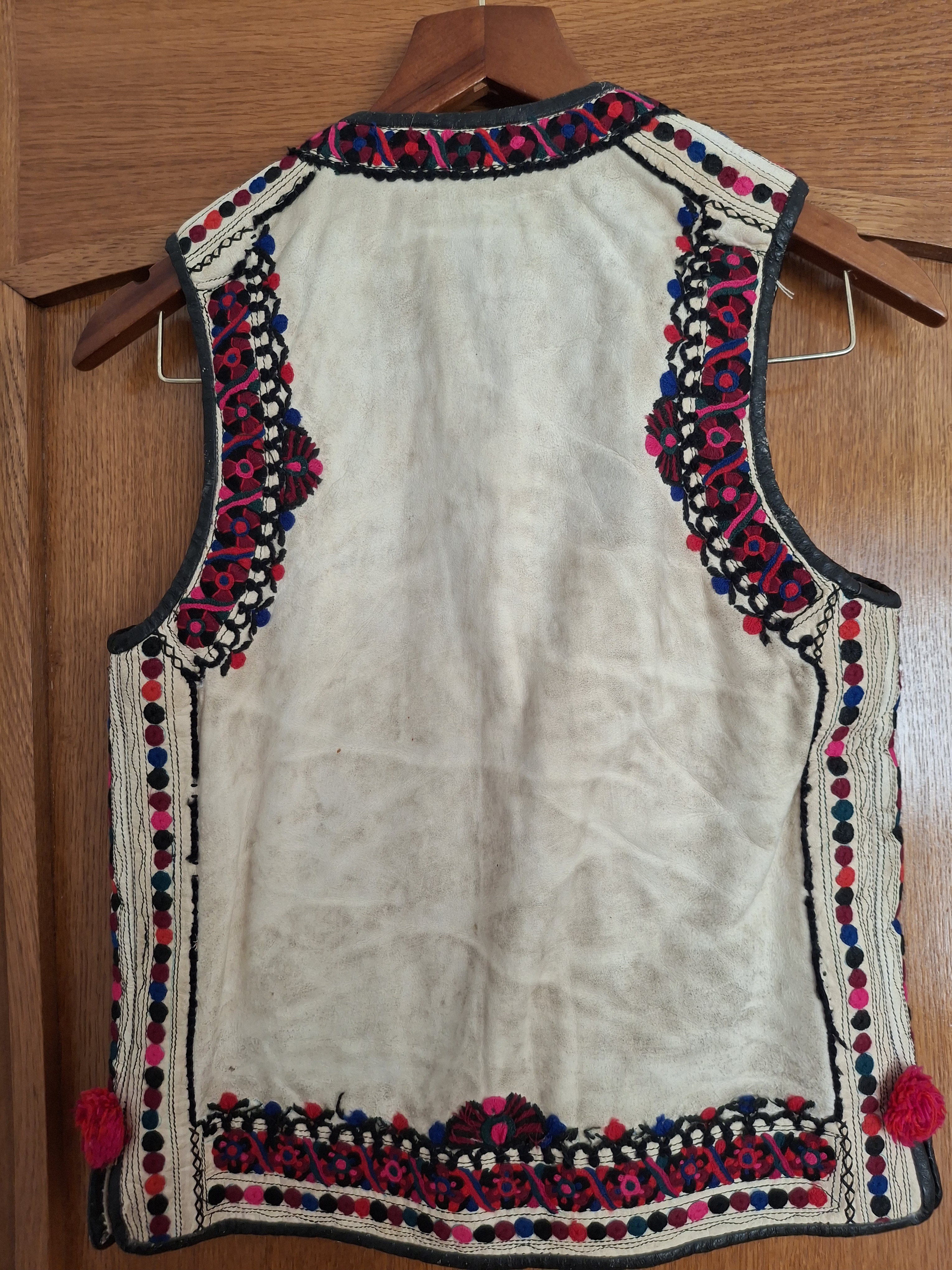
However, the waistcoat I am talking about was my great-grandfather’s hand-crafted garment. It is almost half a century old and a valuable piece of Sofonea family’s history. The waistcoat was once made for my father and was later passed on to my older brother, who wore it on special occasions.
The waistcoat is a traditional, hand-embroidered shepherd's waistcoat (known as a ‘cojoc’ or ‘cheptar’ in Romanian) with floral embroidery in bright red, pink, dark blue and black, on sheepskin. Several horizontal and vertical decorative bands also give the piece symmetry. Such waistcoats were usually worn at weddings, festivals or other occasions, where the more varied and colourful the ornaments on the clothing were, the more they represented a status symbol.
I must admit that I only learned about my family's past at a late stage, unfortunately. A great deal of information has been lost over the last few decades, which my brother and I now find it very difficult to uncover. Much has disappeared and many family members live in different parts of Romania or other countries, such as the USA, therefore, many of the objects that are valuable to my family are scattered in many places in the world or even completely gone. For me, this vest represents the old traditions and culture of Romania, which were unfortunately systematically partially abolished by the communist regime. I am also fascinated by the fact that my family, which consisted of farmers and only a few scholars, became so well-known and achieved so much through pure passion and love for their craft, even though they never belonged to the bourgeoisie of the pre-war and interwar periods and lived only in the small village of Drăguș for the last two centuries. I know from my grandparents how difficult it is to make such intricate garments. I learned from my grandmother that my great-grandfather himself had skinned the sheep and processed the hides for further use. He did every step of the production process himself because he loved this craft, and I admire that.
The man who made this waistcoat came from a time that is familiar to me, yet completely foreign. He was born around the interwar period and carried on his family's craft. There are stories told about him but much has become history and I haven’t found reliable evidence. What I can say with certainty is that he mastered his craft and later taught students (including his son, Dumitru), enabling him to pass on a piece of this tradition. Very little is known about him and his handiwork, as this art form and many others were increasingly overshadowed during the Communist era, leaving little information about him.
All too often, I am surprised by my family history even though many things of emotional value have been lost and will remain so forever. This waistcoat is my great-grandfather's handiwork and a call from the past that can still be heard today. A work that took a lot of time and effort and has survived the decades, waiting in the darkness of the wardrobe to be discovered and admired.