
A Dollhouse Made of Wood, Memory, and History
About the Creator
I’m a very passionate girl who loves her family and city. I love sports and I’m very social. I loved to study about my family history.
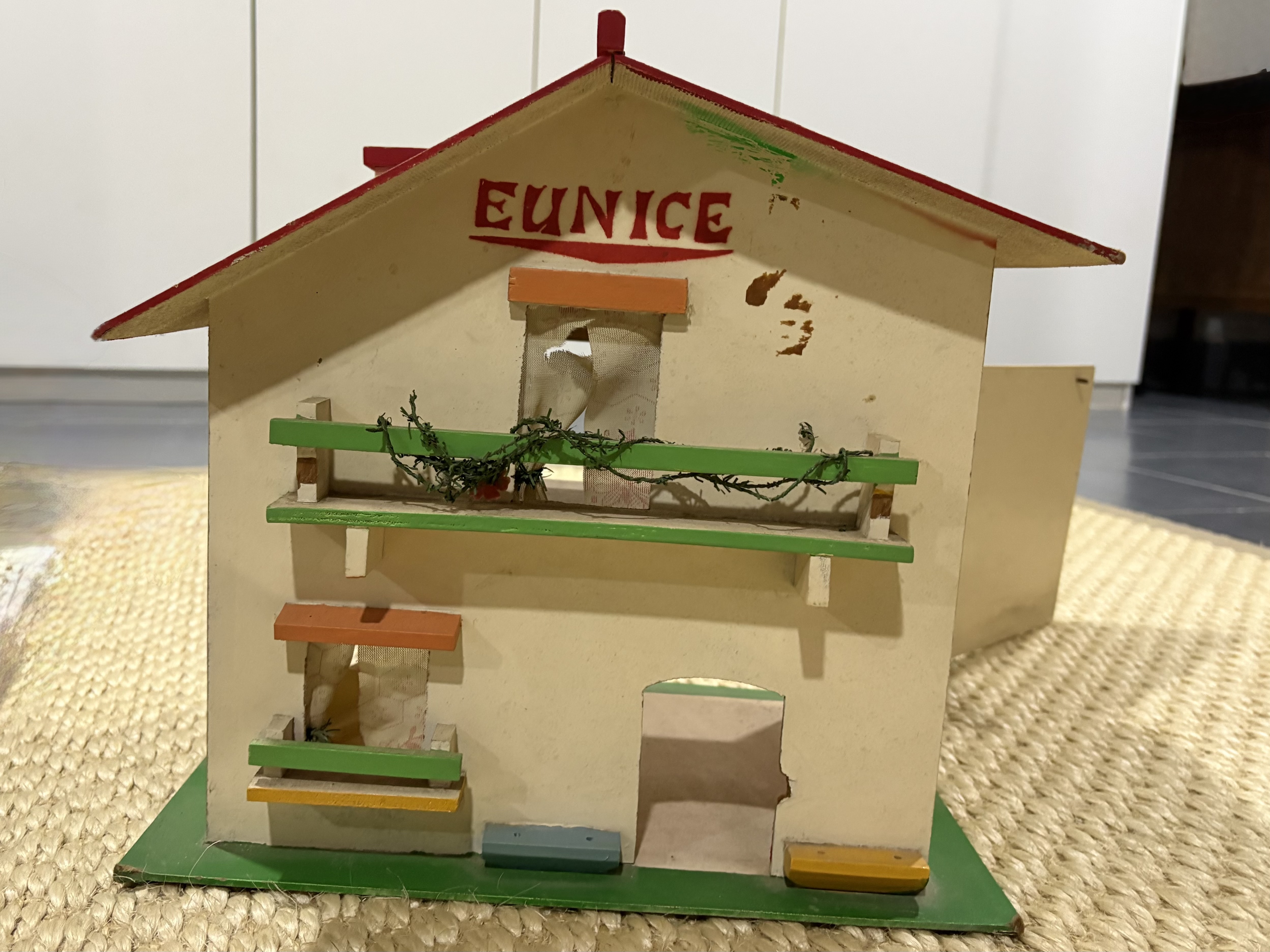
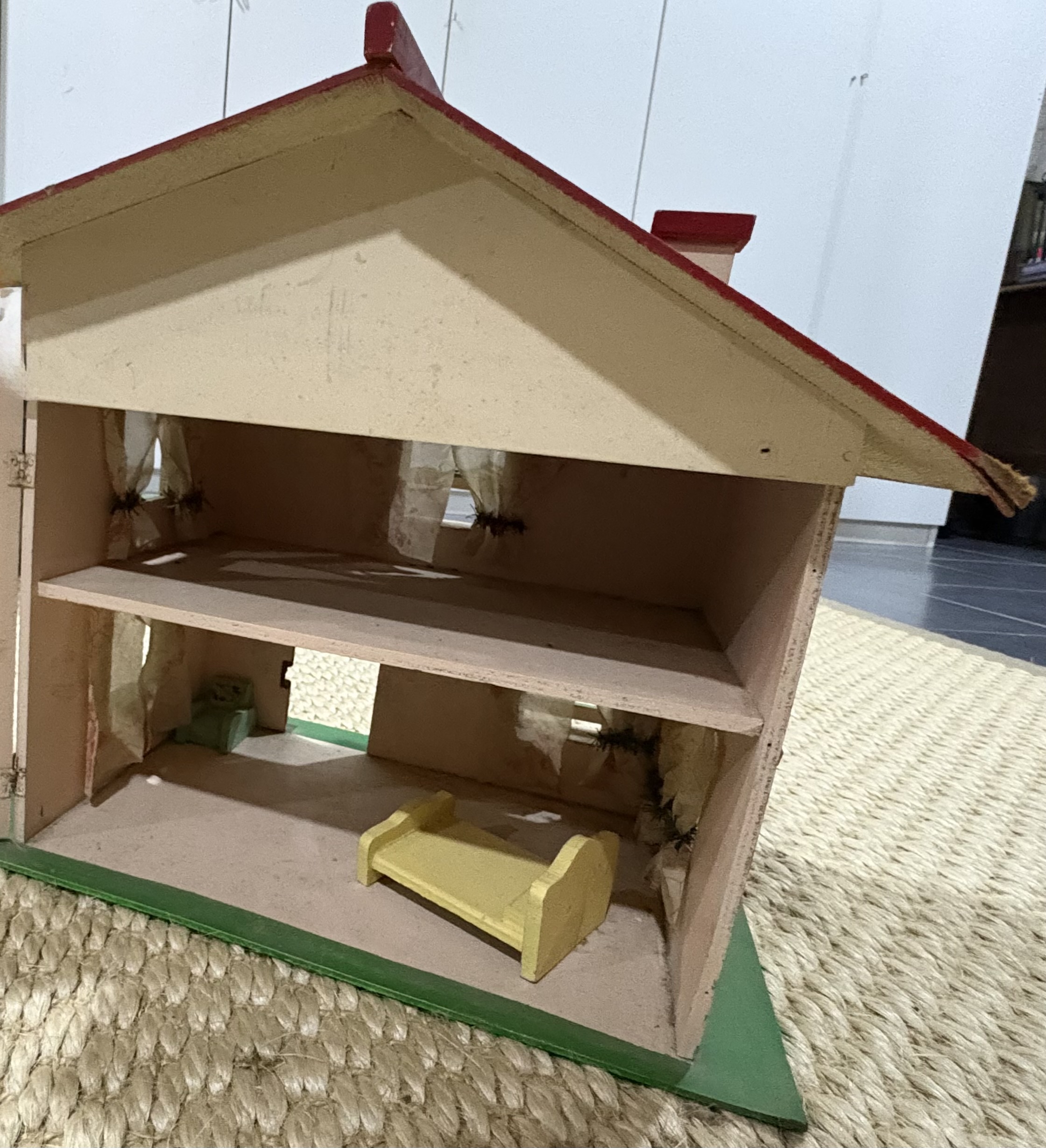
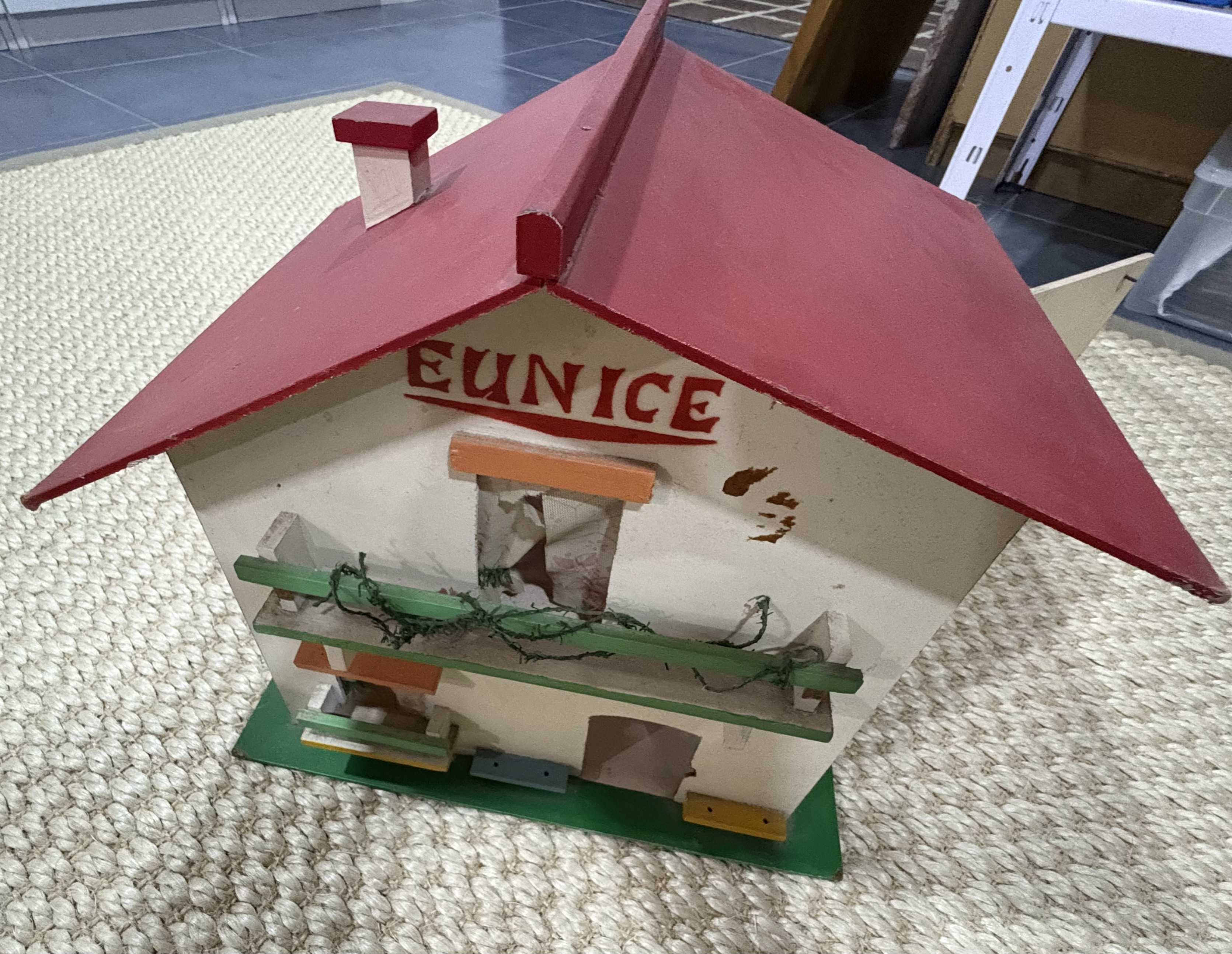
In our home, placed carefully on a shelf where everyone can see it, there is a handmade wooden dollhouse. It is not protected by glass, nor hidden away like a fragile relic. It lives among us, just as it always has. At first glance, it may look like a simple toy from another time, but for my family it is much more than that. It is a witness. It holds the memory of several generations, the effort of a family, and the history of a city that learned how to survive, adapt, and reinvent itself throughout the 20th century.
The dollhouse is built entirely by hand. Its Mediterranean style reflects the place where we live: warm colours, simple lines, and a tiled roof inspired by the traditional houses of our region. The nails are visible, the wood is imperfect, and every detail reveals the human touch behind it. This is not an industrial object. It was made slowly, patiently, by someone who cared deeply about what he was creating. When I look at it, I do not only see a toy. I see time, dedication, and love transformed into wood.
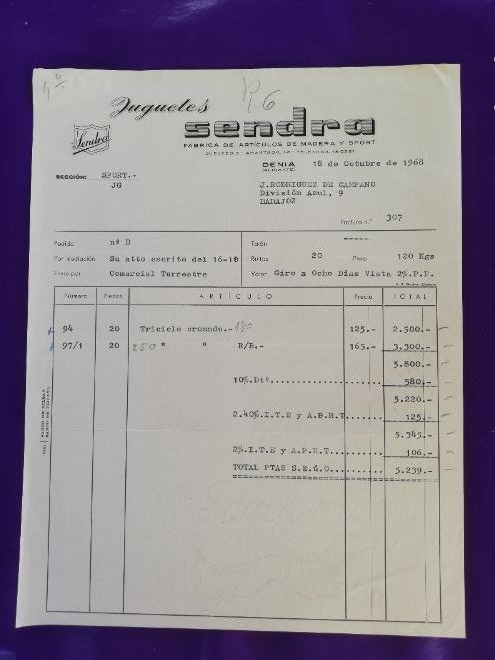
This dollhouse was made by my great-grandfather, Jaime Sendra Timoner, founder of the family company Juguetes Sendra. His story is inseparable from the social and economic transformations that shaped Spain during the 20th century. Like many people of his generation, he grew up in a world marked by uncertainty, limited resources, and the constant need to adapt. From a young age, he showed a strong interest in mathematics and numbers. This talent became a practical tool in a time when every coin mattered.
In order to earn some extra money, my great-grandfather began working at night keeping the accounts of a toy factory. Those nights were long and silent, filled with numbers, calculations, and responsibility. What began as a necessity slowly turned into a vocation. Through this work, he discovered not only the technical side of the toy industry, but also its emotional power. Toys were not just objects; they were carriers of joy, imagination, and hope, especially in difficult times.
However, creating a toy factory in early 20th-century Spain was not an easy dream to pursue. It required sacrifice, patience, and years of careful saving. In this process, my great-grandmother played a decisive and often invisible role. She was an expert in managing household finances and saving money, even during periods of great hardship. Every small saving mattered. Her discipline and perseverance allowed the family to slowly gather the resources needed to invest in tools, materials, and workers. Without her effort, Juguetes Sendra would never have existed.
Their story reflects the reality of many Spanish families during the 20th century, especially in small cities like Dénia. At the end of the 19th century, Dénia depended almost entirely on the production and export of raisins. This industry brought prosperity to the city, but it also made it vulnerable. Between 1870 and 1880, the phylloxera plague devastated vineyards across Europe, destroying the economic foundation of the region. Suddenly, thousands of families lost their livelihood.
The impact on Dénia was profound. Warehouses near the port were left full of unused wooden grape boxes, once symbols of prosperity and trade. Faced with this crisis, the people of Dénia did not give up. Instead, they adapted. With creativity and determination, those abandoned wooden boxes were transformed into raw material for a new industry. From necessity was born innovation.
At the beginning of the 20th century, Dénia reinvented itself as one of the most important centres of wooden toy production in Spain. Nearly one hundred workshops and factories appeared across the city, both small family-run spaces and larger industrial sites. These factories provided work, stability, and dignity to families during decades marked by instability, including the Spanish Civil War and the long and difficult postwar period.
Toy factories were not just places of production. They were spaces of survival, learning, and community. Inside them, craftsmanship was passed from one generation to the next. Wood was shaped by hands that understood its texture, its resistance, and its possibilities. In a country rebuilding itself after conflict, toys became a quiet form of resistance: proof that imagination and joy could survive even in the hardest times.
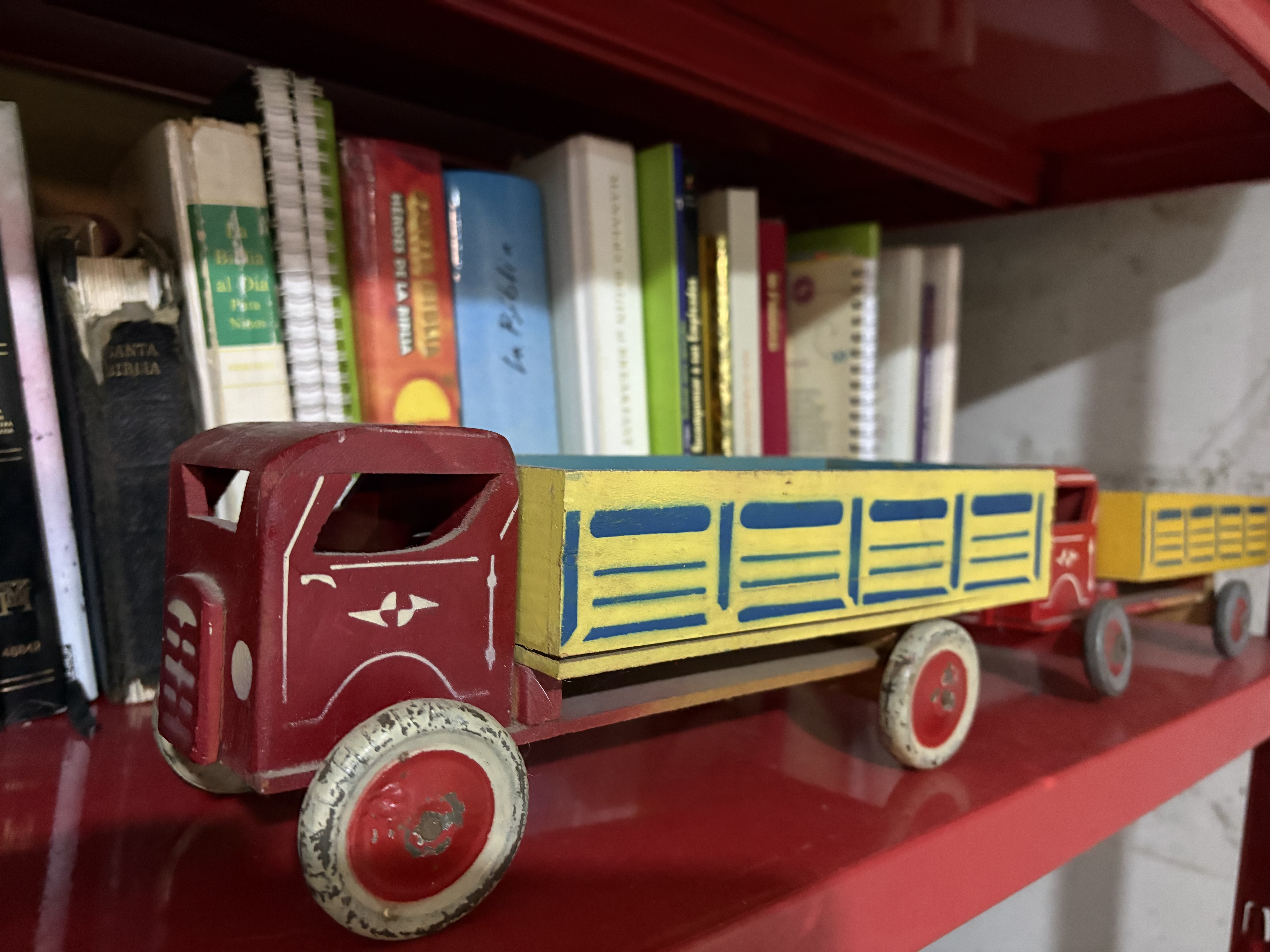
It was within this historical context that Juguetes Sendra grew and found its place. During the 1950s, my great-grandfather worked side by side with his employees, personally crafting toys every day. Dollhouses like the one we keep at home, trucks, table football games, cowboy forts, tricycles, bicycles, and many other toys left the factory and travelled to homes all over Spain. Each piece carried with it the effort of many hands.
My mother says that her grandfather was “Santa Claus’s helper.” This sentence, said half-jokingly, contains a deep truth. In a country still recovering from scarcity, he dedicated his life to creating joy. The factory remained active until the 1980s, adapting to social and economic changes while
preserving its artisanal spirit. When it finally closed, it left behind not only objects, but memories, skills, and a legacy that continues to live within our family.
This dollhouse is also the centre of our personal story. Every member of my family has memories connected to the factory. Some remember the smell of wood, others the sound of tools, others the excitement of seeing finished toys ready to be sent away. Almost all of us keep at least one toy made there. Some pieces have even been recovered from antique shops, where they are now sold as valuable collectibles. Seeing the same toys we once played with displayed behind glass is both emotional and surprising. What was once part of everyday life is now recognized as cultural heritage.
Today, this legacy is not only preserved within families, but also recognized by the city itself. In Dénia, there is now the Museo del Juguete de Dénia, a place dedicated to preserving the memory of the local toy industry. Many of the old factories that once gave life to the city are represented there, turning personal stories into shared heritage. Among the exhibits, there is a wooden dollhouse made by my grandfather, a piece that connects my family directly to the collective history of Dénia. Knowing that an object created by my family is now part of a public museum fills us with pride and emotion.
For me, it has been a privilege to grow up playing with these toys with my brother. The same dollhouse had already been used by my mother, my uncle, and even my grandmother, the daughter of the toy maker himself. Through play, it connects four generations. When I think about it, I realize that this object has never truly stopped fulfilling its purpose.
Today, this dollhouse represents much more than childhood. It is a symbol of family unity. It tells the story of a city that reinvented itself after economic collapse, of a country that endured hardship throughout the 20th century, and of ordinary people who built extraordinary things through perseverance and creativity.
The year 1983 marked a turning point in this story. After decades of work, my great-grandfather, Jaime Sendra Timoner, made the difficult decision to close the factory. By then, the toy industry was changing rapidly. Mass production from China, using much cheaper materials, made it impossible for small artisanal factories like Juguetes Sendra to compete. The closure was painful, but it also marked the end of an era defined by craftsmanship, human labour, and local identity.
That same year, however, opened a new chapter of service and commitment. In 1983, my great-grandfather was elected as the first democratic mayor of Dénia after the dictatorship. After dedicating his life to creating joy for children, he now dedicated his experience and sense of responsibility to his city. His contribution was deeply meaningful and left a lasting mark on the community. In this way, his legacy moved beyond the factory walls and became part of the democratic and social reconstruction of the city itself.
Today, when I look at this wooden dollhouse, I understand that it carries much more than my family’s memories. It contains the story of a city that transformed crisis into creativity, of a country that rebuilt itself after hardship, and of a generation that believed in work, responsibility, and community. My great-grandfather began by shaping toys from reused wood, continued by bringing joy to children, and later served his city during a crucial moment of democratic rebirth. What started as a small handmade object became part of a much larger story. This dollhouse reminds me that history is not only written in official records, but also carved quietly by ordinary people through perseverance and love. Preserved in wood, it connects past and present, private memory and shared heritage. For my family, it is not just a treasure—it is our way of remembering who we are and honouring a legacy that still lives on.