
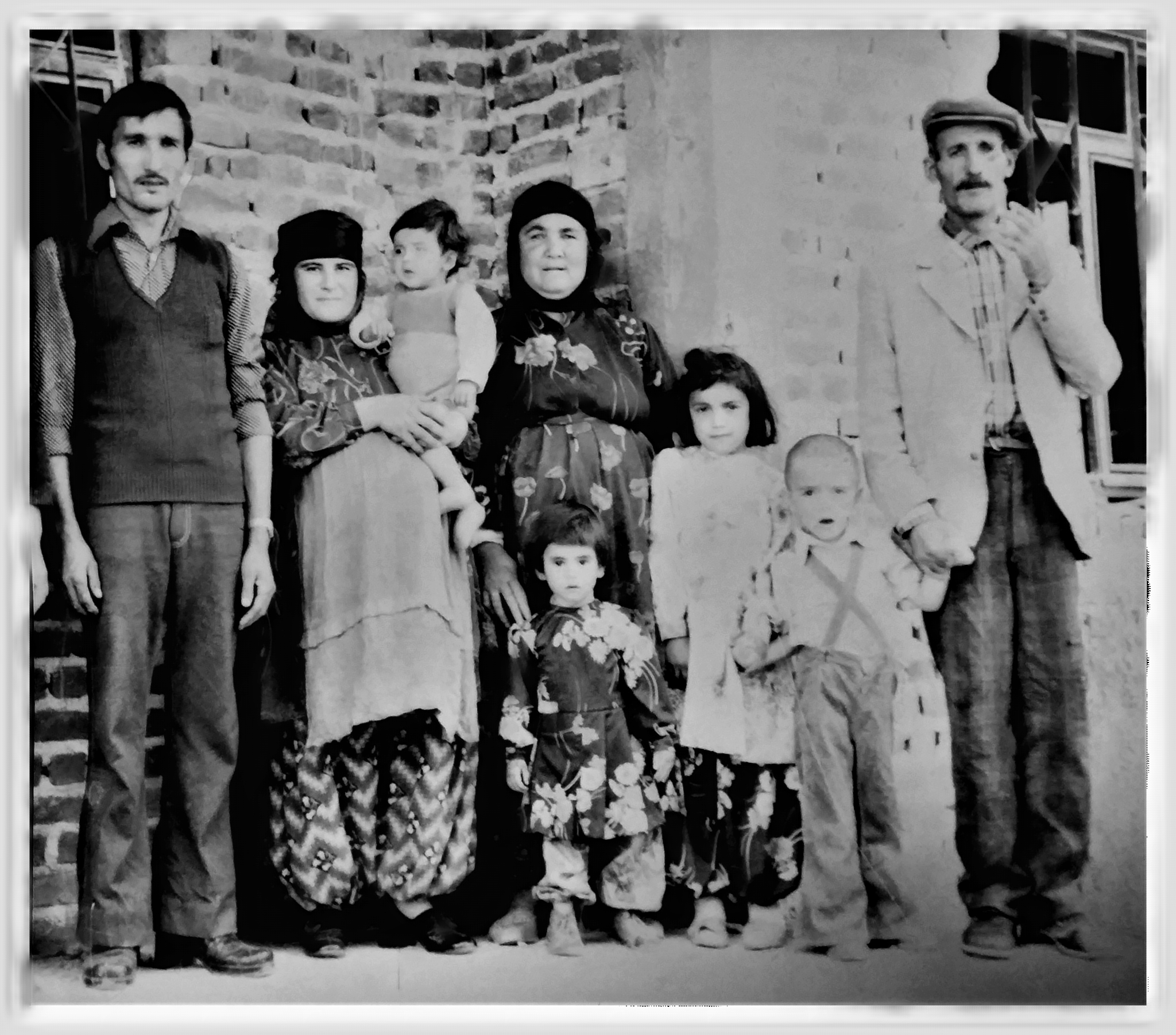
Family Photo That Smells Of Homesickness In Expatriation
About the Creator
Born in 1976, I hold bachelor's degrees in History from Pamukkale University and Sociology from Anadolu University. I also hold a Master’s degree in Educational Administration and Supervision from Uşak University. I am married with two children.
This photo is not just an object for us, it is a black and white visual that hides the deepest traces of sacrifice, longing, statelessness.
This black-and-white frame from 1977 is not just a family's farewell moment; it is a visual memory of one of the most turbulent, most "difficult" and most "hopeful" periods of Turkey. That moment when Aunt Dudu presses the shutter button represents that huge gulf between the coldness of the Deconstructed wall in the background and the warmth of the mother's heart behind the camera.
A Farewell From the Eyes of Aunt Dudu
- This is a family photo taken in 1977 in front of a wall whose plaster has not yet been completed, with a heavy historical burden.
- It came out of the photo album of Aunt Dudu, who is the memory keeper of our family, on dusty shelves as a story of longing.
- The most shocking part of this photo is that the person who took the photo is Dudu Hala, who is going to emigrate personally. He did not enter this frame because at that moment he hid the world he was going to leave behind in his heart and in this photo from behind the camera one last time.
The Socio-Economic Bottleneck of the 1970s and "Forced" Migration
The year 1977 is a "threshold" year for Turkey. The effects of the 1973 Oil Crisis are still ongoing, and the currency bottleneck in the country has reached a stage.
- Economic Landscape: It is a period when queues form for basic necessities (tube, fat, sugar) and inflation bends the waist of the people. The adobe wall in the photo is the most concrete proof that the earth can no longer feed this crowded family — Cuma, his wife Hori, children and the elderly.
- Foreign Exchange Hope: In those years, the "workers' currency" for the state and the "German mark" for families were the only means of salvation. Aunt Dudu is not just an employee; she is the pension security for 47-year-old Bayram Dede and 46-year-old Emine Nine, and the future for 3-year-old Sibel and 5-year-old Bülent.
Female Workers After the 1973 "Anwerbestopp" (Recruitment Ban)
Germany stopped official worker recruitment in 1973. However, Dudu Hala's departure in 1977 marks a new phase in this process.
- Women's Leadership: While many men (like Friday) have difficulty obtaining visas, it is a characteristic feature of this period that women fall into the path of expatriation — especially with the demand for family reunification or labor in certain sectors.
- Farewell: The fact that Aunt Dudu is the person who took the photo determines her current status: she is no longer a "spectator", but an "activist" who will save the family. However, looking at her daughter Sibel and son Bülent from behind the camera is the heaviest price of the 1970s for a mother.
- Political and Cultural Impact: Thousands of women like Dudu Hala were forced to leave their children behind and go to various factories in Germany for the sake of sustenance. This square is a summary of an era when a woman was seen as a "work force" but her heart remained hanging on this wall as a "mother".
Expatriate Orphanhood: The "Bulent" Generation
The 5-year-old Bülent in the photo is a representative of the "left behind children" generation, which formed a large audience in Turkey from the late 1970s to the mid-80s.
- Generational Conflict and Bonds: Children like Bülent and Sibel will recognize their mothers/fathers by the chocolates in shiny packages and the sounds on sizzling cassettes.
- Collective Memory: This photo from Dudu Hala's album is different from the millions of "garage" or "stall" photos taken at that time. This carries the weight of "the last evening before you go, the last moments".
Its Deep Meaning For Our Family
"This photo is a life battle that a family is fighting against poverty in the throes of expatriation."
in this frame from 1977, there is a bridge between the protective posture of his 25-year-old brother Cuma and the solemn waiting of 47-year-old Bayram Dec. This bridge is Aunt Dudu herself. HE's 20. it is the reflection of the "guest worker" story of the century in its most naked and most human form on this black and white visual.
- Bülent's Silence: While Dudu is still taking this photo, he is actually saying to his son Bülent, "I won't forget you". For years, she had dreamed of her son's growth by stroking the edges of this photograph in Germany.
- Transition from Adobe to Concrete: That unplastered wall in the background is the first floor of our future, which will turn into solid buildings that will be plastered on in the future with the sweat that Dudu will shed in expatriation.
- Loyalty and Loyalty: When we look at this frame from the year 2026, we see not Cuma's youth, Hori's pregnancy and Bayram Dede's authority, but a family's battle against absence by clinging to each other.
This black-and-white square from Dudu Hala's album is our root. If we have grown and grown like a tree today, its juice was given with that difficult separation, longing and faith on the day this photo was taken.