
What The Carpet Holds
About the Creator
Olga Tylyatytskaya (Chelyukanova) (b.1979, Chișinău, Moldova) is a photographer and educator working at the intersection of post-documentary photography and printmaking. Her research focuses on Stalinist repression and historical erasure.
As a child, I slept beside a large embroidered carpet. It hung on the wall next to my bed, and I would study it every night before falling asleep. At the time, I didn’t even see flowers in the pattern – only small crosses forming blocks of colour: red beside violet, dark beside light. The image almost dissolved into abstraction. The pattern seemed endless. Outside the window, my grandmother’s garden bloomed with the very same flowers. Because of that, it always felt as if the carpet belonged to that garden.
For a long time, it was simply part of my childhood, and I learned its history only years later.
My grandmother, Eleonora, embroidered the carpet during the years of her family’s exile from their home in Bessarabia. In 1940, following the secret protocols of the Molotov-Ribbentrop Pact (1939) and the fall of France in June 1940, the Soviet Union annexed Bessarabia, which was then part of Romania. In 1941, my grandmother’s family was deported to the Far North as part of Soviet repression against those labelled politically suspect.
A year earlier, the family housed a tenant who I now know was an NKVD officer. The officer falsely reported my great-grandfather’s “counter-revolutionary activity,” resulting in my great-grandfather’s deportation to Ustvymlag (Gulag). As family members of an “enemy of the people,” my grandmother, her sister, and mother were exiled to Novy Port. Their home was confiscated. Their garden was lost.
My grandmother was only fifteen years old at the time.
In the Arctic North, she learned to survive in temperatures below minus fifty degrees. She learned to sew from scraps, weave fishing nets, and cook from what little the land offered. She gave birth to four children, one of whom died, unable to survive in those brutal conditions. Even after their release from the special settlement, the family continued to move across Siberia, marked by the stigma of the accusation.
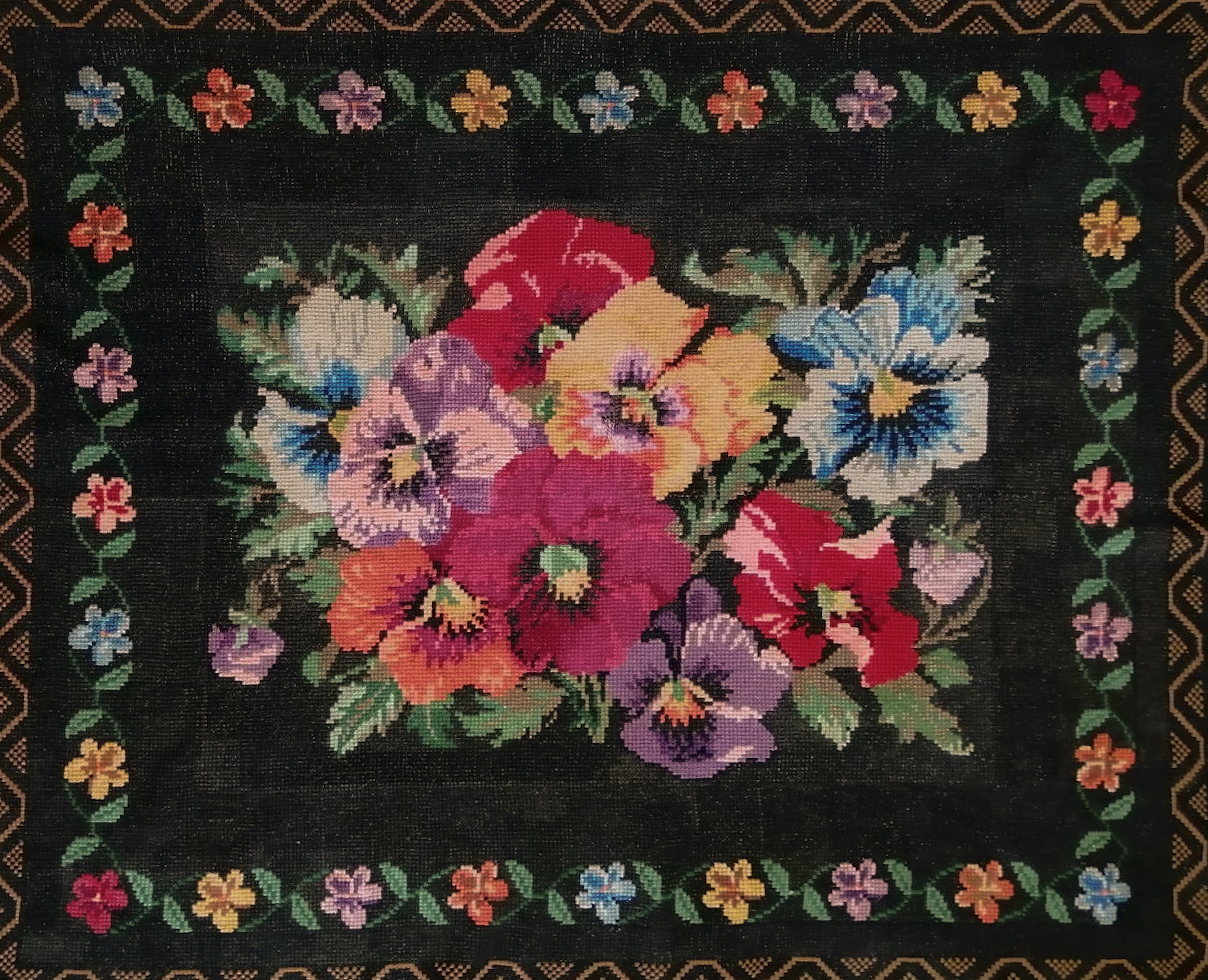
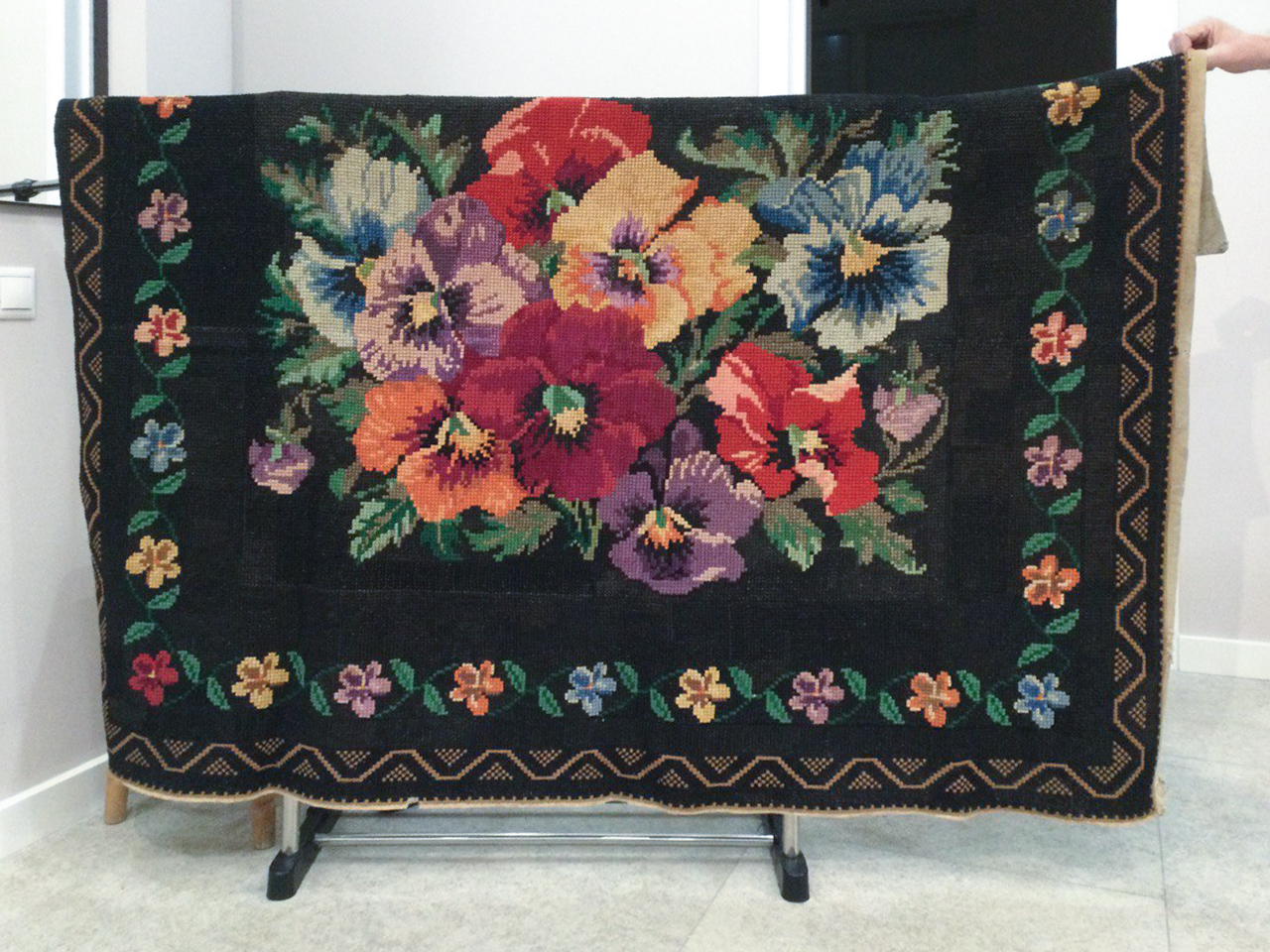
Sometime during those years of exile, she began to embroider what is now a large 130 x 160 cm carpet.
What strikes me most is the contrast of vivid pansies – my grandmother’s favourite flowers – against the overwhelming darkness of the background. Pansies, unlike roses, are rarely used in traditional Moldovan carpet designs, and after fifteen years in exile I imagine she reminisced about the garden of her youth and recreated it from memory. In the mid-1950s, the family was rehabilitated, and my grandmother was allowed to return to Moldova – to the land where flowers could grow. Their land was not returned, and the old garden was gone, so she planted large flowerbeds of pansies in the yard.
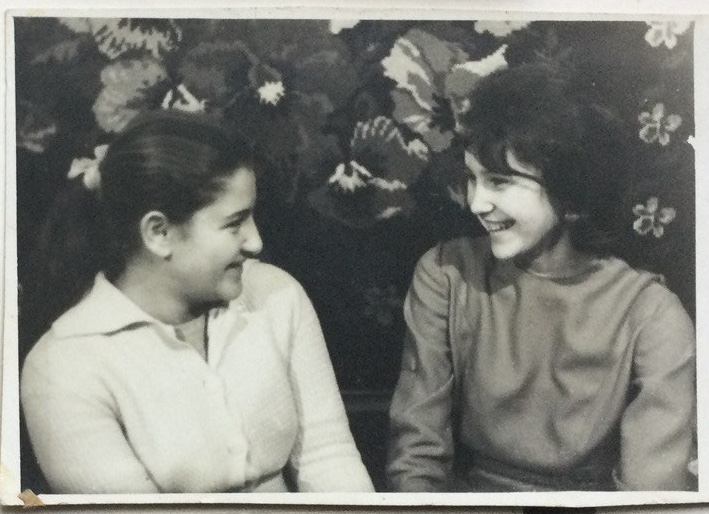
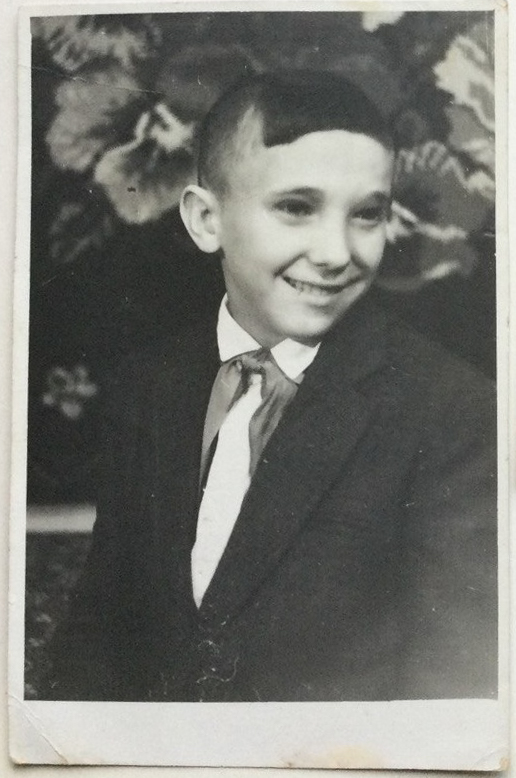
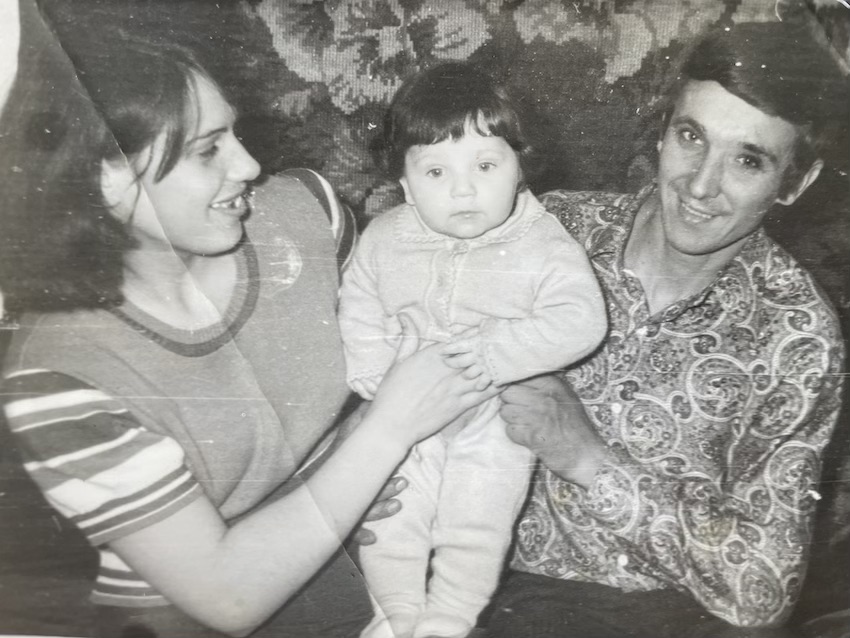
The carpet hung in that house for decades and became the backdrop for family photographs. Many of the people who once stood before it are no longer alive. My grandmother has long been gone. But the carpet remains, and now it is kept in my parents’ house.
My grandmother never spoke directly about their deportation. Instead, she told stories about distant northern lands and unfamiliar peoples, as if they belonged to another world. In her later years, she fiercely defended Stalin and the Soviet system, never teaching us her native language but ingraining in us an admiration of Russian culture. Erasure did not only happen to territory – it happened to identity. Silence and loyalty were her way of surviving; instead, she poured the truth into the carpet: each pattern telling a story, each knot holding a memory, each thread connecting the past to the future.