
Framed as the Villain
About the Creator
I love writing and discovering new things. I am constantly learning, and I dream of becoming a writer one day.
Time marches on unceasingly, indifferent to our awareness of its pace. It serves us well to question our elders about the days of old and the heirlooms they keep, to uncover what transpired and what did not, because what was left unsaid may sometimes remain unsaid forever, for silence becomes eternal the moment a loved one departs.
While sorting through the belongings of my recently departed grandmother, my mother and I unearthed a wealth of treasures. These were not gold or precious gems, but objects possessing a value far beyond earthly riches: a collection of photographs.
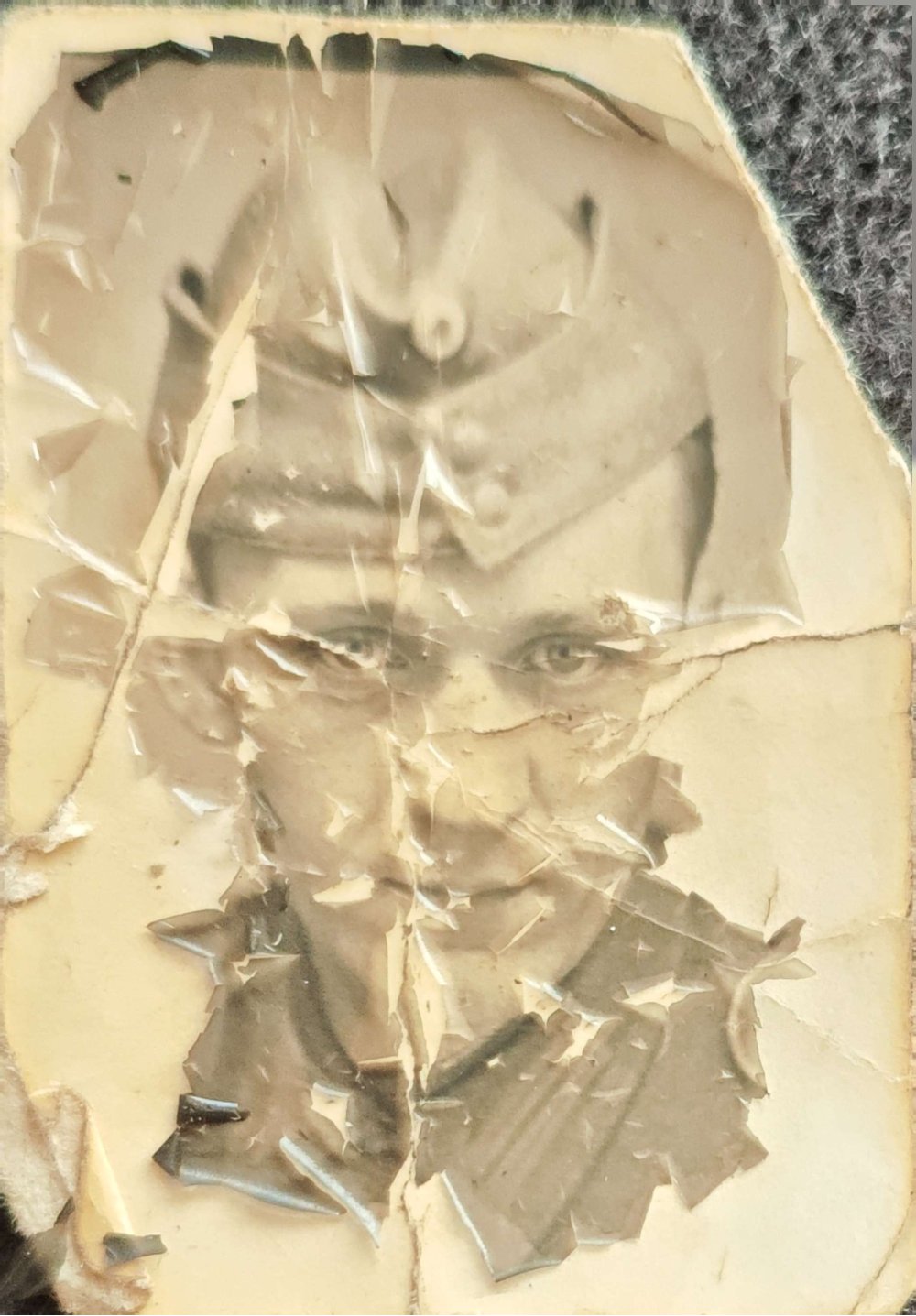
One December afternoon, a particular image commanded our undivided attention. I confess, I did not remember ever seeing that photo before. Perhaps grandmother kept it hidden, shielding it from further breakage, since it was quite damaged.
The portrait depicts a man in uniform, his cap set straight. A shadow of a smile plays upon his lips, though his gaze radiates unmistakable resolve. To a stranger, he represents a German soldier, a cog in a murderous machine, or a traitor to his land. To me, however, he remains a devoted husband and father.
War forces humanity into the shadows of impossible choices – paths where no direction leads to "good," regardless of one’s intent. Such was the cross my great-great- grandfather, Jan, had to bear.
I can only imagine the suffocating weight of those emotions: a beautiful wife, Helena, three small daughters, and a choice that was no choice at all: conscription into the German army or the execution of his entire family. Some might label his actions a betrayal of his country, yet such a sacrifice proved less agonizing than the prospect of his kin’s demise.
Grandmother used to recount how he sent letters and parcels from the trenches. Once, her mother even took her to see him. It was then, at the tender age of four, that he taught her a German nursery rhyme about an "alte Hexe". Remarkably, that verses about an "old witch" lingered in her memory for over eighty years.
The young couple yearned for a moment of privacy, so my dear grandmother, Felicja, was left in the care of a German woman. Grandmother always recalled her with a shiver; she understood not a word of the language, and the woman’s face seemed fixed in a series of terrifying grimaces.
That meeting conceived another sibling who, tragically, was never born – a loss that nearly cost my great-grandmother her life. As the war gasped its final breaths, the last letter from Jan arrived, dated in the early spring of 1945.
When the war finally ceased, church bells rang out in triumph. Families rushed to embrace their returning heroes, but a mother and her three daughters still waited. While others cheered for fathers, brothers, and sons, they kept waiting. My grandmother remembered her eldest sister, Janina, only nine years old then, sobbing uncontrollably. With tears as heavy and large as garden peas rolling down her face, she cried:
“Dad won't be back.”
Her words turned out to be true. Jan never returned, and Helena found herself cast out once more. Ostracism followed her like a shadow: first during the war, when she refused to speak German despite her fluency, and again in its aftermath, because her husband had fought in the enemy army.
Employment remained out of reach for a long time. Eventually, she met another man and sought a death certificate for Jan to move forward with her life. A stepfather stepped into the void Jan had left. Life lacked the lustre of perfection, as grandmother often noted, but it was a life, nonetheless.
Despite the decades, my great-grandmother guarded that photograph with meticulous care. Though the paper bears the scars of time, Jan’s memory will endure. We never knew him, yet we exist because he acted against his own soul and convictions to ensure the survival of the generations that followed – including my own.
I am glad that I found this image. It has acted as a key, unlocking a flood of Grandmother's stories in my mind. Yet, a pang of regret lingers; I should have asked more questions. It’s not possible anymore, but it stands as a poignant lesson: to be more inquisitive, to cherish our family stories, for they are our true heritage.
Looking closely at the photograph now, I see my grandmother’s features mirrored in Jan’s face. I find myself wondering if the youngest sister, also named Helena, has a copy of this portrait in her collection. I need to ask her when we next meet. And as I study his likeness, one more detail becomes clear: I finally know the origin of the rather substantial family nose. We have Jan to thank for that.