
A picture worth a thousand words
About the Creator
I am a senior and I plan to study Arts. I am passionate about all kind of art, from painting, to writing, reading, dancing. In my free time I volunteer, which is where I developed a great passion for challenges.
“A nation that doesn’t know their history is like a child who doesn’t know their parents’’- Nicolae Iorga
I grew up with this quote in my head. My family raised me to know how valuable it is to have an idea about where you are from, where you belong, what piece of land your ancestors called home. From a young age my grandmothers were the ones who thought me how to appreciate each and every tradition that surrounds me, as that is what makes me who I am now - starting with the people that died on the battle field to protect our country and ending with the mothers who stayed at home to raise the next generations, everything contributes to the preservation of Romanian traditions.
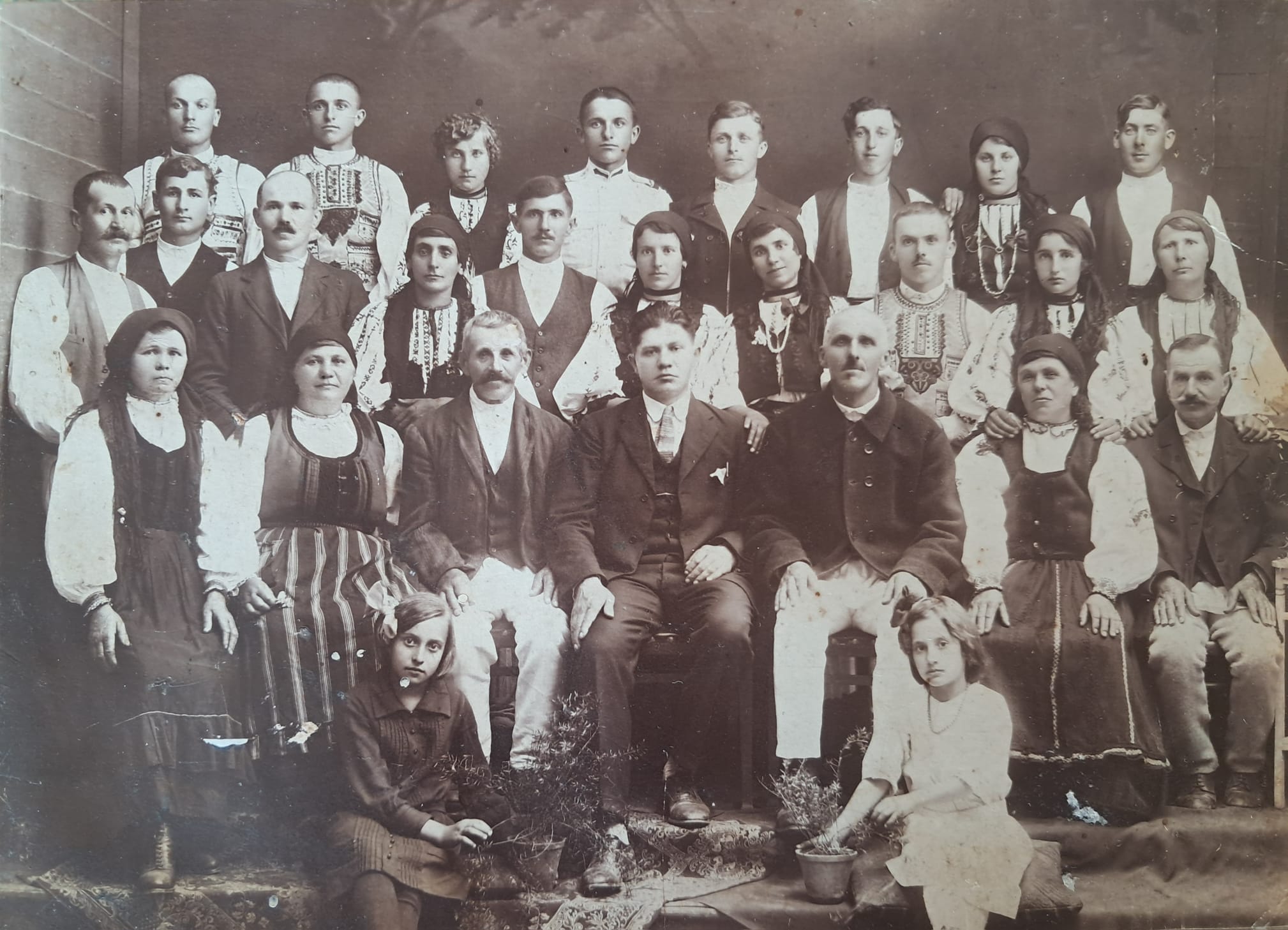
Oe of my most beloved family treasures is a picture from the 20th century, having 27 members of my relatives from my mother’s side. The picture is black and white. Every woman is wearing the traditional Romanian clothing, a blouse called “ie”, skirts, vests and head scarfs. Likewise, men are dressed in traditional shirts and trousers, some of them wearing handmade vests and some others dark coats. This is the” outfit” they used to wear when attending the religious services at church or other important occasions, such as weddings or celebrations. The vest is called ”pieptar” (sheepskin vest). Women embroidered traditional Transylvanian symbols such as the flower of life, tulip, rhombuses or crosses.
The picture was taken after the second World War by one of the relatives who was visiting from America. (Quite a large number of Romanians had emigrated to the USA). In the picture, the eighth man on the second raw is the son of my great-great –grandparent Nicolae Ganea, who died on the battle field during World War I. His remains were not found, and his family, wife and 5 children, was left behind. It wasn’t easy for anybody back home to wait for a response from the battle field. Although Romania only entered the War in August 1916 there were two difficult years of poverty, hunger and fear with limited supplies. I remember my grandma telling me about the wife, Rozeta, who had to wake up every day to work the fields in order to be able to provide food and to raise alone all five children, the youngest being one year old. They used to play with puppets made out of rugs. For them the prospect of the future didn’t have any colour.
The photo is a reminder that life is a gift and I must cherish it. When I watch it, I see people hoping for the better, waiting to be immortalized in a picture so that their name and their faces would not be forgotten. For my family it means taking the memory of the ancestors to the future. I discovered the value of it by the way my grandma used to look at and speak about the photo. She placed the photo on the table in the living room so that every time she would pass by, she could rest her eyes on the young faces framed between centuries. Sometimes, she took me near her, holding the picture, and started telling me about the people she recognized from the family tree. In time I understood that this is the way of making sure that we, the grandkids, would and should take the family treasure with us and in the future tell the story to our children.
If someone else would see the picture, it might look just like an old artefact meaning nothing important, but for us, for me, it is a treasure; it is proof that despite the fact that times goes by, the family connection will remain forever. It is a way of living forever!