
Story of my Grandmother Simha Demajo
About the Creator
I was born in Belgrade and I am living in Vienna, Austria. I studied Ethnology and Anthropology. I was the Cultural and Educational Director of the Jewish Community of Belgrade. I am working as Culture and Eventmanager.
She was small in stature. She had an oval face, almond-shaped eyes, and a straight nose. She captivated everybody with her rich, full voice. This is her story.
My grandmother Simha Demajo was born into a Jewish family, in a part of Belgrade where Sephardim had established a community. Her mother died when she was a little girl. She liked to spend summers with her two-years-older brother near the sandy banks of the Danube River. During the cold winters, she learned how to sew and helped her sisters with household chores.
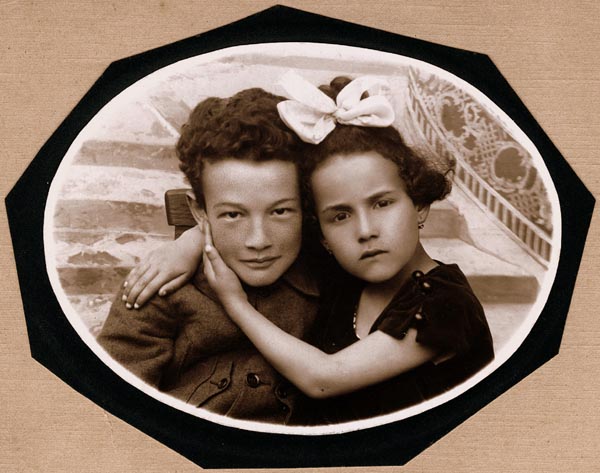
The six-member family was a part of civic Belgrade, as evidenced by a photo taken in a photography studio: the eldest sister Sol Demajo, who assumed the role of mother for the other children, is seated in the photo. She is dressed in a simple white blouse and a woollen skirt. Sarina is standing, her dress is made of the same material and has a similar design as Sol’s. Both sisters, have gentle smiles on their faces. On the left is Tuvi, in a jacket and short pants. He looks at the camera with a serious demeanour, a bit scared but calm. He is a beautiful boy with curly hair and a face the colour of porcelain. On the right is the youngest sister, Simha. Her name means joy. She is wearing a short dark dress, and has a big bow on her head. The seriousness of her gaze and the pursed lips seem to warn the viewer. But what does she warn him about? On the same day, another photo was taken. The same background is visible, a staircase with palm trees. Tuvi is smiling in this photo, his younger sister Simha is hugging him and holding his cheeks with her hands. She is unusually serious for a child of her age. She holds on to him. She will not let fate take him away.
Years passed in Jalija. This part of the city of Belgrade was a place of freedom and mutual understanding, and it remained so even after the Great War. Jevrejska Street and the family house of the Demajos survived the war. Father Jakov and his oldest son Samuilo ran a furniture store there.
Tuvi married a Jewish woman named Bojana, who bore him two children. Two of the sisters married Serbs, and Simha got married to Tuvi's best friend Dušan, who was also a Serb. Their joy was immeasurable when their first daughter was born, followed two years later by a second girl.
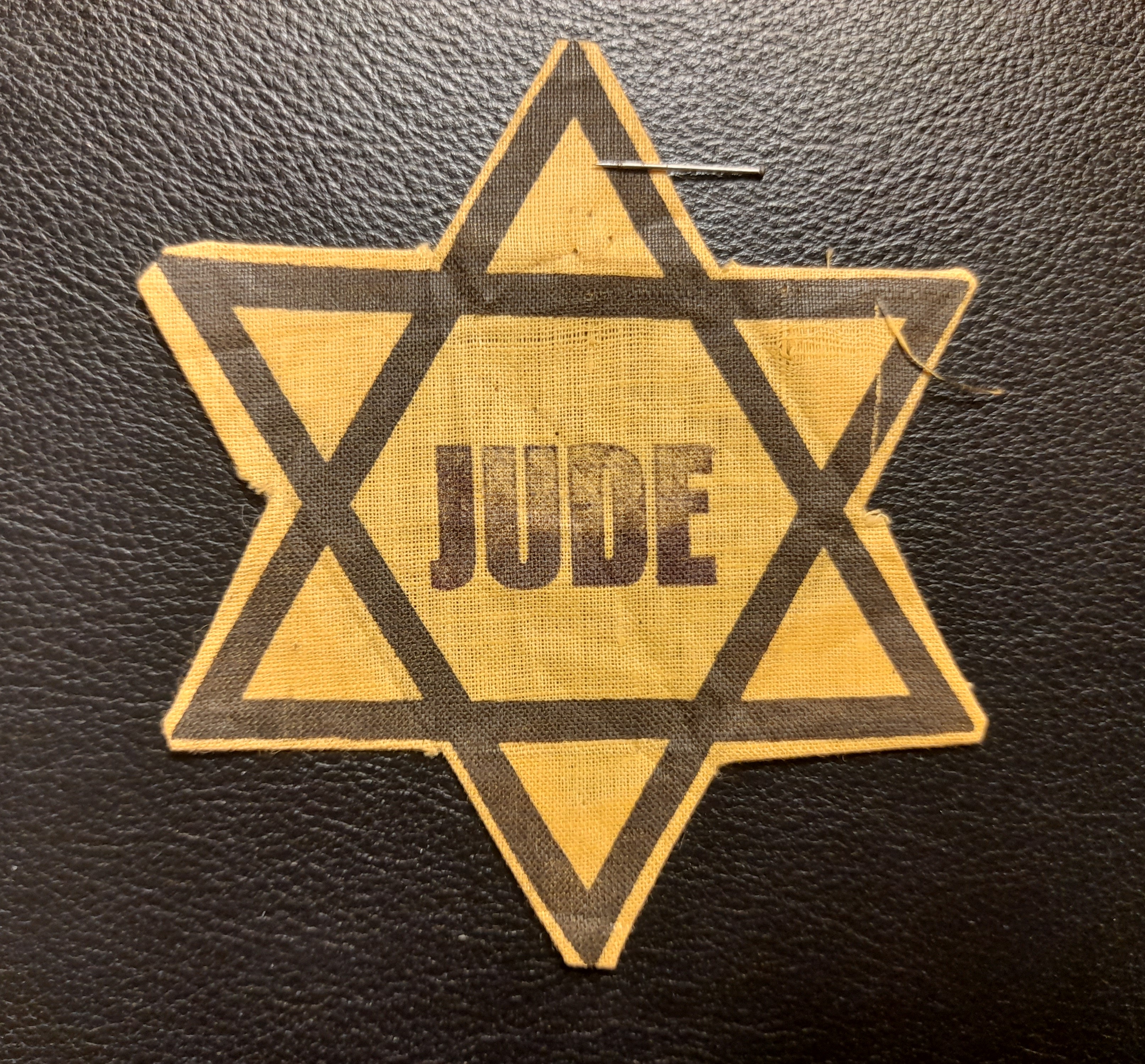
When the war began in Europe, the Kingdom of Yugoslavia was initially peaceful. But not for long. On Sunday, April 6, 1941, Hitler paid retribution to the Serbs, who refused to join the "Triple Pact," with the operation called "Punishment." He bombarded Belgrade and turned it into dust and ashes. Soon after that the order was issued for all Jews to register, with the threat that if the order would be ignored, the whole family would be shot. Simha and Dušan felt mortal fear, their feet were heavy and their bodies trembling. Sofjia's brother's acquaintance provided her with a yellow star and a pin. That piece of cloth had to be attached to a visible place on her clothing. Everybody had to see who she was, and what she was, a target of contempt. Both she and Dušan tasted the bitterness in their throats, their chests tightened, they could hardly breathe.
When they came home, Dušan removed the Star of David from Simha's dress. He hid it, but did not throw it away. He realized that this was the last chance to do something. Distraught, he rushed through the streets of Belgrade to his friends Samuilo and Tuvi. Samuilo knew the woman who had added Simha to a list of Jews. Once upon a time he had done her a big favour. He recalled that and went to ask her to erase Simha from the document identifying her as a Jewess. The woman agreed, but only for Simha, not for other members of the family.
Dušan returned home to retrieve Simha and the children, and they abandoned the apartment and the life that they had lived until then. He found shelter for them on the outskirts of Belgrade, taking along whatever they could carry, knowing that they would never return to the former place of their happiness and tranquillity.
They agreed that as soon as they would hear footsteps and the tap of German boots approaching them, they would first poison the children and then themselves. Everything went fast. Already in June 1942, Heinrich Himmler received a message that Belgrade was declared "Judenfrei". Samuilo Demajo was taken to the camps. He was hit with a shovel, coughing up blood from his lungs until he collapsed dead. He was not treated as if he were a man with thoughts and feelings of love, but as a log.
Tuvi, just as Simha had feared when she was a little girl who worshiped her brother, was taken away by fate in the same cruel way. Bojana and their children were gassed. Solina became Sunčica and Sarina became Jelena. Simha changed her name to Sofija Zorić, born Dekić. She gave birth to another girl.
Sofija's heirs have carefully preserved what was left of the family. Among the memories and heirlooms is that Star of David with a needle on which the rust of evil remained. As deadly today as it was 85 years ago.