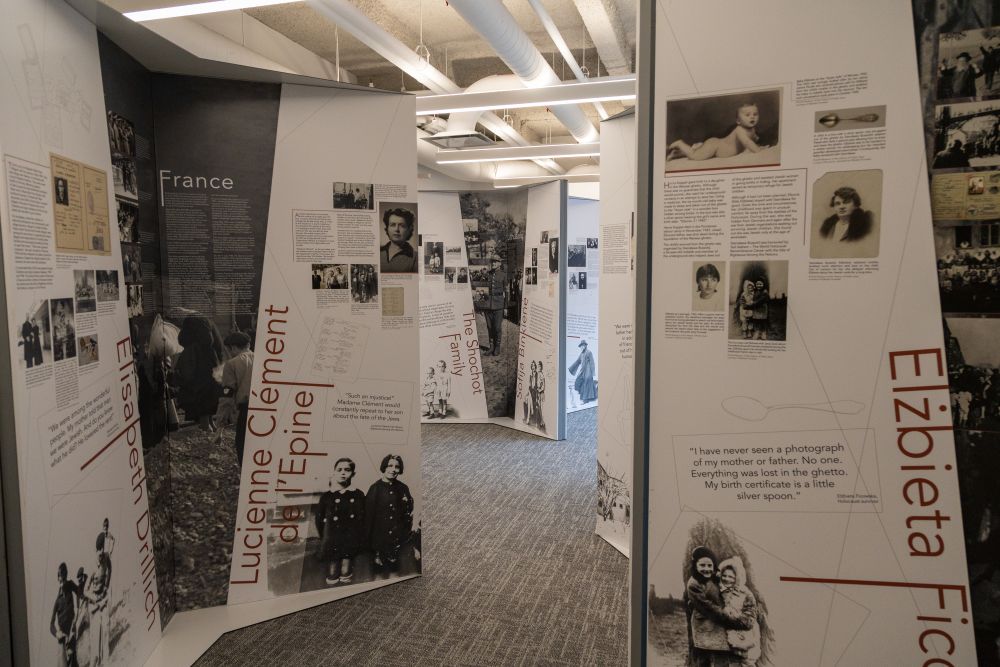
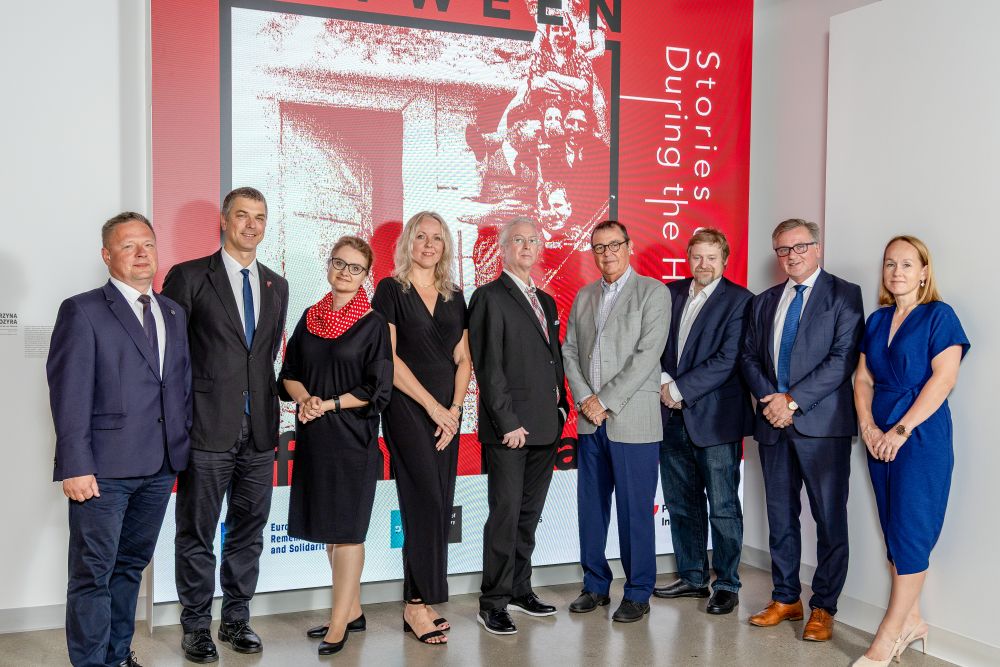
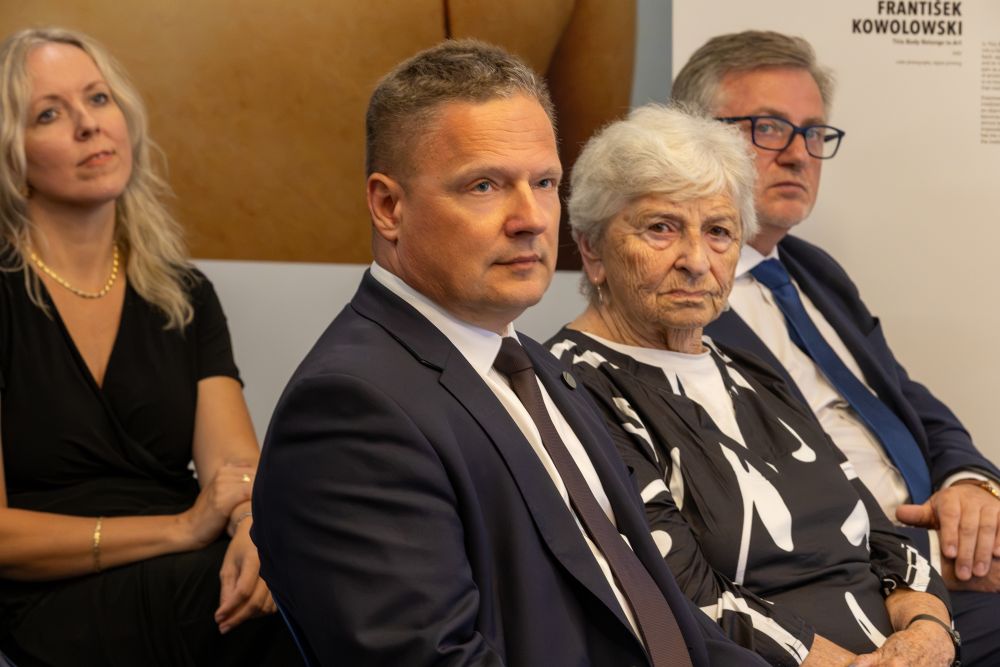
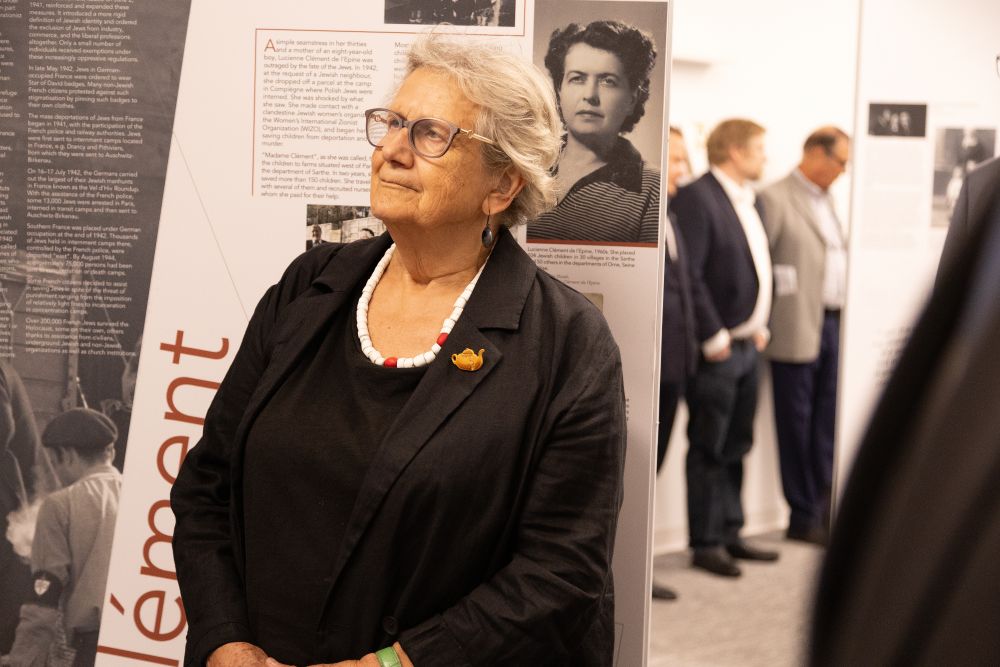
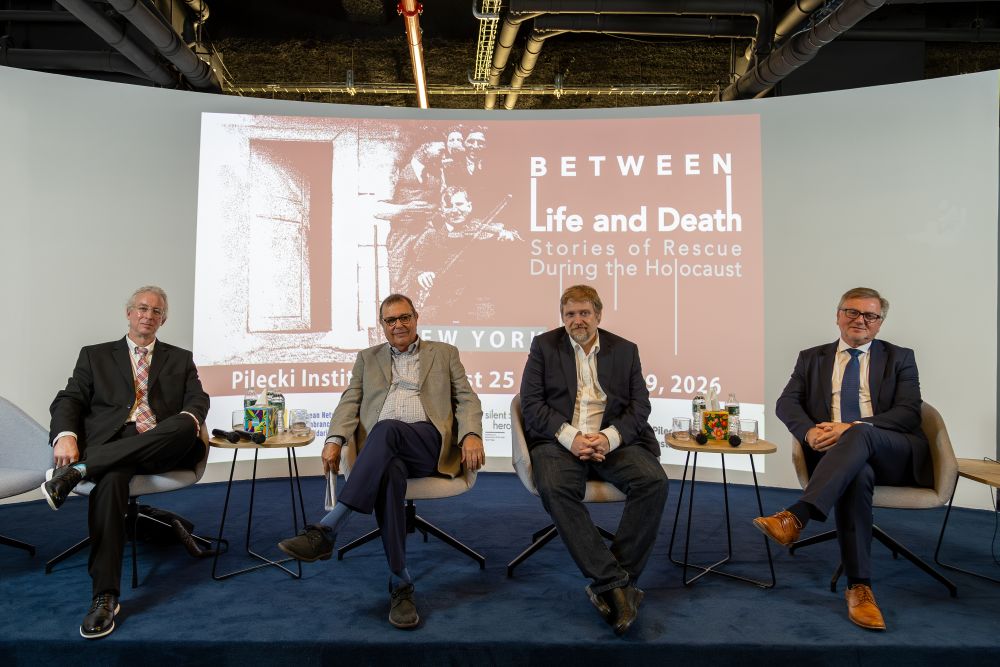
In September 2026 the European Network Remembrance and Solidarity (ENRS) and the Pilecki Institute in New York presented the traveling exhibition "Between Life and Death. Stories of Rescue during the Holocaust". Accompanying events included a seminar "Memory in Transition: A Transatlantic Perspective on Holocaust Education", a conversation between a Holocaust survivor Eva Paddock and the Pilecki Institute CEO Jack Fairweather, and a presentation by Dan Wolf, Artistic Director of Sound in the Silence. The entire program inspired dialogue on the changing landscape of Holocaust remembrance and the challenges facing educators on both sides of the Atlantic.
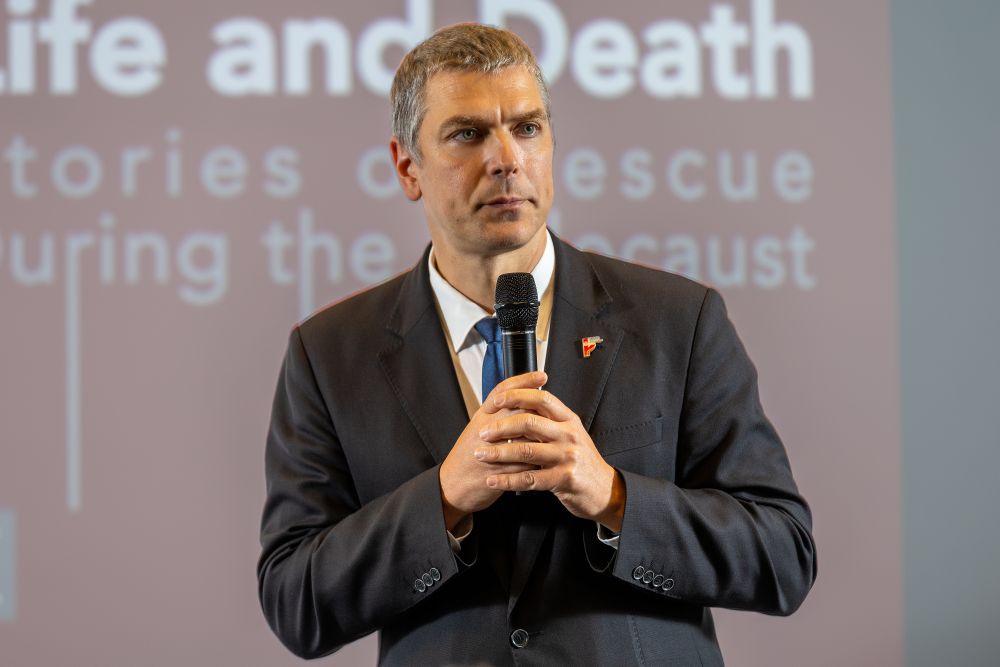
During the official opening of the exhibition Jack Fairwether, Acting Director of the Pilecki Institute in New York, stated: "Contemplating how we can retain our humanity in the face of the horrors of the Second World War is at the heart of the Pilecki Institute's work. – The Between Life and Death exhibition tells the stories of the brave rescuers who risked imprisonment, deportation, and death to save others. With the help of our expert panellists we explored the challenge of making these stories meaningful for a new generation. At a time when the Holocaust is fading from living memory, nothing could be more pressing ".
Questions about the past and present
The seminar was opened by Karol Madaj, the Director of the Pilecki Institute in Warsaw, who started with a question: "How do we pass the memory that we are living with on to a new generation – a generation that does not have the same awareness or direct connection to this history? This is what education is for. Through the knowledge and awareness of educators, we can share this memory with the next generation. This is what we are doing at the Pilecki Institute, this is what the network is doing, and this is what we will discuss today".
Rafał Rogulski, the Director of the European Network Remembrance and Solidarity, pointed out: „The world in which we live poses difficult questions for us. These include questions concerning education about 20th-century history, about victims and perpetrators, about bearing and evading responsibility, about compensation and reconciliation. These issues remain on the agendas of many bilateral and multilateral meetings. They remain unresolved. And the present day continues to confront us with new ones.”
The speakers: Prof. Daniel Blatman (Israel), Prof. Rune Christiansen (Denmark), Prof. Stephan Lehnstaedt (Germany), Dr. Richard Quinlan (USA), and Prof. Piotr Trojański (Poland) tried do answer some of the above questions. They shared a range of international perspectives and experiences, creating an opportunity for meaningful exchange between European and American approaches to Holocaust education. The discussion moderated by Dr. Agnieszka Witkowska-Krych explored Holocaust remembrance as a dynamic and evolving process shaped by historical experience, changing political and social contexts, public debate, and shifting educational priorities across different countries.
Misconceptions about the Holocaust
Prof. Daniel Blatman is the Max and Rita Haber Professor (emeritus) of Contemporary Jewry and Holocaust Studies at the Hebrew University of Jerusalem. His research focuses on twentieth-century Polish Jewry, the Jewish labor movement in Eastern Europe, the Jews of the Warsaw Ghetto, Polish–Jewish relations during the Holocaust and its aftermath, and Nazi extermination policy. During the seminar Prof. Blatman discussed national memory and historical transmission on the example of Israel. He pointed out that without dialogue and openness to other perspectives history can become a closed myth. Competition of victimhood, the ownership of suffering, the temptation to turn past suffering into moral immunity in the present are among the main risks today. Blatman stressed the need for a constructive memory which can hold what is unique without excluding what is human, one that invites partnership and passes to the next generation. A harder task yet is to build from such memory responsibility and restrained, assured future.
Blatman: „The most common misconception about the Holocaust is that the majority of people probably, look at the Holocaust as a black and white event, with bad perpetrators and innocent victims. These categories make it very easy for somebody to identify themselves. Nobody wants to identify as a perpetrator, so we're all either victims or supporting the victims. Dealing with the Holocaust requires us to look beyond these categories and look at an individual human being who did something which could happen to us as well. I'm skeptical about drawing lessons from from any historical event, including the Holocaust. What lessons do we draw from the Armenian Genocide and why? It not less important than the lesson from the Holocaust or the Nazi genocide. I believe the most important thing is to be able to notify that something is going on in the present. Identify a genocide when it's on its way, not after it happens.“
How to teach about the Holocaust
Prof. Rune Christiansen is an associate professor of history education at VIA University College, dept. of teacher education in Aarhus. He is the current chairman of the Danish censorship commission for history education and has previously served as an expert in the COMEX at the Council of Europe and been a member of the Danish parliamentary committee on Southern Slesvig. He is a member of the International Society of History Didactics and his primary research interests are teaching conflicted or minority history, and teaching about the Holocaust in primary and secondary education. Prof. Rune Christiansen focused on Western and Northern Europe, including occupation, collaboration, rescue and national self-images.
Christiansen: “Teaching about the Holocaust is not only a cautionary tale about genocide and awful acts, it's really teaching what it means to be human. In all the chaos of it, the horrors, the rescues, the people trying under difficult circumstances to survive. The Holocaust is an extreme in human history and in this extreme we recognize ourselves. That will always be relevant to each new generation. In the ideal world, we could reach out and use each denial, each distortion, each false image and meme as a lesson in how to see through the false uses and the misuse. In the real world, it's a huge problem because denial is fast, research is slow, going through all the fake evidence is a hard task. So it is a challenge and a big one. The road from exclusion and dehumanization towards a gradual image of the other as an enemy, that's well documented in many, many cases of genocide. We see it every time we speak about those who are not like us, not really belonging, not really part of the community. So there are things here that are obvious parallels. Also, the Holocaust was a unique event. in a specific place and time with specific groups of people. Holding both of those things in your head at the same time, understanding that there are things that repeat themselves and that are lessons for us today, and there are other things that we need to understand as specifics, that's one of the hard parts about Holocaust education. You can't simply claim that everyone who discriminizes or dehumanizes must be Nazis. On the other hand, if we cannot learn from discrimination and dehumanization, then we're not doing our jobs teaching about the Holocaust.“
Challenges in Holocaust remembrance
Prof. Piotr Trojański, Ph.D. is an Associate Professor at the Institute of History and Archival Studies at the University of the National Education Commission in Kraków (Poland). He specialises in 20th-century European history, with a particular focus on the socio-economic life of Polish Jews and other national minorities. His research explores changing perceptions of the Second World War and the Holocaust in Poland, as well as Holocaust education and the evolving memory of Auschwitz and the Holocaust. During the seminar he focused on Central and Eastern Europe and the Holocaust as local history.
Trojański: „One of the main challenges in Holocaust remembrance today is the growing temporal distance from the Holocaust itself. There are fewer and fewer survivors today that can share their stories firsthand. At the same time, the memory is constantly shaped by museums, memorial sites, politics, education and digital technologies. This can sometimes lead to simplification and even distortion of Holocaust history and its remembrance. The challenge is to preserve not only historical knowledge, but also human dimension to history and ist complexity, which is especially important today, at the time of disinformation and growing antisemitism. The key issue is to combine historical accuracy with meaningful engagement. We need to present Holocaust in its historical context and also to make people understand why this history still matters today. We can do this by using personal stories, primary sources and organizing visits in memorial sites. while encouraging critical thinking and helping people to recognize and resist the distortion of history and manipulation. The exhibition Between Life and Death is a very good example how to combine the personal story with the historical context. So it shows the individual stories of rescuers and those whom they rescued. And this is very important because it gives the human dimension to history, but also creates a bridge between the generation of survivors and the future generations.“
Holocaust education in America
Dr. Richard Quinlan currently serves as Director of the Center for Holocaust and Genocide Education and Chair of the History Department at Saint Elizabeth University in Morristown, New Jersey where the exhibition was shown in spring. In his presentation he focused on memory at a distance and civic frameworks in the United States.
Quinlan: “The Holocaust is teaching empathy. Looking at stories of people who sacrificed so much for someone they either barely knew or didn't know at all gives you significant belief in the strength of the human spirit. In the midst of unimaginable suffering there's still people who are willing to help others purely out of a sense of decency and goodness. As Americans we can tend to believe that the universe revolves around us. To many students, events like the Holocaust seem like something that happened a long time ago in a place that's very, very far away. Studying it internationally, it creates a sense of connectivity and much better understanding of the depth of the tragedy. It's showing students that, yes, while this happened long before you were born, the lessons still resonate around the world and resonate here. And don't think that just because you live in the United States such atrocities could not happen again and could not happen where we are. I think it's a perpetual education. We have to always remind people that the Holocaust is not a moment in history that is now over. The lessons continue and always will continue to resonate today.“
Collective responsibility
Prof. Stephan Lehnstaedt is since 2016 professor for Holocaust Studies at Touro University Berlin. His current projects include a study called Die Wirkung der Wiedergutmachung, which evaluates oral history interviews with Holocaust survivors from five countries, and aims at evaluating the impact of German compensation payments. Prof. Stephan Lehnstaedt covered Germany and Austria, including perpetration, responsibility and civic education.
Lehnstaedt: “The German society had to acknowledge that there were actually victims of German perpetrators. So you basically have to say: Sorry, it was our fault that they were dead, we are the perpetrators. This of course comes with all sorts legal problems and consequences, inluding reparations on national level, compensation on individual level, criminal prosecution. All of this was happening. If you do that on individual level only you can always say: we ave individual perpetrators and they were put to trial. But this is not a form of collective responsibility“.
The power of one
Eva Paddock, a Holocaust survivor, was interviewed by Jack Fairweather, Acting Director of the Pilecki Institute in America. During this special conversation and Q&A session, the audience had the opportunity to meet Eva and hear her remarkable story of rescue, resilience, and rebuilding her life in a new country. Drawing on her long career as a teacher and headteacher, Eva shared thoughtful reflections on how to approach Holocaust education with care, sensitivity, and clarity.
Ms. Eva Paddock is a Holocaust survivor who, at just three and a half years old, escaped German-Nazi-occupied Europe through the Kindertransport. In July 1939, she and her sister were among the children sent from Prague to England on one of the last Czech Kindertransport trains organised by Sir Nicholas Winton. She pursued a long career in education, teaching at all levels from early childhood to graduate school and continues to support Holocaust education internationally.
Mr. Jack Fairweather, the President of Pilecki Institute, is a British journalist and war correspondent. He is the author of the international bestseller *The Volunteer*, a book about Captain Witold Pilecki, for which he received the Costa Book Award (one of the most prestigious British literary awards). He co-curated the first exhibition on Witold Pilecki, presented at the Institute of National Remembrance’s branch in Berlin in 2019. He also served on the Advisory Committee of the Museum of Jewish Heritage in New York. For the past ten years, he has been involved in Holocaust education and the development of educational programs.
Paddock: “What people need to understand is that the Holocaust didn't happen overnight. That in fact the anti-Semitism becoming a national policy happened only when the Nuremberg Laws were enacted. There was an opportunity for people who were not Jewish to speak up and to act and to organize against that law. But that did not happen. I think that's an important thing that's not spoken about. What I want people to remember is certain qualities that are worth replicating. The power of one: each person can act. Courage of thouse who help people to escape, particularly the courage of my mother, who allowed us to go on the Kindertransport. Altriusm. Pay attention to what's going on around you. It's your responsibility to maintain a moral, just, and compassionate society. And it won't happen unless you get involved in your local communities and politics. It can be in your town, it can be in your school but you have to be aware and you have to be willing to act.“
Sound in the Silence
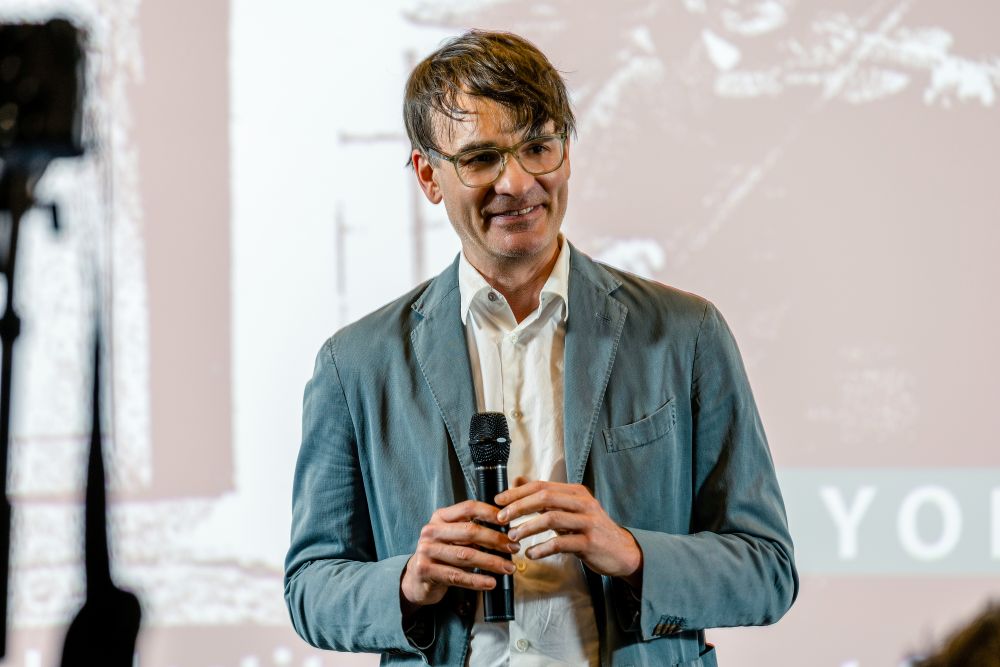
Lastly, Dan Wolf presented Sound in the Silence, an innovative educational program developed by European Network Remembrance and Solidarity. Working as the project’s Art Director, Dan is also a hip-hop artist who works with rap, theater, personal narrative, and history to give voice to the problematic world we live in. His multi-sensory work draws its power from years of experience working, teaching, and performing with the critically acclaimed hip-hop music and theatre artists. His projects have traveled all around the world from concert halls to museums to schools and memorial sites where he engages history and culture as a prompt to make vital music and theater that can only live in this moment.
Wolf: “The difference between US youth and European youth is mostly cultural context. In the United States, we're taught that history is somewhat linear. It's a line, this happened, then this happened, and then this happened. The things that came before don't necessarily always mean anything to the present moment . Whereas in Europe I really feel like young people understand that history is cyclical, it's like a swirling shape of past and present and because you walk out of your house and you see so much history everywhere there's really a deep understanding of what happened before and what might be happening now.“
Special thanks to the partners of the exhibition: The POLIN Museum of the History of Polish Jews, Silent Heroes Memorial and BKGE Oldenburg.