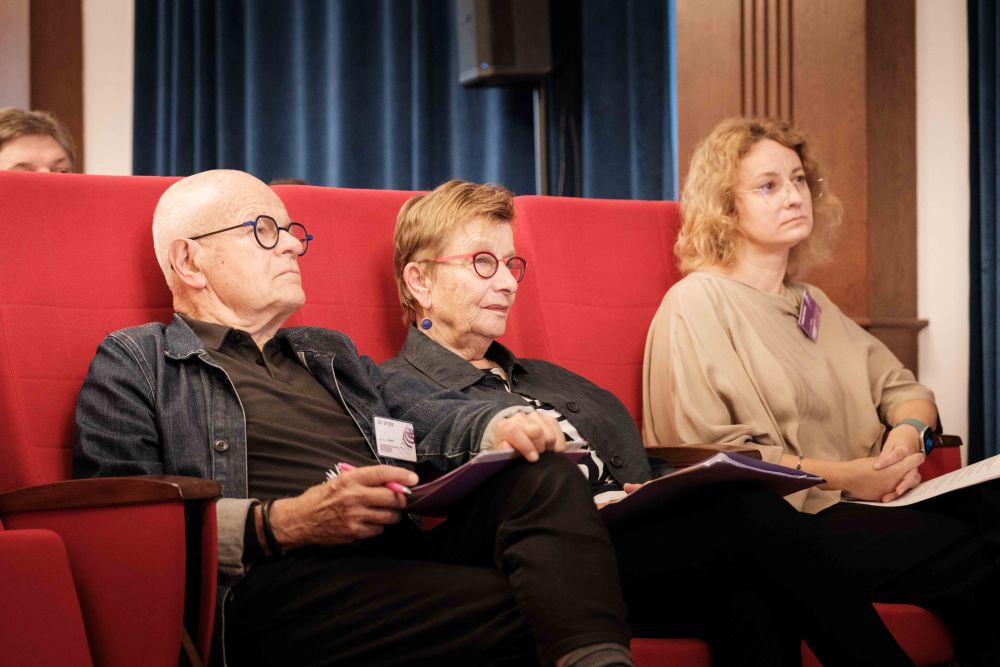
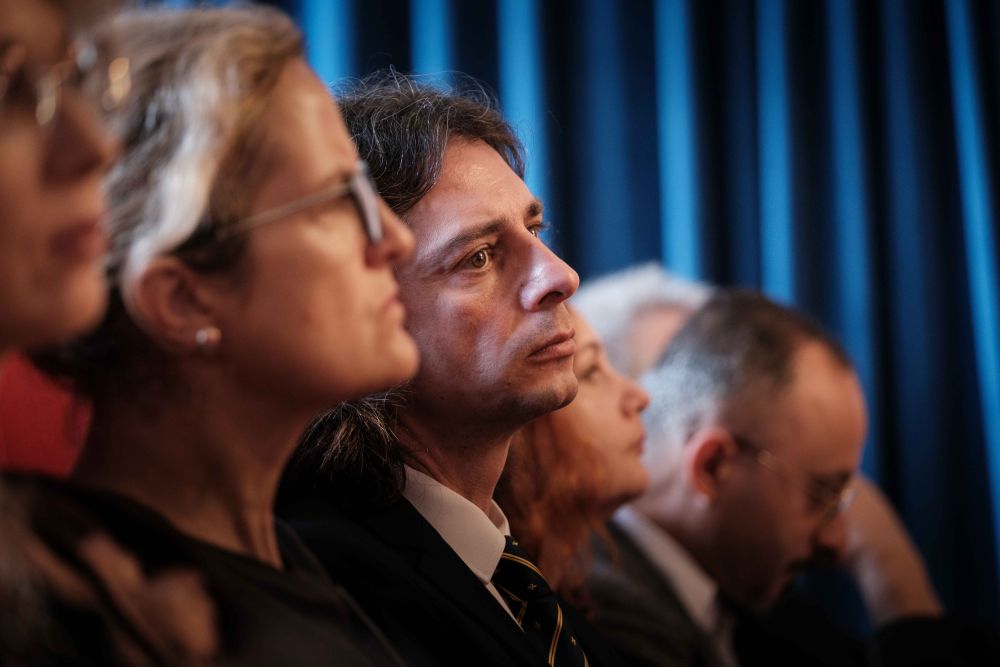
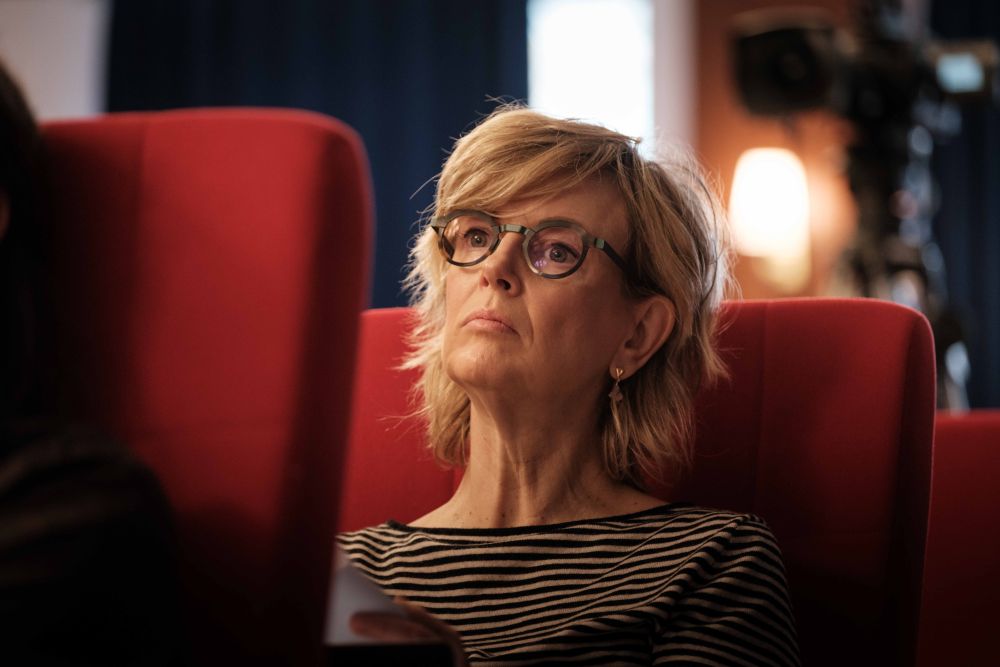
How is trauma transmitted when it is not narrated? The 16th Genealogies of Memory conference, held in Iași on 23–25 September 2026, approached intergenerational memory less as a question of whether the past is handed down than of the conditions under which it is, and of the forms it takes in transit. Across cases from Bessarabia to Alsace and from Sarajevo to occupied Luhansk, silence emerged not as the absence of memory but as one of its principal modes.
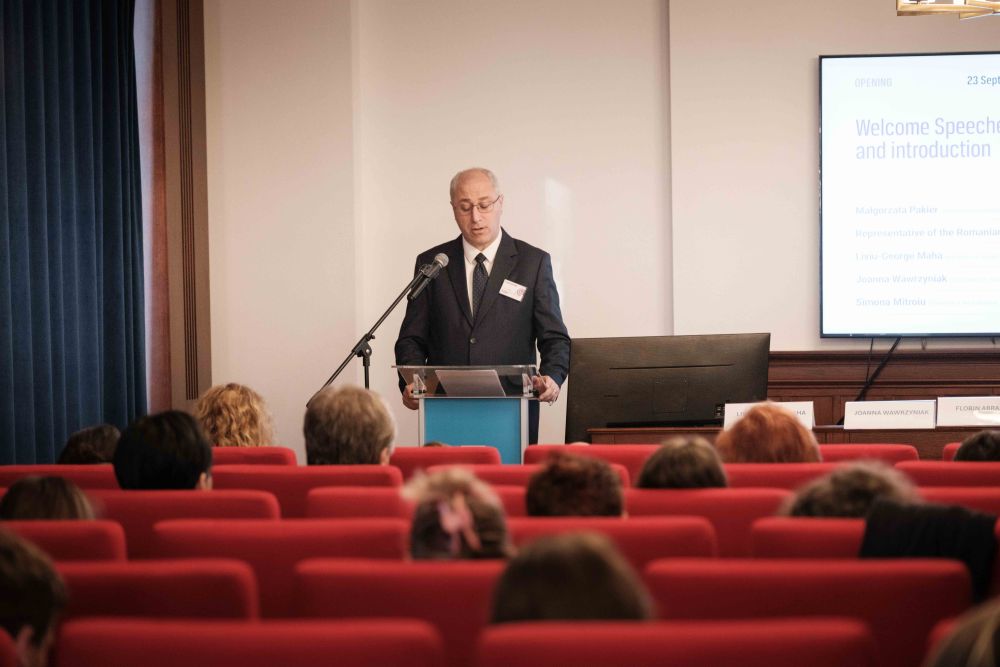
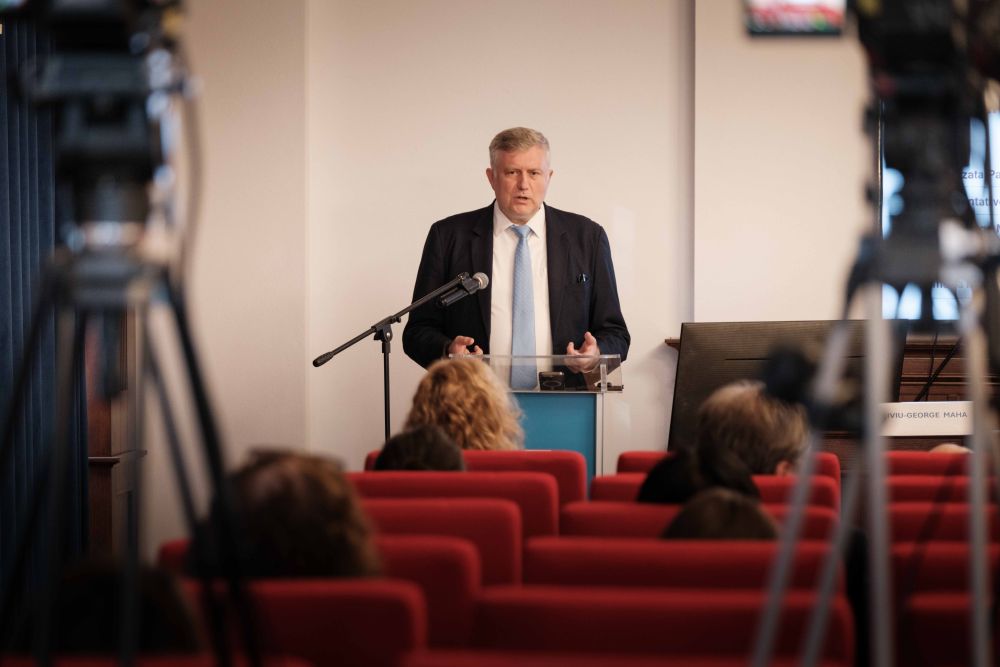
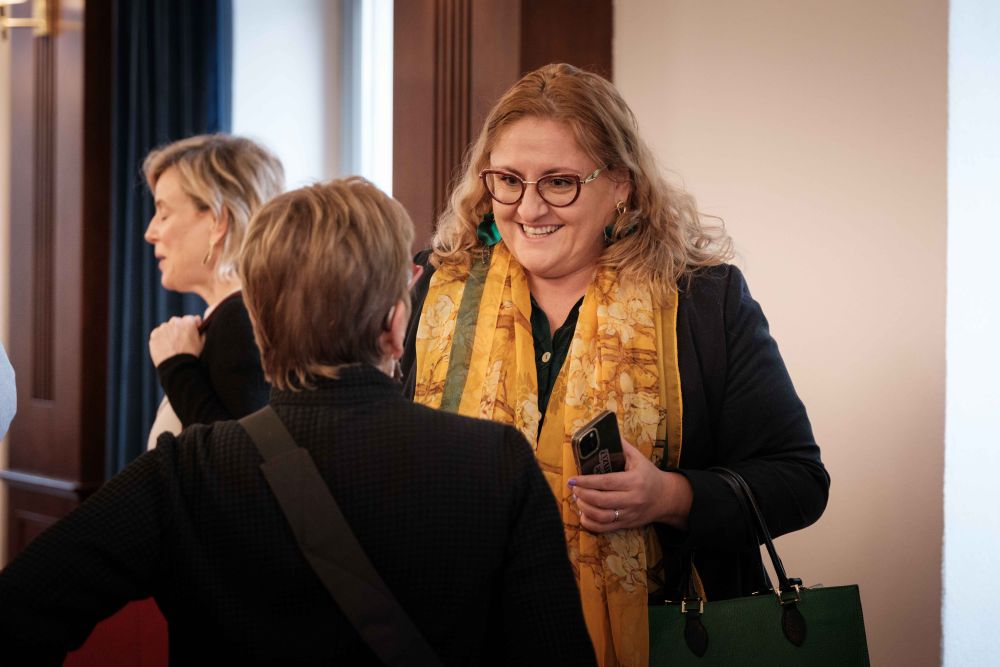
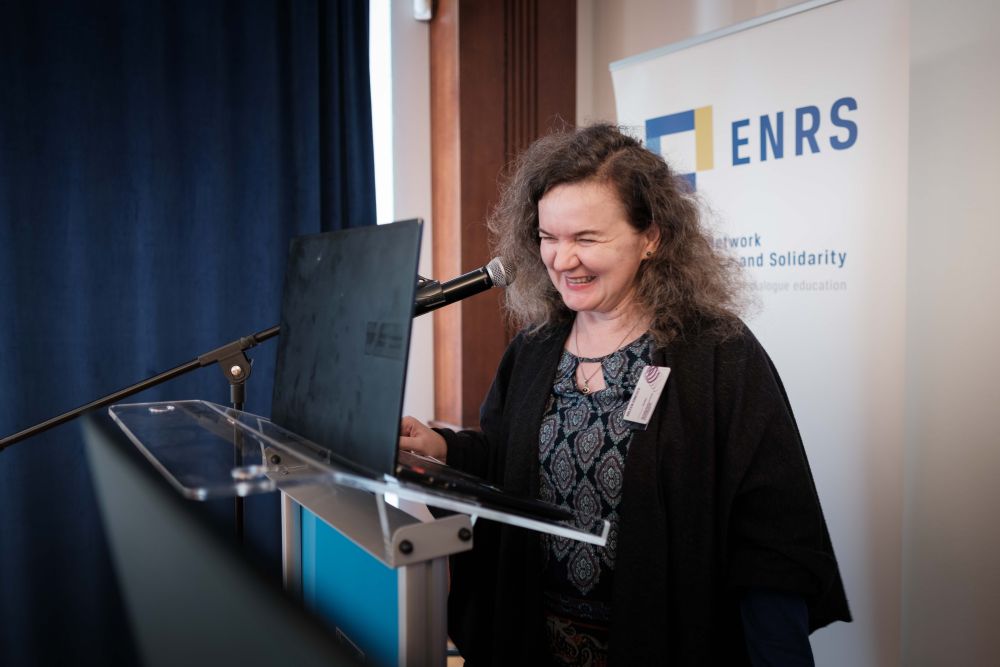
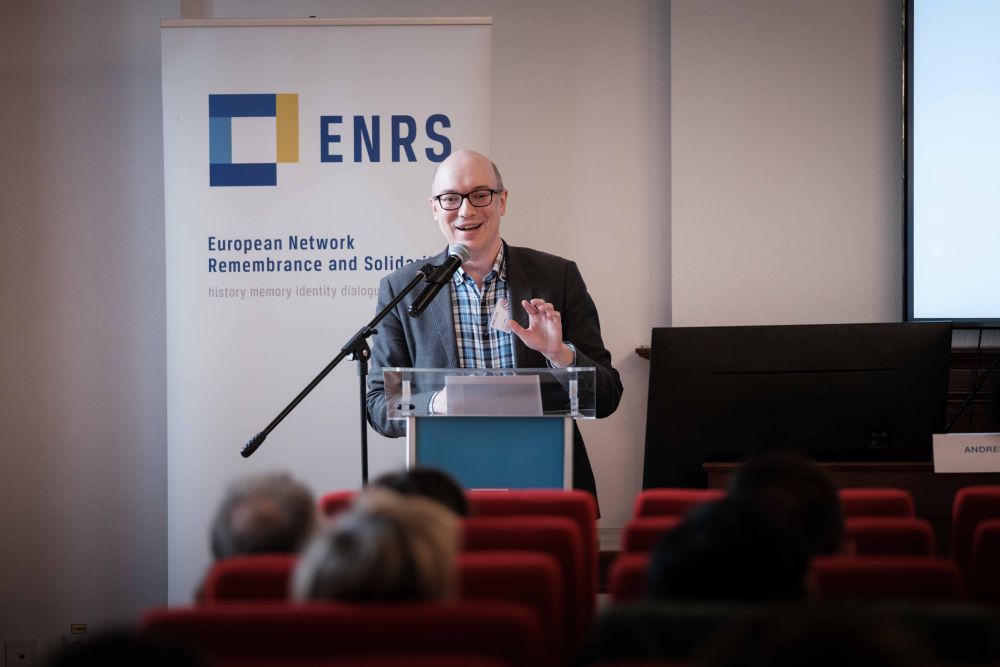
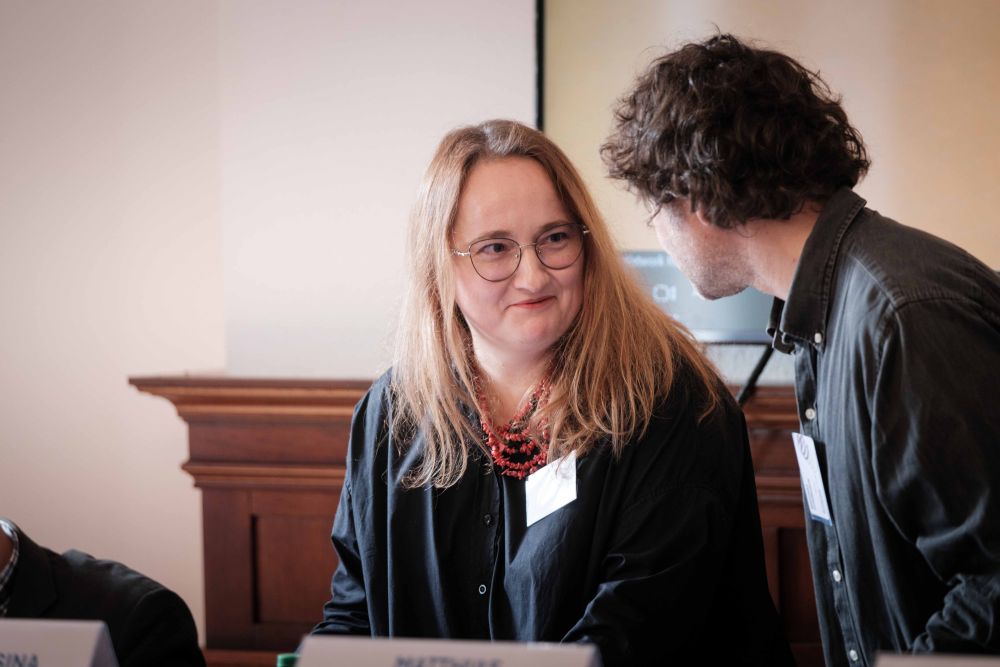
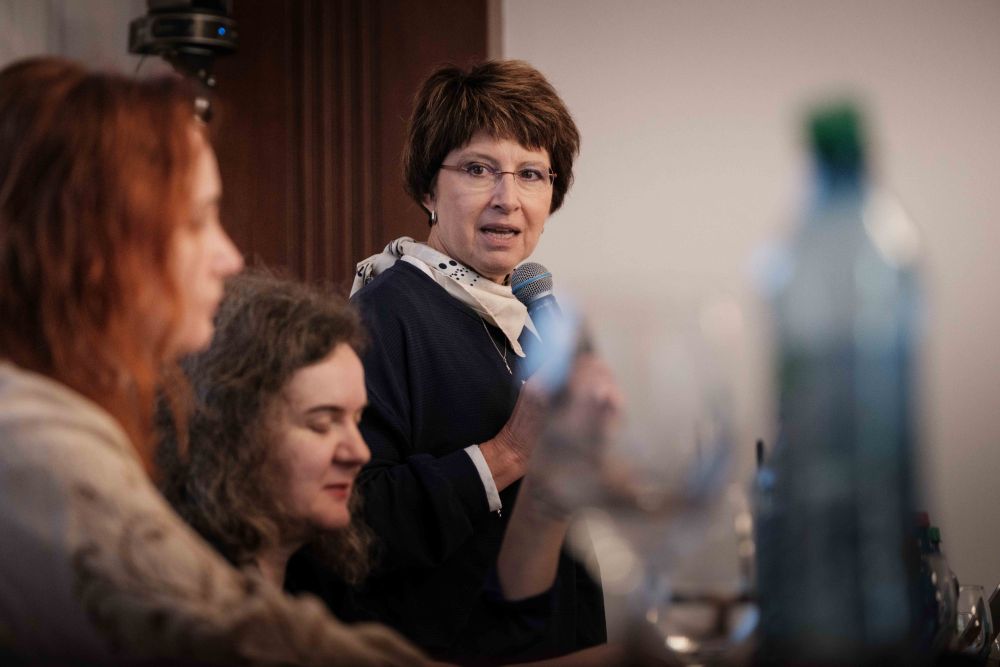
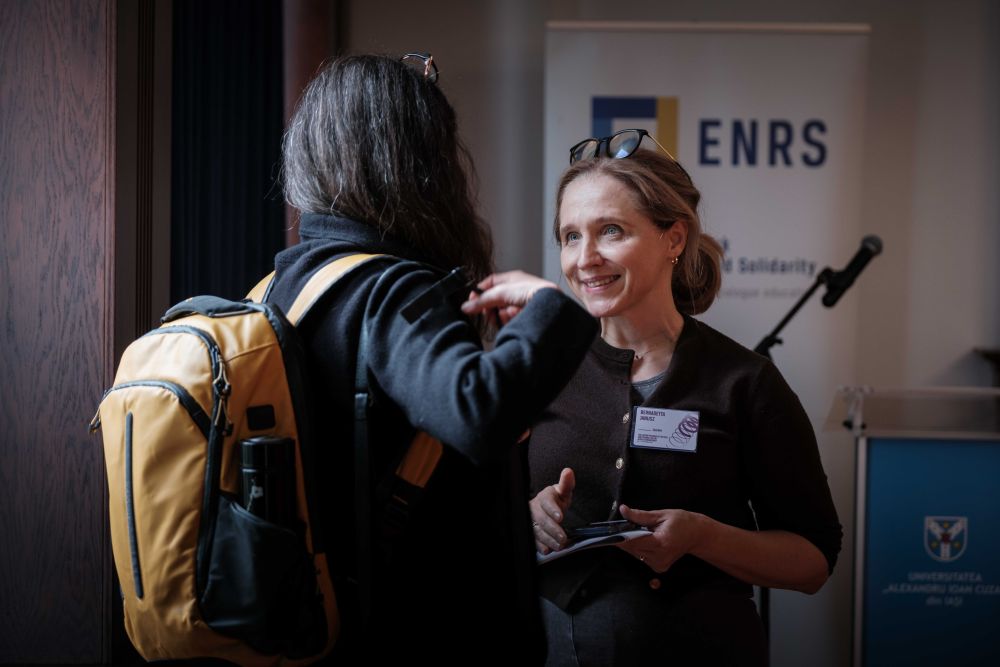
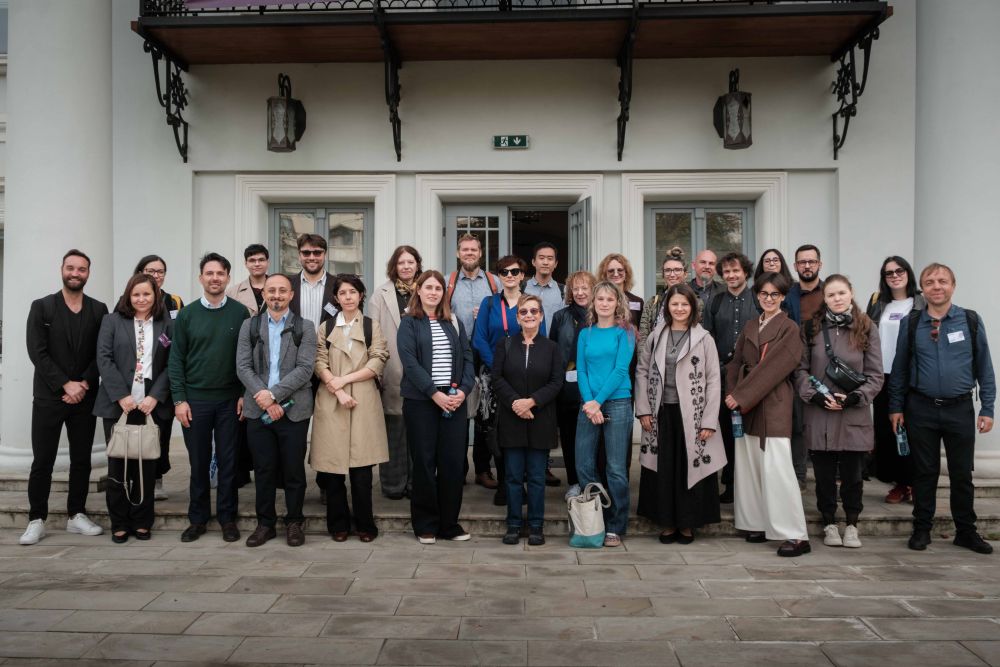
The 16th Genealogies of Memory conference, “The Lasting Presence of the Past: How Trauma Lives on Across Generations?”, was organised by the European Network Remembrance and Solidarity together with Alexandru Ioan Cuza University of Iași and convened by Dr Simona Mitroiu. Over three days, nine panels, a keynote lecture and a roundtable brought together almost thirty researchers and artists from history, sociology, psychology, anthropology, film and literary studies, ethnomusicology and visual art. The conference was opened by Małgorzata Pakier on behalf of ENRS, Rector Liviu-George Maha, Joanna Wawrzyniak, co-initiator of the Genealogies of Memory series, and Simona Mitroiu.
Postmemory under Revision
The choice of venue carried its own weight. Iași is the city of the June 1941 pogrom and the death trains, a history that returned in the very first panel. The keynote lecture by Marianne Hirsch (Columbia University) and Leo Spitzer (Dartmouth College), “Remembering Possibility: Rethinking Holocaust Memory in a Time of Genocide”, set the frame for the discussions that followed. Hirsch's concept of postmemory served throughout as a common point of reference, but also as an object of revision: many contributions tested where it needs to be extended or qualified.
The call for papers placed the conference between two familiar models of transmission. One is the family, where memory circulates through stories, objects and silences. The other is the institutions of cultural memory: archives, museums, schools and commemorations. The most productive papers worked at the junction of the two, and in doing so shifted the question. The issue was no longer whether trauma is passed on, but how: through which media, under which political and social constraints, and with what transformations of meaning. Around this question, a number of recurring problems took shape.
Silence as Practice
Classical trauma theory has tended to read the unspoken as a symptom of failed processing. Several papers proposed instead to treat silence as a practice: socially produced, historically conditioned and itself a vehicle of transmission. Ludmila Cojocaru (National Museum of History of Moldova) and Virgiliu Bîrlădeanu (Moldova State University), working on Stalinist deportations, formulated the premise directly: “Silence is not absence, but active mnemonic practice.” Their material showed silence operating at several levels at once. It appeared in the pauses and gestures of survivors' testimonies. It appeared in the ethical restraint of researchers entrusted with testimonies of sexual violence against deported girls. And it appeared in an official commemorative culture in which the ritual minute of silence could at times stand in for an explicit reckoning with the past.
Taken together, the papers outlined a differentiated typology of silence. Oskars Gruziņš (University of Latvia), analysing families of children born of war in Soviet Latvia, distinguished between memories socially suppressed by community norms and memories institutionally oppressed by the coercion of a totalitarian state. In the Latvian case, he argued, the latter clearly prevailed. Helene Henze (Ludwig Maximilian University of Munich) described silence among Soviet Germans after deportation as the product of three converging forces. The first was internalised political discipline. The second was an intergenerational pragmatism that steered children toward the post-Stalinist future. The third was a public discourse of reconstruction that left no language in which deportation could become collective memory. Anna Dulska (University of Navarra), on the basis of three-generation family interviews in Spain, identified silence as a form of ethical protection. The past could be transmitted en frío, preserving historical knowledge while withholding the emotional antagonisms of the Civil War.
Other contributions shifted attention from the motives of silence to its interactional effects. Bernadetta Janusz (Jagiellonian University / Humboldt University of Berlin) used conversation analysis of interviews with children of Holocaust survivors. She distinguished “loss without a story”, that is, emotional knowledge without narrative, from “story without emotional and relational context”, factual knowledge without meaning. Karina Diłanian-Pinkowicz drew on Carol Kidron's notion of silent presence to trace the intergenerational memory of the Armenian Genocide through atmosphere, gesture and the stigma of sexual violence. She concluded that silence is “not the opposite of testimony but one of its conditions.” Zinaida Bolea (Moldova State University) found in the accounts of grandchildren of deportees a characteristic leap over the middle generation, consistent with Alexander Etkind's sequence of terror, trauma and mourning. Sophie Grégoire Weill (University of Strasbourg), finally, showed how the absence of family narratives among descendants of rural Alsatian Jews can generate genealogical and archival research. In her terms, memory moves from being transmitted to being reconstructed.
The Archive: Erasure and Restitution
The archive appeared throughout as a site of both erasure and restitution. Beja Margitházi (Eötvös Loránd University) analysed three archival documentaries as acts of “visual restoration” that return names and faces to the victims of dehumanisation: Nelly and Nadine, Three Minutes: A Lengthening and Radu Jude and Adrian Cioflâncă's The Exit of the Trains. The last of these confronts the Iași pogrom by reading its victims in alphabetical order, “within the syntax of bureaucracy, but turned against it”. Its closing sequence then exposes the point beyond which no face can be restored. Miruna Butnaru-Troncotă (SNSPA, Bucharest) read Kumjana Novakova's The Silence of Reason as feminist performative research on the Foča rape camps. The film refuses explicit imagery and translates survivors' testimonies from the English transcripts of the Hague tribunal back into Bosnian.
Several papers placed the official document and family memory in direct confrontation. Andrei Cușco (Romanian Academy, Iași) read the NKVD and KGB files of his grandfather, deported from Bessarabia in 1941, against the family's own recollections. Even the family name, altered by a registering official in Siberia, turned out to be a product of the repressive bureaucracy. Selma Ćatović Hughes (University of Turku) reconstructed the identities of soldiers in a 1992 newspaper photograph from besieged Sarajevo. She set the “no casualties specified” of UN daily reports against oral testimonies from forty veterans, civilians and family members. Jan Miklas-Frankowski (University of Gdańsk) identified discrepancies between the Stutthof Museum's presentation of the Gwiazda family and the family's own account. He argued that family testimony preserves meanings absent from institutional narratives.
Cojocaru and Bîrlădeanu proposed to read archive and testimony as complementary rather than opposed. Soviet files are silent precisely where survivors speak, and survivors are silent precisely where the files are most detailed. Olga Grădinaru (Babeș-Bolyai University) pointed to the reverse asymmetry in post-Soviet cinema. Jewish Red Army soldiers are present in digitised testimonies, yet on screen they are erased, displaced or allowed only a “managed visibility”. Archival accessibility, in other words, does not translate into cultural visibility.
Spaces of Memory and the Legibility of Perpetration
Space formed a further axis of discussion. Çlirimtare Januzaj approached the memorial landscape of post-war Kosovo as an active social agent rather than a passive container. Memorials “give trauma a place” and, in selecting whom and what they commemorate, “do not simply preserve memory. They produce memory.” Marta Duch-Dyngosz (Humboldt University of Berlin) examined the Jewish home, abandoned, plundered and expropriated, as an unheimlich agent of intergenerational trauma. It affects both Jewish descendants and the non-Jewish inhabitants who took these homes over.
Two papers on Kraków formed a complementary pair. Magdalena Chmiel (Jagiellonian University / EuroClio) proposed the category of “genealogical rooting” for the way a resident of the former Podgórze ghetto builds a relationship with the past through family research and everyday proximity. One resident summed it up: “I live in the ghetto, but with a view of my great-grandmother's house.” Sheng Zhu (University of Edinburgh) drew on Alison Landsberg's notion of prosthetic memory. She showed how memory of Płaszów is formed elsewhere, through Schindler's List and the museum, before it encounters the site itself as a “non-site of memory”.
Lurdes Valls-Crespo (Charles University) compared the Topography of Terror, the Vojna Memorial and the former Model Prison in Barcelona. She introduced the concepts of “mediational saturation” and the “legibility of perpetration”. Material traces make suffering perceptible, but they cannot by themselves explain who organised violence. Where perpetration has never been tried, as in post-Franco Spain, mediation must intervene where material silence risks “prolonging political, judicial and memorial silence”.
Embodied and Artistic Transmission
Several contributions examined transmission that bypasses narrative altogether. Vlada Rusina and Matthias Schönijahn presented field recordings of elderly singers from the Luhansk region, made in 2021 shortly before the full-scale invasion, and their later transfer to choirs in Berlin. Rusina traced a generational break in singing style produced by collectivisation, famine and war. Schönijahn drew on Pauline Oliveros's practice of listening to describe re-singing as the “hosting” of another's voice in one's own body. The voice, in his account, is a living archive that “is not stored; it is produced each time in order to exist at all”. In occupied Osynove, he noted, these songs can no longer be sung in Ukrainian.
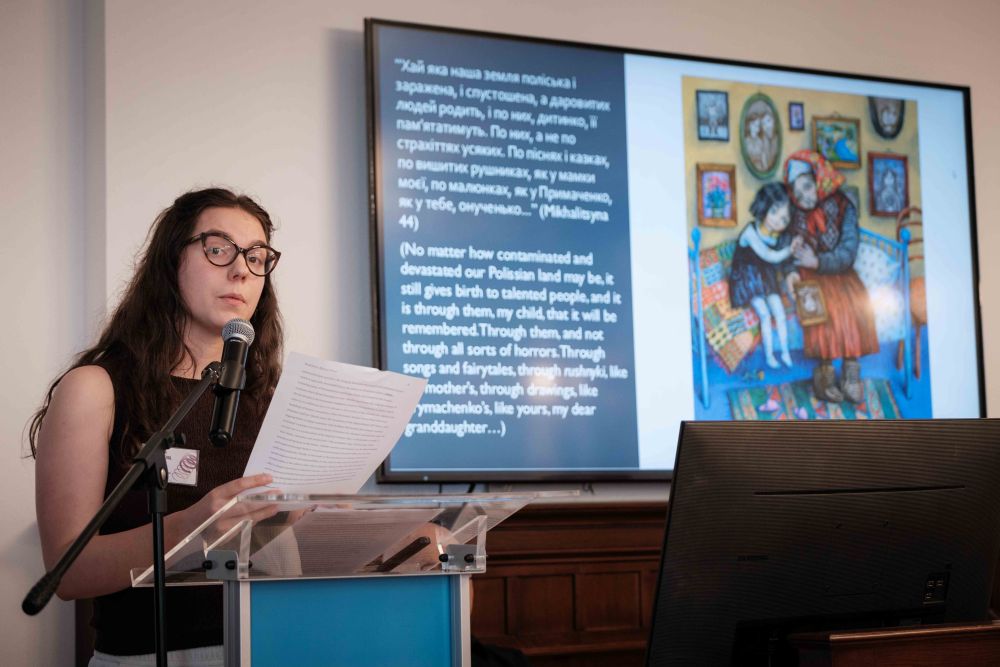
Magdalena Blincoe-Deval (University of Oxford) read Kateryna Mikhalitsyna's picturebook Flowers near the Fourth as a case of second-generation memory in children's literature. In the book, a child's drawing in the manner of Mariia Prymachenko becomes a proxy genealogy that unlocks her great-grandmother's account of Chornobyl. Blincoe-Deval also asked how much commemorative responsibility can legitimately be placed on a child. Corina Doboș (National Institute for the Study of Totalitarianism) examined the memorialisation of Ceaușescu's 1966 abortion ban, which cost the lives of more than 12,000 women. She showed how its memory is being reworked amid neoliberal austerity and rising social conservatism.
Memory in the Political Present
The institutional and political present of memory was the subject of several papers. Ana-Maria Cătănuș (National Institute for the Study of Totalitarianism) traced six trajectories of Romanian anti-communist dissent, from Paul Goma to the worker Vasile Paraschiv and the priest Gheorghe Calciu-Dumitreasa. Their survival in cultural memory, she argued, depends less on historical merit than on three factors. These are time, the channel of transmission (state, family, church or civil society), and an institution's capacity to absorb moral complexity.
Florin Abraham (National Institute for the Study of Totalitarianism / SNSPA) described the post-1989 governance of memory in Romania and identified three present risks. The first is dogmatisation. The second is the “neo-fascist seduction” of Legionary mythologies circulating among young people online. The third is pseudo-memory generated by artificial intelligence. Notably, Abraham and Henze both used the formula “postmemory without memory”, in nearly opposite senses. For Abraham, it describes emotional investment in a past never lived and accessed through decontextualised digital fragments. For Henze, it describes a relationship to the past shaped by structured absence that never became a family narrative. The convergence of terms points to a conceptual gap that postmemory alone does not cover.
The position of younger generations recurred across these papers. Kristine Andra Avram (University of Bayreuth) described the “privatisation of the past” in Romania. Without adequate public and educational frameworks, families become the primary interpreters of communism, producing moral judgement without structural understanding. Dulska characterised contemporary Spain as “too late and still too early”: too late because communicative memory is disappearing, too early because cultural memory remains politically contested. Dalma Tóth (University of Debrecen) analysed the 2024 Hungarian presidential pardon scandal. She showed that struggles over closure, and over resisting it, shape political memory before an event becomes past. Gruziņš concluded that mnemonic distortions produced under coercion “do not dissolve with regime collapse; they continue to shape identities intergenerationally.”
Genealogies in the Plural
The comparative design of the conference proved particularly fruitful for Central and Eastern Europe. Stalinist deportation, for instance, was examined from five perspectives: survivors' testimonies and museum practice in Moldova, grandchildren's narratives, a family file read by a historian, Soviet German biographies, and families of children born of war in Latvia. Set side by side, these cases showed that the same violence produces different patterns of transmission. The patterns depend on the degree of coercion, the public languages available and the position of each generation. Across the cases, descendants appeared not as passive recipients but as active agents of reconstruction. This finding also raised a question voiced repeatedly: how much responsibility for remembering can be shifted onto the youngest generations.
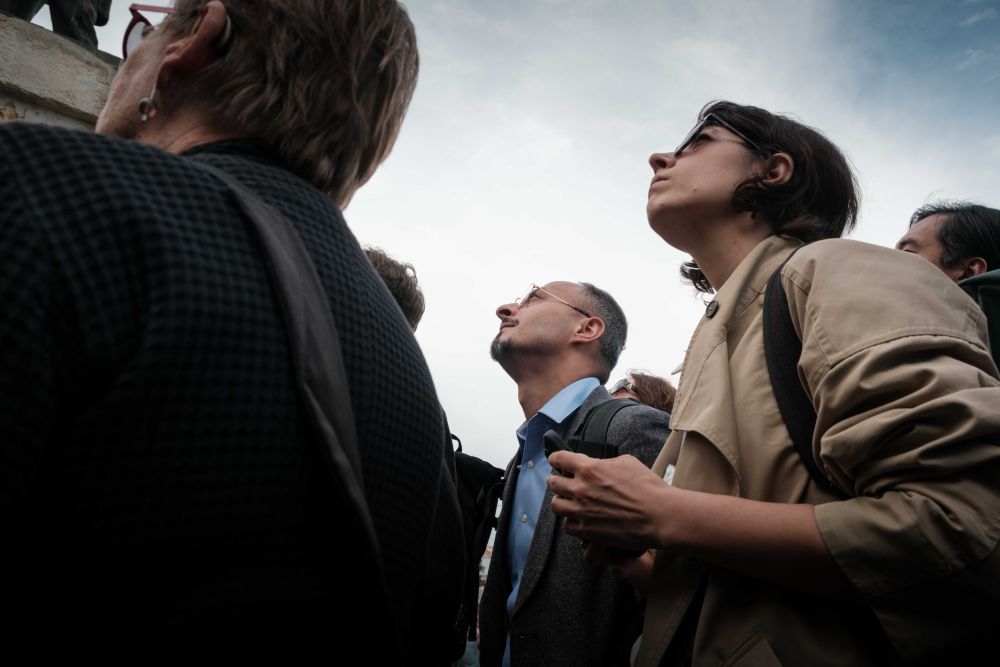
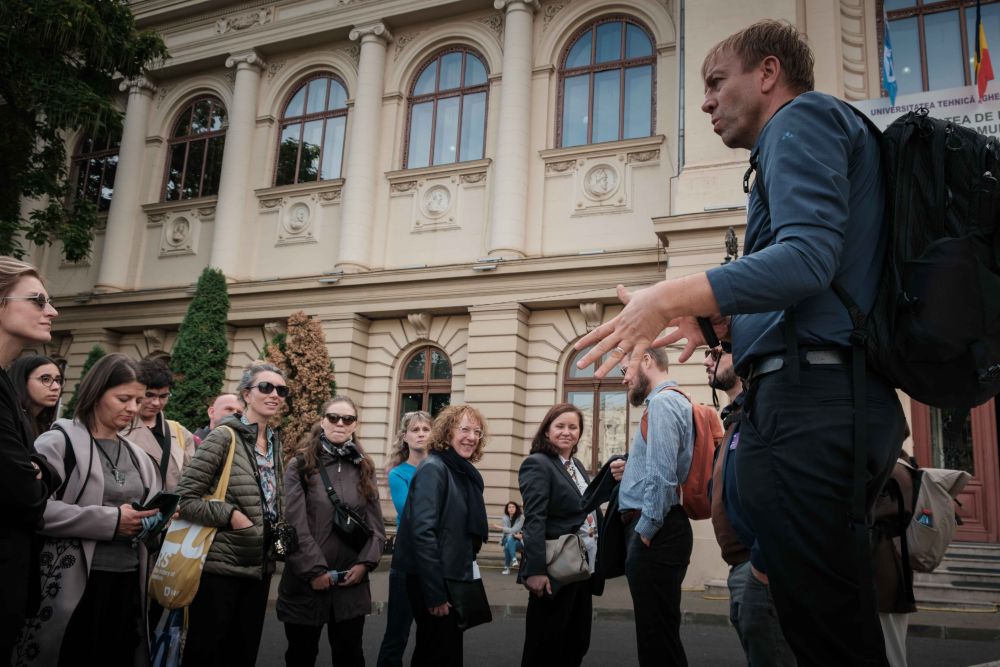
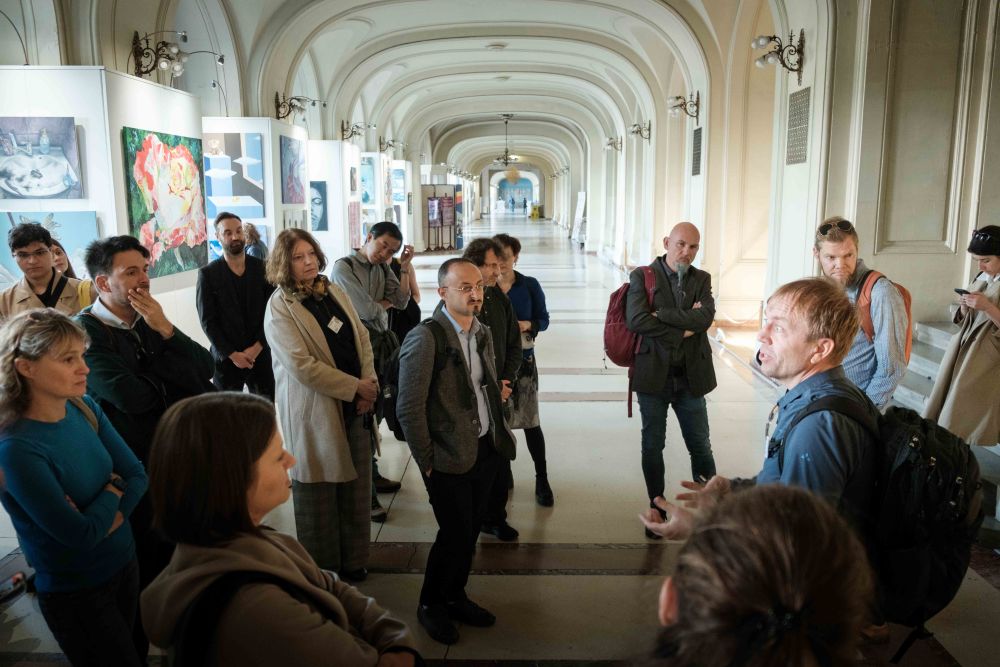
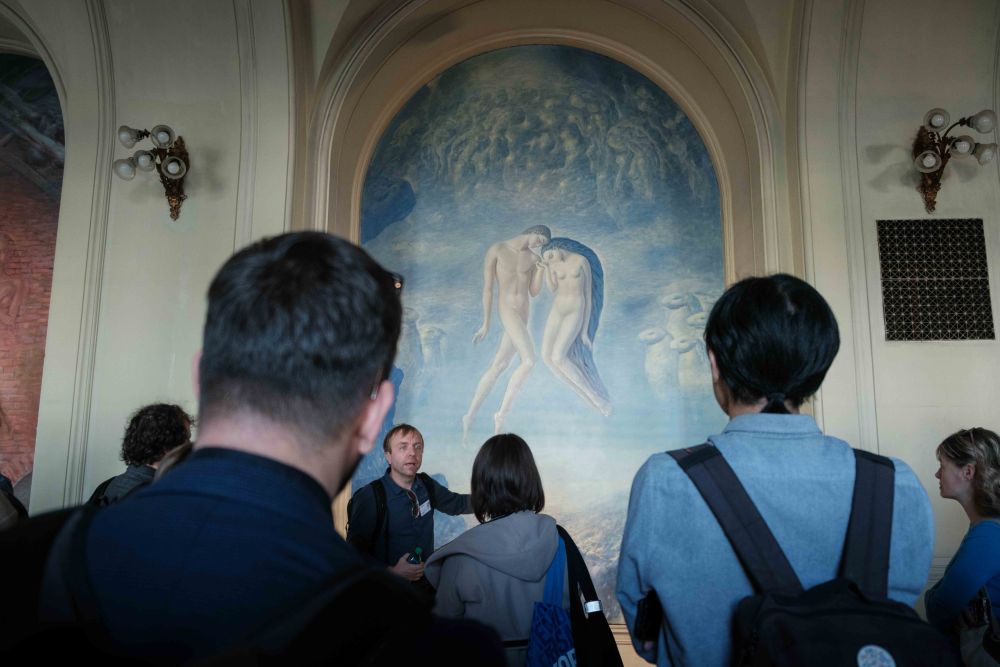
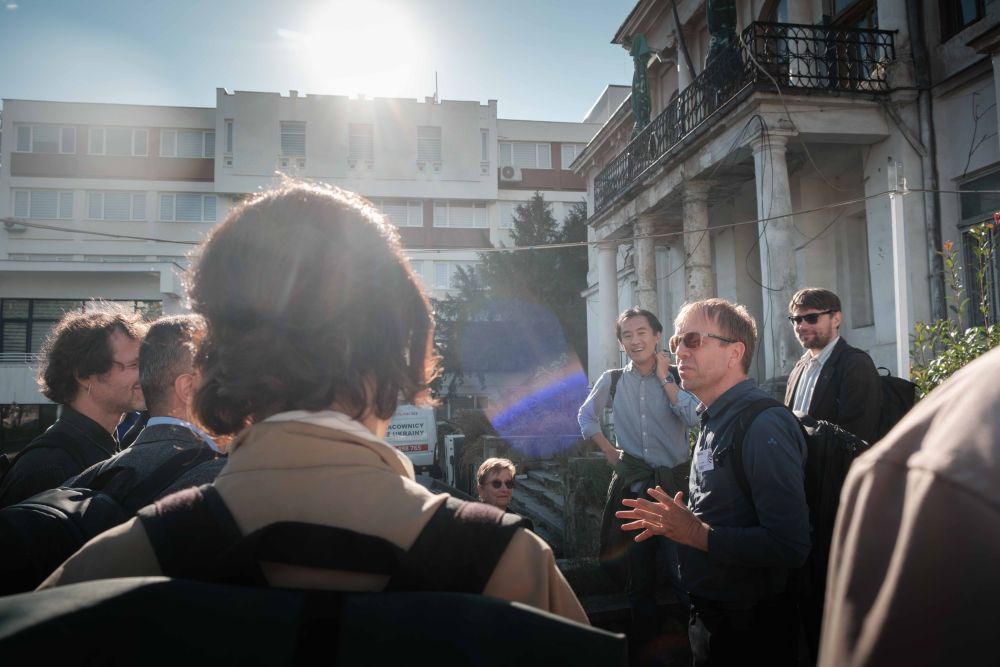
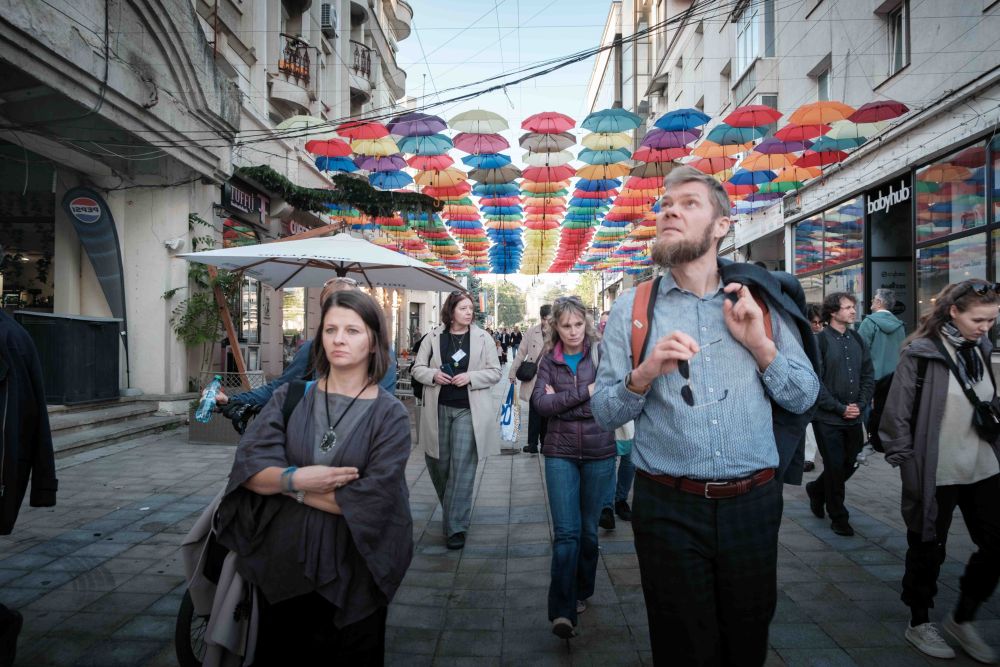
The conference closed with the roundtable “The Lasting Presence of Violence: Remembering, Narrating and Transmitting Trauma”, chaired by Ihab Saloul with Dana Dolghin, Johana Kotišová and Dawid Grabowski (University of Amsterdam). It was followed by a lecture and guided tour by Mihai Bulai on how historical memory and trauma are mediated touristically in Iași.
Closing Reflection: Listening to What Is Not Said
Read together, the papers presented in Iași suggest that the study of intergenerational memory is shifting its object. What passes between generations is not only remembered content but the structure surrounding its absence: the topics that could not be raised, the questions that ended in tears, the files that recorded names but not suffering. To study transmission is therefore to study the conditions of speakability, the social, political and institutional circumstances that decide what can become a story and what remains a trace.
This shift has consequences that are as much ethical and political as they are analytical. The same silence may result from terror, from the wish to protect one's children, from shame, from a researcher's respect for what was entrusted to her, or from a state that prefers ritual to reckoning. These silences cannot be treated alike. Some deserve to be broken, others to be respected, and the task of memory work is to tell them apart. Several contributions also showed that silences produced by repression do not end with the regimes that produced them. They persist in families, institutions and public languages long after the archives have opened.
A second consequence concerns the end of the era of witnesses. As communicative memory recedes, mediation becomes the primary mode of access to the past: archives, documentaries, museums, memorial sites, digital platforms and, increasingly, artificial intelligence. The conference identified two risks in this transition. The first is that affect outlives historical specificity, so that suffering remains recognisable while its causes, perpetrators and victims blur. The second is that moral condemnation is passed on without an understanding of the structures that made violence possible. Against both, the papers argued for a memory that renders not only suffering but also responsibility legible.
Finally, the conference was a reminder that its subject is not confined to the past. The keynote's reference to “a time of genocide” and the recordings from occupied Luhansk placed the discussion within ongoing violence, in which the traumas of future generations are being produced now. In this light, the comparative and dialogic approach that has defined the Genealogies of Memory series is not only a scholarly method. It is a way of building a European memory culture able to hear what is not said, and to recognise in other histories something more than a competing claim.
The story of Genealogies of Memory goes back many years. You can follow it in the Genealogies of Memory section of our website.
Impressions written by Dr Monika Haber.