
How can contemporary history be taught beyond national perspectives? How can teachers approach difficult and sometimes contested chapters of the 20th century while encouraging students to think critically about the past? And how can individual stories, places of memory and new educational methods help young people understand historical processes that continue to shape Europe today?
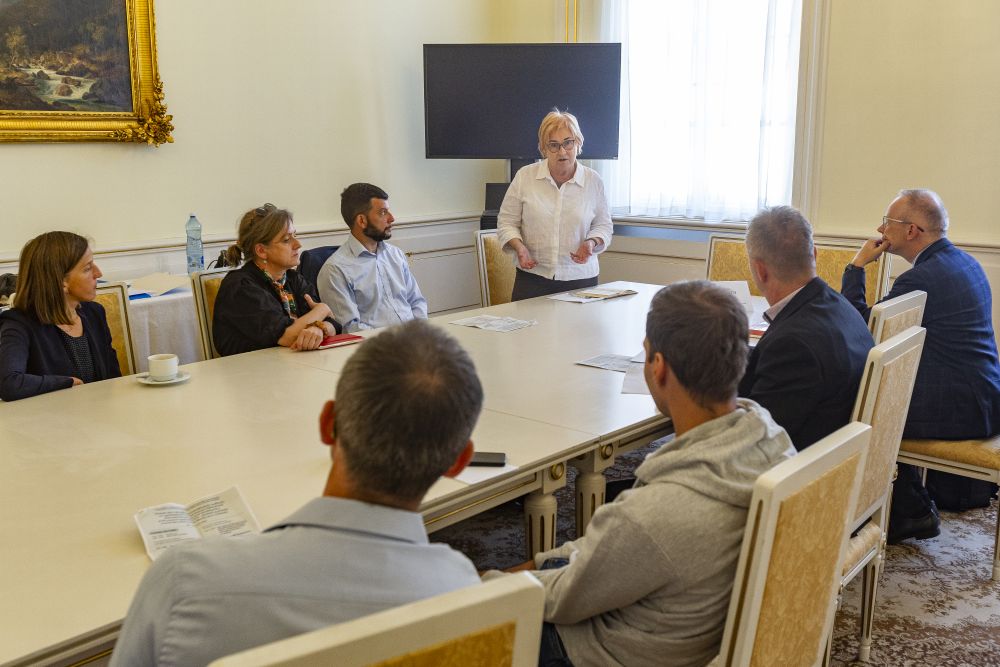
These questions were at the heart of the International Summer School for teachers of history, humanities and social sciences, held in Prague on 26–27 August 2026.
Organised by the Institute for the Study of Totalitarian Regimes (ÚSTR), in cooperation with the European Network Remembrance and Solidarity (ENRS), the Museum of 20th Century Memory and the Office of the Government of the Czech Republic, this year's edition focused on Central and Eastern Europe between 1939 and 1989.
The Summer School has a long tradition – 2026 marked its 17th edition – but this year brought an important change. For the first time, the programme was extended to two days and given a distinctly international dimension, bringing together experts and speakers from the Czech Republic, Hungary, Kosovo, Poland, Romania, Slovakia and Ukraine.
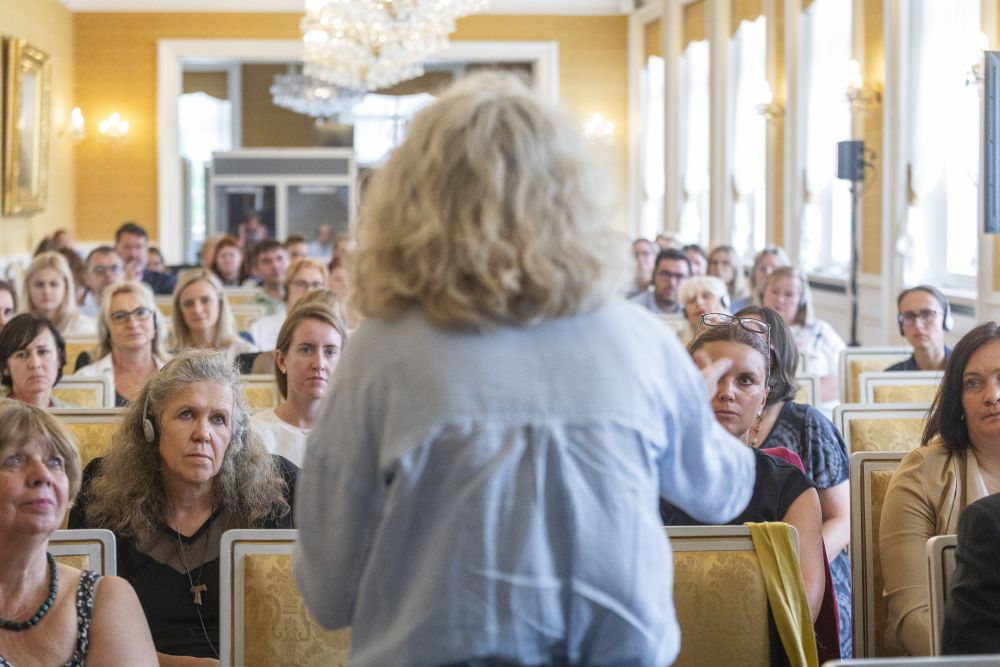
Strong interest among teachers confirmed the continuing need for spaces where educators can discuss not only what we teach about contemporary history, but also how we teach it.
From war to communist rule
The first day focused on one of the most turbulent periods in the history of Central and Eastern Europe: the transition from the Second World War and occupation to the establishment of communist regimes.
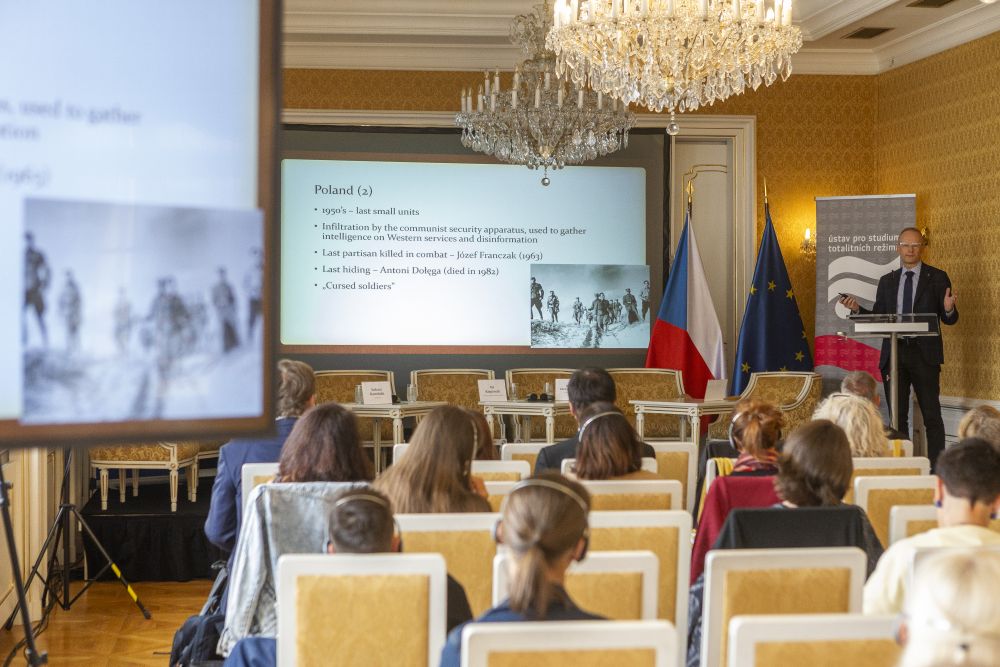
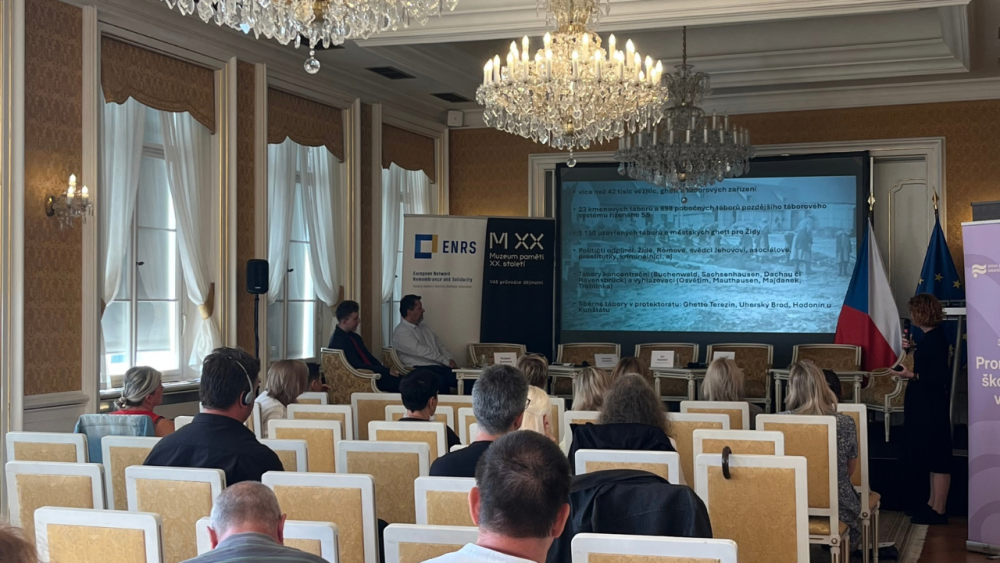
Prof. Barbara Klich-Kluczewska from the Jagiellonian University examined migration in Central and Eastern Europe and its role in shaping new political and social realities between 1944 and 1956. Dr Łukasz Kamiński placed post-war armed anti-communist resistance in a broader regional context, while Czech experts explored the developments that led to the establishment of communist rule in Czechoslovakia.
Bringing these perspectives together was particularly important. The countries of Central and Eastern Europe experienced war, displacement, political repression and communist rule in different ways. Looking beyond individual national narratives made it possible to identify shared experiences without overlooking the differences between them – including differences in how this history is remembered today.
From historical knowledge to classroom practice
The Summer School was designed not only as a forum for presenting historical research, but also as a source of practical inspiration for teachers.
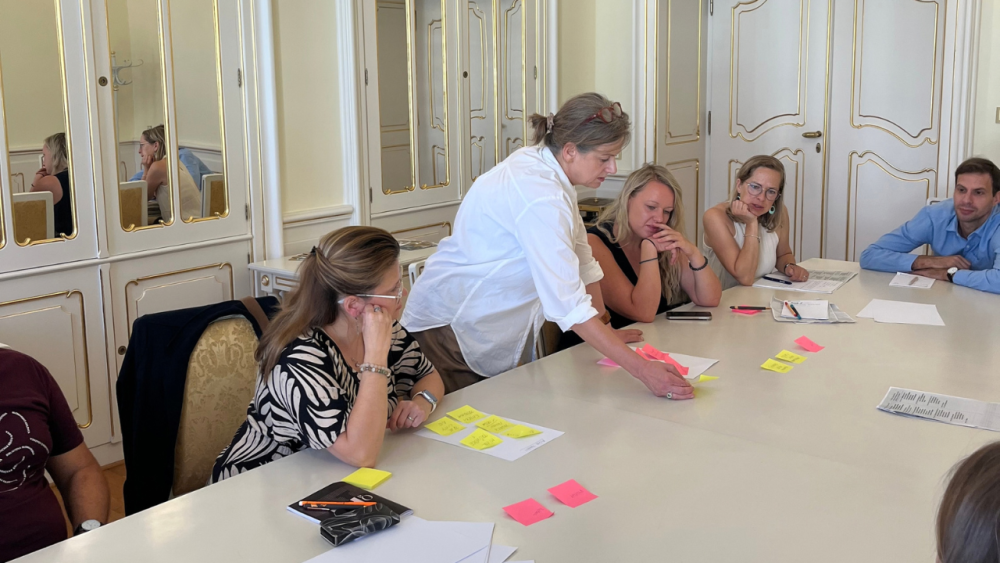
During the afternoon workshops, participants explored ways of teaching subjects such as occupation, repression, wartime violence and social conflict. Barbara Walshe from ENRS led a workshop on working with conflict through restorative dialogue, examining how dialogue can be used when addressing difficult and potentially divisive topics in the classroom.
Other workshops approached 20th-century history from very different angles. Tomáš Zouzal from ÚSTR focused on forced displacement connected with the establishment of the Böhmen military training area. Aleš Otava from the Museum of 20th Century Memory looked at the assassination of Reinhard Heydrich and the anti-Nazi resistance from a less conventional perspective. Jan Samohýl from ÚSTR and Kryštof Zeman from the Museum of 20th Century Memory concentrated on teaching the Second World War and on practical methods of working with educational materials.
This combination of historical expertise and concrete teaching methods was one of the key strengths of the programme. Difficult history cannot be reduced to providing students with more facts. Teachers also need tools that allow young people to work with competing perspectives, ask questions, discuss conflict and recognise the connections between the past and the world around them.
Learning through places of memory
The second day brought history even closer to individual experience, with a particular focus on concentration camps, sites of repression and places of memory under both Nazism and communist rule.
Joana Orłoś and Julia Machnowska from ENRS presented a film from the international educational project “Sound in the Silence” and led a workshop on preparing students for visits to memorial sites. Such visits pose challenges that go far beyond practical organisation. How should young people be prepared to encounter places associated with mass violence? How can teachers help them understand what happened there without overwhelming them? And how can emotions become part of the learning process rather than replace historical reflection?
These questions were complemented by workshops examining the experiences of prisoners and victims of Mauthausen, Ravensbrück and Jáchymov, as well as the history and transformation of the Vojna labour camp between 1947 and 1961.
The programme also demonstrated how new technologies can open different paths to the past. A presentation of the Siberian Gulag through virtual reality showed how digital tools can bring students closer to historical environments that would otherwise remain geographically and physically inaccessible.
Together, the sessions reflected the growing range of methods available to history educators – from archival sources and personal testimonies to film, dialogue, memorial sites and immersive technologies.
When the city becomes a classroom
History education did not end at the doors of Lichtenstein Palace. Led by historian Petr Blažek, participants walked through central Prague to explore how the city's public space preserves – and interprets – the memory of the 20th century.
The route included Jiří Sozanský's memorials on Kampa commemorating the victims of the 1968–1969 occupation of Czechoslovakia and Olbram Zoubek's Memorial to the Victims of Communism at Újezd.
The walk offered a reminder that a city itself can become a historical source. Monuments tell us not only about the people and events they commemorate, but also about the societies that created them. They raise questions about who and what is remembered, how that memory is expressed and how interpretations of the past change over time.
For teachers, places of memory can therefore become powerful learning spaces, connecting historical knowledge with physical surroundings and encouraging students to consider how history remains present in contemporary public life.
From individual stories to the history of violence
The afternoon shifted the perspective once again – from places to people and from national histories to experiences that crossed borders.
Joana Orłoś and Julia Machnowska presented ENRS's “Remember. August 23” campaign, demonstrating how individual stories can be used to approach complex historical processes. Personal experiences can give students an entry point into subjects that may otherwise seem abstract, showing how dictatorship, repression, war and political decisions affected individual lives.
The international scope of the programme became particularly visible in contributions from Kosovo and Ukraine. Atdhe Hetemi from the Institute for War Crimes Committed in Kosovo discussed interdisciplinary approaches to documenting war crimes and the wider role such documentation can play beyond historical research.
Vitalii Baka from the Ukrainian Institute of National Memory turned attention to the development of teaching Ukrainian history since 1991 and to changing attitudes towards the past in the context of the ongoing war.
The programme also confronted a particularly difficult dimension of remembrance: what happens to victims after death. Adam Hájek from Prague Cemeteries Administration discussed the burial of victims in mass graves in Prague cemeteries between 1939 and 1948, while Petr Blažek presented recent findings concerning the treatment of human remains at Ďáblice Cemetery.
Taken together, these contributions showed how contemporary history education increasingly connects research, commemoration and individual experience. They also raised broader questions about how societies document violence, preserve evidence and transmit the memory of victims to future generations.
European and American perspectives on teaching contemporary history
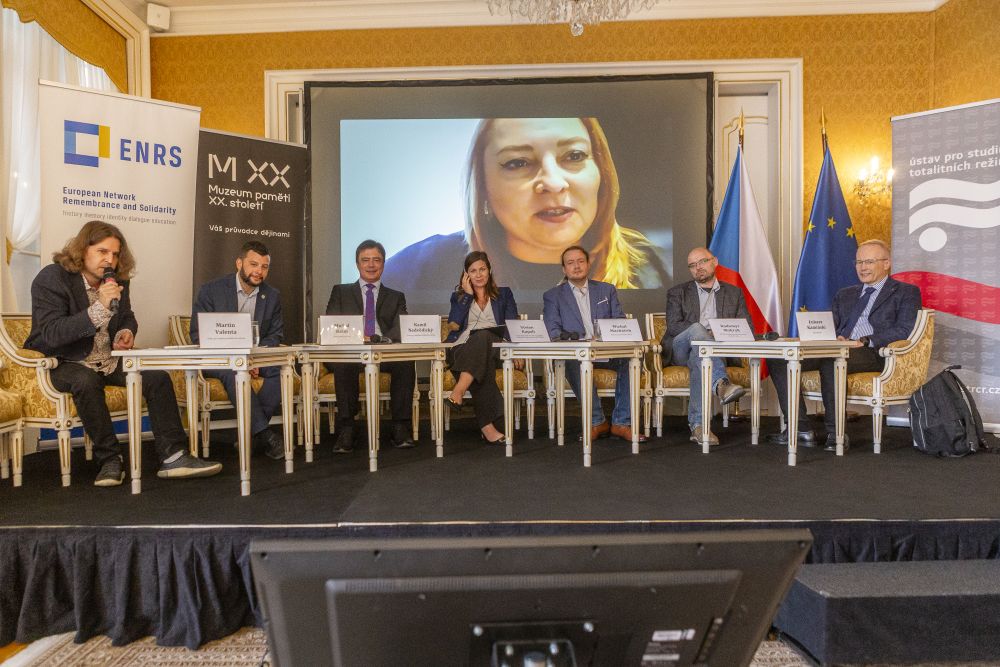
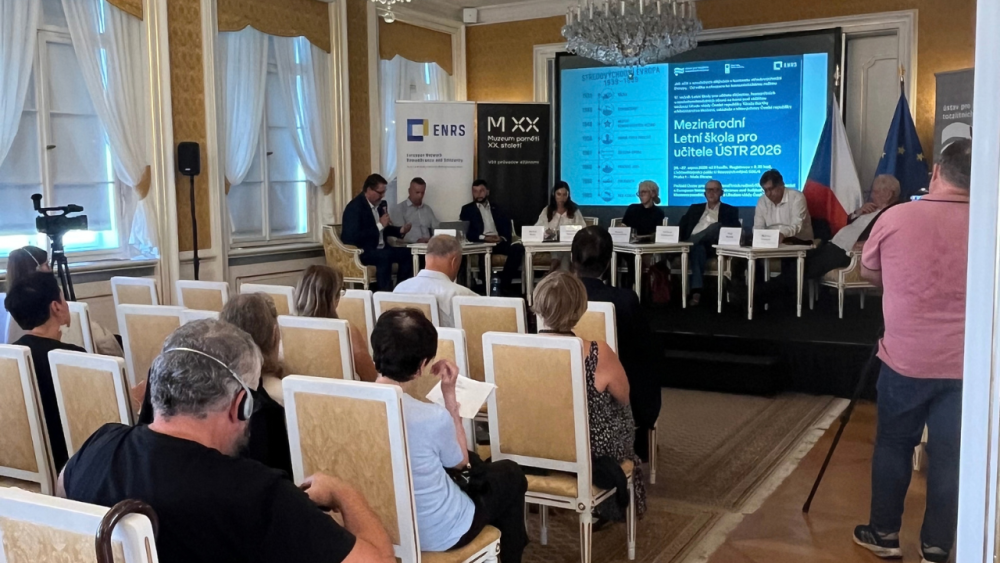
The Summer School concluded with a panel discussion devoted to European and American perspectives on teaching contemporary history.
Moderated by Vladimír Hanousek from ÚSTR, the discussion brought together Petr Blažek, William Eddleston and Martin Palouš from the Czech Republic, Michal Keim from Slovakia's Nation’s Memory Institute, Prof. Barbara Klich-Kluczewska from the Jagiellonian University in Poland and Dorottya Szénási from the Research Institute and Archives for the History of the Hungarian Regime Change (RETÖRKI).
Different countries have different curricula, educational traditions and cultures of remembrance. Yet the discussion also revealed challenges that cross borders: how to teach younger generations about Nazism and communism, how to address conflicting interpretations of the past, and how to ensure that contemporary history does not become merely a collection of names and dates disconnected from students' lives.
These questions captured the wider purpose of the two days in Prague. Teaching contemporary history inevitably involves national experiences, but it does not have to remain within national boundaries. Wars, occupations, forced migrations, dictatorships and resistance movements crossed borders, and their consequences shaped societies throughout Central and Eastern Europe.
Understanding this history therefore also requires conversation across borders. The International Summer School created precisely such a space – bringing together historical research, educational practice and different cultures of remembrance. For teachers, it offered new knowledge and practical methods. But perhaps just as importantly, it provided an opportunity to exchange experiences with colleagues and experts from other countries and to look at familiar histories from a different perspective.
Because teaching contemporary history is not only about explaining what happened. It is also about helping a new generation understand why the past is still present – and giving young people the tools to ask their own questions about it.
Sources:
https://www.ustrcr.cz/mezinarodni-letni-skola-pro-ucitele-ma-za-sebou-prvni-den/
https://www.ustrcr.cz/o-promenach-vyuky-tabu-i-zkusenostech-jednotlivych-zemi/
https://www.ustrcr.cz/o-letosni-letni-skolu-byl-mezi-pedagogy-velky-zajem/